

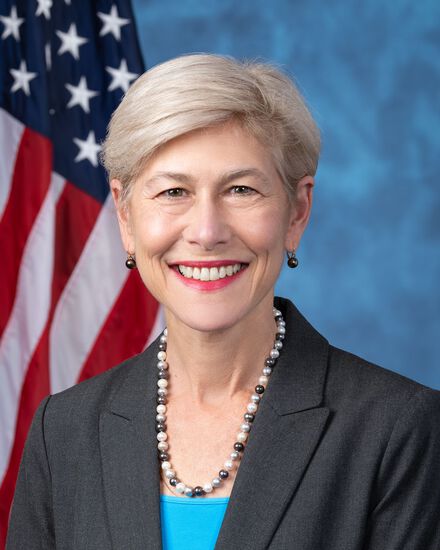
Photo of Deborah K. Ross
D United States House · District 2 · North Carolina On the 2026 ballot

Rep. Deborah K. Ross

Compare
Total votes
2,837
all sessions
Attendance
99%
22 missed
Higher than 96% of chamber peers
With party
98%
of cast votes
Higher than 94% of chamber peers
Bipartisan score
1%
crosses aisle rarely
Lower than 95% of chamber peers
Sponsored
1,956
bills & resolutions
Higher than 93% of chamber peers
Committees
7
assignments
1,956 bills and resolutions

Sponsored bills

Total
1,956
Primary
86
Co-sponsor
1,870
This page
1,956
matching current filters
Co-sponsor HR 2419
In committee · United States House · Co-sponsor
Affordable Housing for Homeless Veterans Act of 2021

Affordable Housing for Homeless Veterans Act of 2021 This bill reauthorizes and modifies a program of the Department of Veterans Affairs (VA) that provides housing assistance to homeless veterans. Specifically, the bill authorizes the VA to enter into agreements with specified entities (e.g., nonprofit organizations or tribal entities) through September 30, 2025, to assist homeless veterans and their families in acquiring shelter or permanent housing. Under the bill, the VA may enter into agreements where an entity that is buying, leasing, or receiving property agrees to sell or rent the property directly to homeless veterans or veterans at risk of homelessness.

In committee May 4, 2021 1 co-sponsor
Co-sponsor HR 2929
In committee · United States House · Co-sponsor
Virtual Peer Support Act of 2021

Virtual Peer Support Act of 2021 This bill appropriates funding for grants to transition behavioral health peer support services that are provided at no cost to participants from in-person to virtual platforms or to otherwise expand these kinds of virtual services. Specifically, the Substance Abuse and Mental Health Services Administration must award competitive grants to certain consumer-controlled or consumer-run organizations and tribal communities. Among other eligibility requirements for these grants, entities must have offered certain behavioral health services at no cost to participants before the declaration of the COVID-19 (i.e., coronavirus disease 2019) public health emergency.

In committee May 3, 2021 1 co-sponsor
Co-sponsor HR 2903
In committee · United States House · Co-sponsor
Creating Opportunities Now for Necessary and Effective Care Technologies (CONNECT) for Health Act of 2021

Creating Opportunities Now for Necessary and Effective Care Technologies (CONNECT) for Health Act of 2021 or the CONNECT for Health Act of 2021 This bill expands coverage of telehealth services under Medicare. Among other provisions, the bill allows the Centers for Medicare & Medicaid Services (CMS) to waive certain restrictions, such as restrictions on the types of technology that may be used; permanently removes geographic restrictions on originating sites (i.e., the location of the beneficiary) and allows the home of the beneficiary to serve as the originating site for all services; permanently allows federally qualified health centers and rural health clinics to serve as the distant site (i.e., the location of the health care practitioner); and allows the CMS to generally waive coverage restrictions during any public health emergency. Additionally, the CMS must report on the effects of expanded telehealth services during the COVID-19 public health emergency, including with respect to the utilization, quality, and outcomes of services. The Center for Medicare and Medicaid Innovation may also test alternative payment models relating to expanded telehealth services.

In committee Apr 29, 2021 1 co-sponsor
Co-sponsor HCONRES 19
In committee · United States House · Co-sponsor
Urging the establishment of a United States Commission on Truth, Racial Healing, and Transformation.

This concurrent resolution (1) affirms, on the 400th anniversary of the arrival of the first slave ship, that the nation owes a debt of remembrance not only to those who lived through the injustices of slavery but also to their descendants; and (2) urges the establishment of a U.S. Commission on Truth, Racial Healing, and Transformation to properly acknowledge, memorialize, and be a catalyst for progress, including toward permanently eliminating persistent racial inequities.

In committee Apr 28, 2021 1 co-sponsor
Co-sponsor HJRES 28
In committee · United States House · Co-sponsor
Proposing an amendment to the Constitution of the United States relative to equal rights for men and women.

This joint resolution proposes a constitutional amendment declaring that women shall have equal rights in the United States and every place subject to its jurisdiction.  The amendment prohibits the United States or any state from denying or abridging equal rights under the law on account of sex.

In committee Apr 28, 2021 1 co-sponsor
Co-sponsor HRES 151
In committee · United States House · Co-sponsor
Condemning all forms of anti-Asian sentiment as related to COVID-19.

This resolution condemns and denounces all forms of anti-Asian sentiment, including those related to COVID-19 (i.e., coronavirus disease 2019), and calls on federal law enforcement officials, working with state and local agencies, to take specified steps. The resolution calls on federal officials to expeditiously investigate and document all credible reports of hate crimes, harassment, bullying, and threats against the Asian American and Pacific Islander communities; the Attorney General to work with state and local agencies and Asian American and Pacific Islander community-based organizations to prevent discrimination and to expand culturally competent and linguistically appropriate education campaigns on public reporting of hate crimes; and the Department of Health and Human Services to issue guidance describing best practices to mitigate racially discriminatory language in describing the pandemic. The resolution recommits the United States to serving as a world leader in building more inclusive, diverse, and tolerant societies by (1) prioritizing language access and inclusivity in communication practices, and (2) combating misinformation and discrimination that put Asian Americans and Pacific Islanders at risk.

In committee Apr 28, 2021 1 co-sponsor
Co-sponsor HR 2896
In committee · United States House · Co-sponsor
Kids Eat Local Act

Kids Eat Local Act This bill modifies Department of Agriculture requirements for the national school food programs relating to the purchases of locally produced food. The bill allows institutions participating in the school food programs to use locally grown, locally raised, or locally caught as a product specification in food procurement requests.

In committee Apr 28, 2021 1 co-sponsor
Co-sponsor HR 1783
In committee · United States House · Co-sponsor
Accessible, Affordable Internet for All Act

Accessible, Affordable Internet for All Act This bill reauthorizes through FY2026, revises, and establishes grants and activities to promote access to broadband internet and other telecommunication services. The bill addresses digital equity and inclusion through grants and by requiring studies on barriers to adoption of broadband services and related matters. The bill addresses broadband affordability and access. It (1) reauthorizes and expands various programs that subsidize or otherwise support broadband services for eligible households, schools and libraries, and tribal lands and populations; and (2) establishes a program for expanding broadband service for underserved areas and community support organizations (e.g., schools and religious organizations). Additionally, the Federal Communications Commission (FCC) must award grants and take other actions to expand programs that verify an individual's eligibility for subsidized services. The bill addresses broadband data collection, disclosure, and sharing. The FCC must (1) issue rules regarding the collection of pricing data and labels that disclose information about broadband plans to consumers, and (2) collaborate and share data with federal agencies and other stakeholders. The bill makes financing (e.g., low-interest loans) available to communities and public-private partnerships for broadband infrastructure investments. Additionally, the Department of Transportation must require states to install conduits for broadband cables as part of certain highway projects. The bill also sets up a task force on nationwide dig once requirements (i.e., policies or practices to minimize excavations of highway rights-of-way when installing telecommunications infrastructure). Further, the bill preempts state laws that prohibit certain telecommunications service providers (e.g., public providers) from providing high-speed broadband services.

In committee Apr 28, 2021 1 co-sponsor
Co-sponsor HR 1368
In committee · United States House · Co-sponsor
Mental Health Justice Act of 2021

Mental Health Justice Act of 2021 This bill creates a grant program for states and local governments to train and dispatch mental health professionals to respond, instead of law enforcement officers, to emergencies that involve people with behavioral health needs. The Substance Abuse and Mental Health Services Administration (SAMHSA) must manage the program in consultation with the Department of Justice (DOJ). SAMHSA may cancel grants that increase incarceration or institutionalization. Grantees must use funds for purposes including de-escalation and anti-racism training. The Department of Health and Human Services and the DOJ must evaluate this program.

In committee Apr 28, 2021 1 co-sponsor
Co-sponsor HR 1378
In committee · United States House · Co-sponsor
Do No Harm Act

Do No Harm Act This bill prohibits the application of the Religious Freedom Restoration Act of 1993 (RFRA) to specified federal laws or the implementation of such laws. Currently, RFRA prohibits the government from substantially burdening a person's exercise of religion even if the burden results from a rule of general applicability, except in furtherance of a compelling governmental interest when using the least restrictive means. Under the bill, RFRA is inapplicable to laws or the implementation of laws that protect against discrimination or the promotion of equal opportunity (e.g., the Civil Rights Act of 1964); require employers to provide wages, other compensation, or benefits, including leave; protect collective activity in the workplace; protect against child labor, abuse, or exploitation; or provide for access to, information about, referrals for, provision of, or coverage for, any health care item or service. The bill prevents RFRA from being used to deny (1) goods or services the government has contracted, granted, or made an agreement to provide to a beneficiary of or participant in a program or activity funded by such government contract, grant, agreement, or other award; or (2) a person's full and equal enjoyment of a government-provided good, service, benefit, facility, privilege, advantage, or accommodation. In order for a person to assert a RFRA claim or defense in a judicial proceeding, the government must be a party to the proceeding.

In committee Apr 28, 2021 1 co-sponsor
Showing 1,791 to 1,800 of 1,956 bills