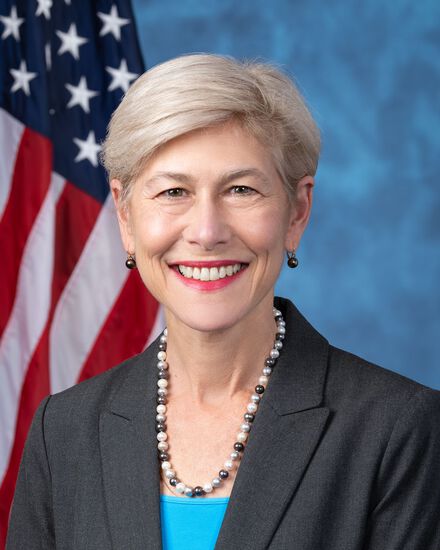
Photo of Deborah K. Ross
D United States House · District 2 · North Carolina On the 2026 ballot

Rep. Deborah K. Ross

Compare
Total votes
2,837
all sessions
Attendance
99%
22 missed
Higher than 96% of chamber peers
With party
98%
of cast votes
Higher than 94% of chamber peers
Bipartisan score
1%
crosses aisle rarely
Lower than 95% of chamber peers
Sponsored
1,961
bills & resolutions
Higher than 93% of chamber peers
Committees
7
assignments
1,961 bills and resolutions

Sponsored bills

Total
1,961
Primary
86
Co-sponsor
1,875
This page
1,961
matching current filters
Co-sponsor HR 8452
In committee · United States House · Co-sponsor
Reproductive Health Travel Fund Act of 2022

Reproductive Health Travel Fund Act of 2022 This bill authorizes the Department of Health and Human Services to award grants to pay for travel, childcare, and other expenses of an individual seeking access to abortion services. Eligible grant recipients must be nonprofit or community-based organizations that assist individuals seeking abortion services through programs that are unbiased and medically and factually accurate. The grants may not be used to pay for abortion procedures.

In committee Jul 20, 2022 1 co-sponsor
Co-sponsor HR 8297
Passed · United States House · Co-sponsor
Ensuring Access to Abortion Act of 2022

Ensuring Women's Right to Reproductive Freedom Act This bill prohibits anyone acting under state law from interfering with a person's ability to access out-of-state abortion services. ( Abortion services includes the use of any drugs that are approved to terminate pregnancies and any health care services related to an abortion, whether or not provided at the same time or on the same day.) Specifically, the bill prohibits any person acting under state law from preventing, restricting, impeding, or retaliating against health care providers who provide legal abortion services to out-of-state residents, any person or entity who helps health care providers to provide such services, any person who travels to another state to obtain such services, any person or entity who helps another person travel to another state to obtain such services, or the movement in interstate commerce of drugs that are approved to terminate pregnancies. The Department of Justice may enforce this bill through civil actions; the bill also establishes a private right of action for violations.

Passed Jul 18, 2022 1 co-sponsor
Co-sponsor HR 8265
In committee · United States House · Co-sponsor
TEAM Volunteers Act

Tax Emergency Adjustment for Mileage Volunteers Act or the TEAM Volunteers Act This bill increases the rate of the tax deduction for the charitable use of a passenger automobile to equal the standard business rate (i.e., 58.5 cents per mile in the first half of 2022, then 62.5 cents per mile for the rest of that year) for taxable years beginning after 2021 and before 2024. It then provides for a permanent 24 cents per mile rate, adjusted annually for inflation, for taxable years beginning after 2023.

In committee Jul 1, 2022 1 co-sponsor
Co-sponsor HR 7585
In committee · United States House · Co-sponsor
Health Equity and Accountability Act of 2022

Health Equity and Accountability Act of 2022 This bill directs the Department of Health and Human Services (HHS) and others to undertake efforts to reduce health disparities. For example, the bill (1) requires more detailed reporting of demographic and health disparities data, including related to public health emergencies; (2) directs certain components of HHS to support health workforce diversity; and (3) increases access to culturally and linguistically appropriate health care. The bill also modifies eligibility and other requirements for Medicare, Medicaid, private health insurance, nutrition assistance, and other programs to reduce health disparities among vulnerable populations. The bill includes specific provisions with respect to noncitizens; maternal, infant, and child health; mental and behavioral health; specified conditions that disproportionately affect racial and ethnic minority groups, such as certain cancers, HIV/AIDS, kidney disease, and diabetes; investments in communities facing health and other inequities; and nondiscrimination in the provision of services in federally supported health programs. Additionally, the bill (1) revises health information technology programs to address health disparities, and (2) supports health impact assessments and other efforts pertaining to environmental justice and social determinants of health (i.e., nonmedical factors that influence health outcomes, such as income and educational attainment). The bill also requires various studies and reports on issues related to health care and health disparities, including a report by the Government Accountability Office on health workforce diversity.

In committee Jun 29, 2022 1 co-sponsor
Co-sponsor HR 8111
In committee · United States House · Co-sponsor
My Body, My Data Act of 2022

My Body, My Data Act of 2022 This bill establishes protections, subject to certain limits, for personal reproductive or sexual health information. This includes information relating to past, present, or future surgeries or procedures, such as the termination of a pregnancy. Specifically, commercial entities, including individuals, nonprofits, and common carriers, may not collect, retain, use, or disclose personal reproductive or sexual health information except (1) with the express written consent of the individual to whom such information relates, or (2) as is strictly necessary to provide a requested product or service. Commercial entities also must provide individuals with access to, and a reasonable mechanism to delete, any of their reproductive or sexual health information upon request. Further, commercial entities must maintain and publish a privacy policy describing their practices with respect to such information. The bill's provisions do not apply to entities that are subject to certain existing health-related privacy regulations, such as the privacy regulations issued under the Health Insurance Portability and Accountability Act of 1996. Additionally, the provisions do not apply to the disclosure of personal reproductive or sexual health information for the publication of newsworthy information of legitimate public concern. The bill provides for enforcement by the Federal Trade Commission and by private civil actions.

In committee Jun 23, 2022 1 co-sponsor
Co-sponsor HR 5585
Passed · United States House · Co-sponsor
ARPA–H Act

Advanced Research Project s Agency-Health Act or the ARPA-H Act This bill establishes within the Department of Health and Human Services (HHS) the Advanced Research Projects Agency-Health to accelerate health and medical innovation by investing in high-risk, high-reward research. The bill also establishes a committee to advise on agency activities. HHS must transfer all authorities, functions, funds, and personnel from a similar entity within the National Institutes of Health to a new, independent agency. Additionally, the President must appoint a director to lead the agency. The director may submit testimony and recommendations concerning the agency to Congress without review or approval by other federal officers or agencies. The director must appoint personnel to administer the agency's research programs, including by selecting projects to support and making recommendations about terminating or continuing projects. The agency may use grants, prize competitions, and a variety of other mechanisms to support the research projects. The agency's budget is separate from that of HHS. The agency must coordinate with the Food and Drug Administration and the Centers for Medicare & Medicaid Services to expedite development and coverage of high-need cures. Additionally, the agency may partner with other public and private entities (e.g., institutions of higher education and patient advocacy organizations). The bill also requires the agency to develop and periodically update a strategic plan and annually report on its activities. Furthermore, (1) the National Academies of Sciences, Engineering, and Medicine must evaluate the agency's performance; and (2) the Government Accountability Office must review the research portfolio of HHS and its components, including the new agency.


Passed Jun 23, 2022 1 co-sponsor
Co-sponsor HR 3355
In committee · United States House · Co-sponsor
SAFE Act of 2021

Save America’s Forgotten Equines Act of 2021 or the SAFE Act of 2021 This bill prohibits the transporting, receiving, possessing, purchasing, selling, or donation by a person of an equine (e.g., horse) that the person has reason to believe will be slaughtered for human consumption.

In committee Jun 23, 2022 1 co-sponsor
Primary HRES 1191
Passed · United States House · Lead sponsor
Providing for consideration of the bill (H.R. 4176) to improve Federal population surveys by requiring the collection of voluntary, self-disclosed information on sexual orientation and gender identity in certain surveys, and for other purposes; providing for consideration of the bill (H.R. 5585) to establish the Advanced Research Projects Agency-Health, and for other purposes; providing for consideration of the bill (H.R. 7666) to amend the Public Health Service Act to reauthorize certain programs relating to mental health and substance use disorders, and for other purposes; and for other purposes.

Sets forth the rule for consideration of the bill (H.R. 4176) to improve Federal population surveys by requiring the collection of voluntary, self-disclosed information on sexual orientation and gender identity in certain surveys, and for other purposes; providing for consideration of the bill (H.R. 5585) to establish the Advanced Research Projects Agency-Health, and for other purposes; providing for consideration of the bill (H.R. 7666) to amend the Public Health Service Act to reauthorize certain programs relating to mental health and substance use disorders, and for other purposes.

Passed Jun 22, 2022 0 co-sponsors
Co-sponsor HR 7072
Passed · United States House · Co-sponsor
NDO Fairness Act

NDO Fairness Act This bill makes various changes to the procedures and requirements with respect to delayed notification orders. Current law authorizes the government to compel providers of electronic communication services or remote computing services to disclose certain records and information pertaining to subscribers and customers. Further, a provider may notify subscribers or customers of the government's request for records and information unless the government obtains a delayed notification order. With respect to delayed notification orders, the bill raises the standard for courts to grant a delayed notification order, requires courts to issue delayed notification orders only after issuing a written determination based on specific facts, requires orders to be narrowly tailored, and shortens the duration of delayed notification orders. Finally, the bill requires the Department of Justice to report annually on data related to delayed notification orders, including the number of customers targeted; the number of applications for orders; the number of orders granted, extended, or denied; and the number of orders targeting members of the media or conduct related to certain protected activities.

Passed Jun 22, 2022 1 co-sponsor
Showing 1,431 to 1,440 of 1,961 bills