

Energy Cybersecurity University Leadership Act of 2022 This bill requires the Department of Energy (DOE) to establish an Energy Cybersecurity University Leadership Program. Under the program, DOE must provide financial assistance to graduate students and postdoctoral researchers pursuing a course of study that integrates cybersecurity competencies within disciplines associated with energy infrastructure needs. In addition, DOE must provide the students and researches supported under the program with research and training experiences at its National Laboratories and utilities.
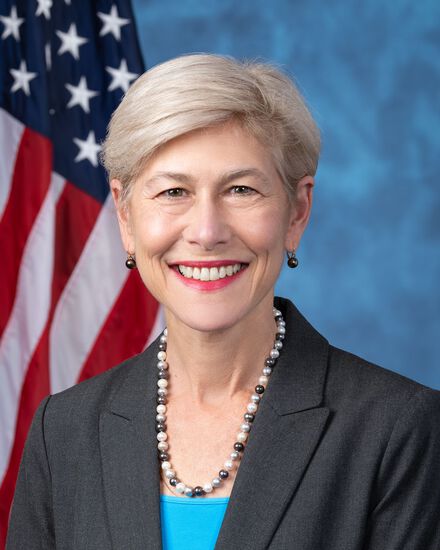
Rep. Deborah K. Ross
Sponsored bills
Keeping Girls in School Act This bill authorizes the U.S. Agency for International Development (USAID) to enter into agreements to address social, cultural, health, and other barriers that adolescent girls face in accessing quality secondary education. The USAID shall seek to ensure that such activities meet various requirements related to monitoring and evaluating outcomes, collecting data, and using specified indicators and methodologies for international basic education. The Department of State shall periodically update and report to Congress a publicly available U.S. global strategy to empower adolescent girls, and the USAID shall periodically report to Congress on the activities initiated under this bill and efforts to monitor and evaluate such activities.
NOAA Chief Scientist Act This bill revises requirements concerning the qualifications and responsibilities of the Chief Scientist in the National Oceanic and Atmospheric Administration (NOAA). Specifically, the bill establishes new minimum qualification requirements for the position of the Chief Scientist. It also outlines new responsibilities of the Chief Scientist. For example, the Chief Scientist must follow NOAA's scientific integrity policies and ensure NOAA's employees and contractors adhere to the policies as well. In addition, the Chief Scientist must (1) provide policy and program direction for the science and technology priorities of NOAA, and (2) manage the Office of the Chief Scientist.
Gabriella Miller Kids First Research Act 2.0 This bill reauthorizes through FY2027 a pediatric disease research initiative within the National Institutes of Health (NIH) and requires the NIH to coordinate pediatric research activities to avoid duplicative efforts. Additionally, the Department of Health and Human Services must report, within five years, to Congress about research funded through the initiative.
Original Slavery Remembrance Day Resolution of 2021 This resolution supports the designation of a Slavery Remembrance Day and condemns slavery and its progenies.
Shirley Chisholm Congressional Gold Medal Act This bill provides for the posthumous presentation of a Congressional Gold Medal in commemoration of Shirley Chisholm, in recognition of her activism, independence, and groundbreaking achievements in politics, election as the first African American woman in Congress, and campaign to be the first African American to gain the nomination of a major political party for President of the United States. Following its award, the gold medal shall be given to the Smithsonian Institution where it shall be available for display and research.
Mathematical and Statistical Modeling Education Act This bill requires the National Science Foundation (NSF) to take certain actions to increase mathematical and statistical modeling education in public elementary and secondary schools. First, the NSF must provide competitive grants to institutions of higher education and nonprofit organizations for research and development to support high-quality mathematical modeling education (e.g., data science and computational thinking) in schools. In addition, the NSF must seek to enter into an agreement with the National Academies of Sciences, Engineering, and Medicine to study and report on mathematical and statistical modeling education in schools.
American Families United Act This bill authorizes the Department of Homeland Security (DHS) or the Department of Justice (DOJ) to exercise discretion in certain immigration cases. The bill also removes certain requirements related to birthright citizenship. Under this bill, DOJ or DHS may, on a case-by-case basis, exercise discretion by declining to remove an alien or bar an alien from entering the United States to prevent hardship for the alien's U.S. citizen spouse, parent, or child. However, DOJ or DHS may not exercise this discretion if the alien is removable or inadmissible due to certain grounds, including specified crime- and security-related grounds. The bill also removes certain requirements related to birthright citizenship for a child born outside of the United States to one U.S. citizen parent and one alien parent. Specifically, the bill removes a provision that requires the U.S. citizen parent to be physically present in the United States for at least five years before the child's birth in order for the child to acquire U.S. citizenship at birth.
Fashioning Accountability and Building Real Institutional Change Act or the FABRIC Act This bill requires garment industry employers to pay at least the hourly minimum wage and prohibits piece rate pay. Garment manufacturers and contractors also must register with the Department of Labor.
Right to Contraception Act This bill sets out statutory protections for an individual's right to access and a health care provider's right to provide contraception and related information. Contraception refers to an action taken to prevent pregnancy, including the use of contraceptives (i.e., a device or medication used to prevent pregnancy), fertility-awareness based methods, and sterilization procedures. Generally, the bill prohibits measures that single out and impede access to contraception and related information. However, a party may defend against a claim that a measure violates the bill's prohibitions by demonstrating, through clear and convincing evidence, that the measure significantly advances access to contraception and cannot be achieved through less restrictive means. The Department of Justice, individuals, or health care providers may bring a lawsuit to enforce this bill, and states are not immune from suits for violations.