

Maddy summaryHR 4070, the Disaster Mitigation and Tax Parity Act of 2023, excludes certain payments received from state disaster mitigation programs from taxable income. It directly affects homeowners who get funds from state or state-regulated programs to make property improvements specifically designed to reduce damage from windstorms, earthquakes, or wildfires (like installing fire-resistant roofing or seismic upgrades). The bill adds a new tax exclusion in the Internal Revenue Code, meaning these qualified mitigation payments won't be counted as gross income for tax purposes. This change applies to payments made after December 31, 2020, with options for retroactive tax filings.
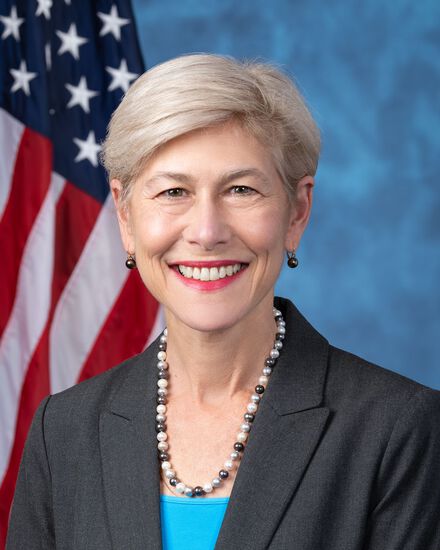
Rep. Deborah K. Ross
Sponsored bills
This bill includes phosphate and potash on the Department of the Interior's final list of critical minerals. (Under current law, Interior and other departments are required to conduct a variety of efforts to ensure a secure and reliable supply chain of critical minerals.) Interior must evaluate current policies relating to permitting and leasing of projects to develop critical minerals and issue recommendations to Congress to support domestic production of such commodities.
Maddy summaryHR 4021, the Fair and Open Skies Act, amends U.S. aviation law to require that the Department of Transportation consider labor standards when reviewing international air transport agreements. Specifically, it adds "preventing the undermining of labor standards" as a mandatory factor in the public interest test for approving such agreements under 49 U.S.C. § 40101. This change directly affects international airlines seeking to operate flights to or from the U.S. and the DOT, which must now evaluate whether proposed agreements could weaken U.S. labor protections. The bill updates existing provisions by replacing outdated language about "agreements with the United States Government" and explicitly including labor standards in the evaluation criteria.
Maddy summaryHR 4035, the Protecting Small Business Information Act of 2023, requires the Treasury Secretary to coordinate the effective dates of all rules under the Corporate Transparency Act. It mandates that all final rules related to beneficial ownership reporting must take effect on the same date, delaying implementation until the Secretary certifies to Congress that all rules are issued and will align on a single effective date. This directly affects small businesses required to report beneficial ownership information under the Corporate Transparency Act. The bill’s key mechanism is creating a unified implementation timeline, preventing staggered rule deadlines that could complicate compliance for small entities. It does not change reporting requirements but ensures a synchronized rollout of the regulations.
Maddy summaryHR 3987, the Leveraging Quantum Computing Act, requires the National Quantum Coordination Office to work with federal agencies to identify how quantum computing could help their missions. The bill directs the Office to develop specific plans for each identified use case, such as acquiring quantum computers or using cloud-based systems, and to consult with relevant agencies and private partners. It mandates annual reports to Congress detailing outreach efforts, identified use cases, progress on implementation plans, and any funding obstacles. The bill directly affects federal agencies seeking to adopt quantum technology and aims to streamline their coordination with the private sector.
Maddy summaryHR 3978, the Southern California Coast and Ocean Protection Act, prohibits the federal government from issuing new oil and gas leases in the Southern California planning area. It directly affects the Secretary of the Interior and potential oil and gas companies by banning exploration, development, or production leases in that specific region, as defined in the 2018 National OCS Leasing Program. The bill amends existing law to permanently block new leasing in this coastal zone, with no new permits allowed under current or future federal leasing programs.
Maddy summaryThis bill requires federal agencies collecting demographic survey data to begin including questions on sexual orientation, gender identity, and variations in sex characteristics (intersex traits) within 360 days of enactment. Agencies must review existing surveys to identify gaps, develop privacy-protective methods for collecting this data (including anonymization and data destruction protocols), and incorporate it into relevant reports within three years. The law applies to all federal surveys that collect standard demographic data (like race, ethnicity, and age), such as the census or health surveys, but does not compel individuals to disclose their status. It emphasizes maintaining confidentiality, allows limited agency waivers if standards can't be met, and mandates a congressional report on implementation within two years.
Maddy summaryHR 3850, the Pride In Mental Health Act of 2023, establishes a federal grant program to improve mental health and substance abuse services for LGBTQ+ youth (including nonbinary, intersex, and Two Spirit individuals). The bill directs the Health and Human Services Secretary to fund eligible organizations to provide trauma-informed care, cultural competency training for caregivers, school bullying prevention guidelines, and family support resources. It explicitly prohibits grant funds from being used for conversion therapy or advertising related to such therapy. The bill also requires data collection on LGBTQ+ youth mental health and a federal survey to measure psychological distress.
Wild Horse and Burro Protection Act of 2023 This bill prohibits the Bureau of Land Management (BLM) from using or contracting for the use of helicopters or fixed-wing aircraft for gathering horses and burros under the Wild Free-roaming Horses and Burros Act. Further, BLM may not make contracts to use helicopters for transporting captured animals under such act.
Maddy summaryThe American Offshore Wind Opportunity Act (HR 3614) directs the Government Accountability Office (GAO) to study how to increase U.S. vessel manufacturing, crewing, and shipyard capacity for offshore wind projects. The GAO must analyze policy options to meet the 2030 goal of 30 gigawatts of offshore wind energy, including workforce needs, U.S. vessel rules (Jones Act), shipyard capabilities, and required investments. The study will assess training requirements, credential gaps, and strategies to leverage existing maritime skills for offshore wind jobs. The GAO will submit its findings to relevant congressional committees within 120 days of the bill's enactment.