

American Neighborhoods Protection Act of 2023 This bill imposes an excise tax, with certain exclusions, on individuals who own more than 75 single family homes. The amount of such tax is the product of $10,000 and the excess of the number of homes owned over 75. The bill establishes a Housing Trust Fund into which the excise tax amounts shall be deposited and used to provide grants for down payment assistance to families purchasing a home.
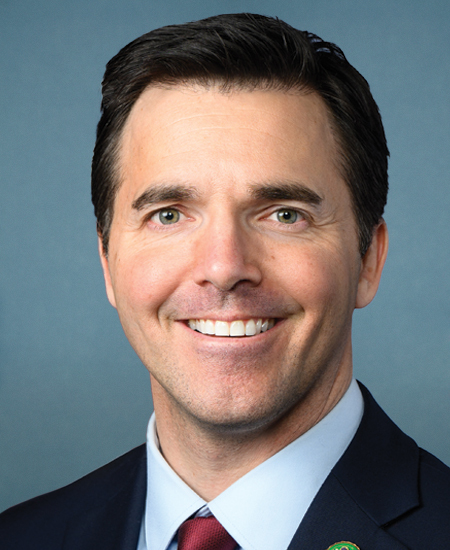
Rep. Jeff Jackson
Sponsored bills
Maddy summaryThis bill requires the Department of Energy (DOE) and Department of Agriculture (USDA) to coordinate joint research projects on shared priorities like biofuels, AI for farming, energy-water systems, and carbon storage. It mandates a formal agreement between the departments to fund collaborative projects through competitive grants open to universities, labs, and industry. The departments must report to Congress within two years on their coordination efforts, research achievements, and future opportunities. This affects how DOE and USDA manage their research partnerships, not direct public policy or regulations.
Maddy summaryHRES 793 is a resolution passed by the U.S. House of Representatives calling on Hamas to immediately release all 199 hostages taken during Hamas' October 7, 2023 attack on Israel. The resolution condemns Hamas for the attack, the taking of hostages, and threats against hostages, while stating that holding hostages violates international humanitarian law under the Geneva Conventions. It demands the immediate release of all hostages and expresses sympathy for victims and their families. As a symbolic resolution, it does not create legal obligations but formally expresses the House's position.
Maddy summaryHR 6451, the Mental Health Justice Act of 2023, provides $250 million in federal grants to states, tribes, and localities to hire mental health professionals as first responders for specific emergencies. It directs these professionals to replace police in situations involving mental health crises, substance use, or intellectual/developmental disabilities - such as when a 911 caller describes a mental health emergency or a first responder identifies someone needing mental health support. The bill requires grantees to train responders in de-escalation techniques, link individuals to community-based services (not incarceration), and report on outcomes like reduced arrests or use of force. It also mandates data collection on demographics and prevents funneling people into institutional settings, with annual reports to Congress on program effectiveness.
Maddy summaryThis bill amends federal transit grant rules to encourage housing near transit by adding incentives for projects that support "pro-housing policies." It defines such policies as local actions removing regulatory barriers to housing construction, including reducing parking minimums, creating faster approval processes for multi-family housing, and eliminating height restrictions. Transit project applicants can earn an extra point in their grant rating if they submit evidence of these policies in areas near transit, with the Department of Transportation consulting the Housing Secretary to assess how the policies will increase housing supply. The bill directly affects state and local governments implementing these policies and transit project applicants seeking federal capital investment grants.
Maddy summaryThis bill requires military commanders to approve leave for active-duty service members and their dependents seeking abortion care without needing to disclose the specific procedure. It mandates reimbursement for travel costs to clinics providing abortion services when local access is unavailable and protects the privacy of those using this leave. The bill explicitly prohibits any negative consequences for service members who request or take such leave. It directly affects military personnel and their families by ensuring timely, private, and accessible abortion care without command interference.
Maddy summaryThis bill amends a provision in the 2021 National Defense Authorization Act to extend the deadline for Department of Defense Education Activity (DoDEA) schools to maintain current student-to-teacher ratios. Specifically, it changes the reference from the 2023-2024 academic year to the 2029-2030 academic year. The bill directly affects DoDEA schools, which serve military-connected students (children of active-duty military personnel). It does not change eligibility for military-connected students or create new programs; it only delays when schools must meet the existing staffing ratio requirements.
Maddy summaryThe SHIP Act imposes sanctions on foreign entities that knowingly handle Iranian petroleum, targeting those involved in port operations, transportation, refining, or ship-to-ship transfers of Iranian oil. Starting 90 days after enactment, the President must block assets, deny visas, and impose penalties on individuals or companies engaging in these activities, including family members or owners of sanctioned entities. It requires annual reports tracking Iran's oil exports, revenues, and key players like shipping companies and ports. The sanctions terminate if the President certifies Iran has stopped supporting terrorism and dismantled weapons programs.
Maddy summaryThe REPAIR Act requires car manufacturers to provide vehicle owners and independent repair shops with free, unrestricted access to vehicle data and repair information. It bans manufacturers from using technological or legal barriers to block access to diagnostics, tools, or aftermarket parts, and prohibits mandating specific brands for repairs or restricting customers’ choice of repair facility. The law also prevents manufacturers from requiring waivers of these rights as a condition of purchase, lease, or warranty service. The Federal Trade Commission will enforce these provisions to ensure fair competition in vehicle repair.
Maddy summaryThe Rape Kit Backlog Progress Act of 2023 requires states and local governments receiving federal crime-fighting grants to conduct comprehensive inventories of all sexual assault kits (both tested and untested) and report key details to the Attorney General. It mandates that jurisdictions document victim consent for testing, upload DNA results to the national CODIS database, establish electronic tracking systems for victims, and implement victim notification protocols. States must submit these reports annually to maintain eligibility for federal grants, with the Attorney General publishing a public annual report on backlog status and compliance. This law directly affects state/local law enforcement agencies and prosecutors handling sexual assault cases, aiming to improve transparency and accountability in processing evidence.