

Maddy summaryThis resolution honors the Greensboro Four (Joseph McNeil, Jibreel Khazan, Franklin McCain, and David Richmond) for their 1960 sit-in at a Greensboro, North Carolina Woolworth's store, which sparked the civil rights movement. It formally recognizes their role in challenging racial segregation and inspiring nationwide protests during Black History Month. The resolution encourages schools to include the Greensboro Four's story in their educational curriculum to highlight their contributions to civil rights. As a commemorative resolution, it has no binding effect but aims to promote historical awareness.
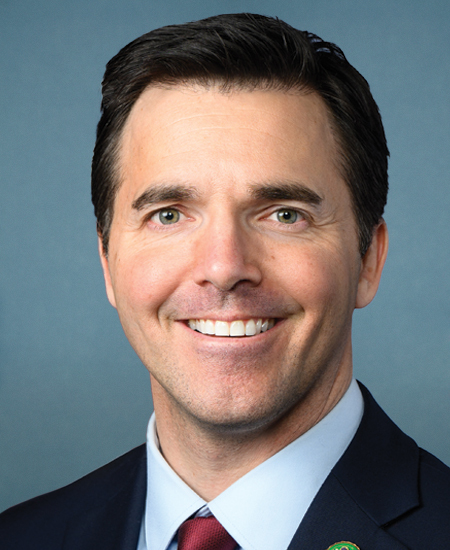
Rep. Jeff Jackson
Sponsored bills
Maddy summaryThis bill reauthorizes and enhances anti-trafficking programs through several key provisions. It establishes "Frederick Douglass Human Trafficking Prevention Education Grants" for schools to implement evidence-based, culturally responsive training for K-12 students, teachers, and school personnel on recognizing and preventing child trafficking. It also creates a Human Trafficking Survivors Employment and Education Program to help trafficking victims gain job skills, education, and life skills for self-sufficiency. The bill extends funding for these programs through 2028 with increased authorization levels and modifies international trafficking reporting standards.
Maddy summaryHRES 966 is a symbolic resolution condemning alleged sexual violence committed by Hamas during its October 7, 2023, attack on Israel. It specifically references eyewitness accounts, forensic evidence, and Hamas fighters' admissions of ordering gang rape, sexual mutilation, and assault against Israeli civilians. The resolution calls for international condemnation of such acts as weapons of war, urges nations to criminalize sexual violence, and supports investigations into Hamas' actions. As a non-binding resolution, it does not create new laws or directly affect any individuals but formally expresses the House's position on the issue.
Maddy summaryThe JOBS Act of 2023 would expand Federal Pell Grant eligibility to cover certain short-term job training programs that prepare students for high-demand careers. It defines "eligible job training programs" as those offering 150-600 hours of instruction over 8-15 weeks, aligned with in-demand industry sectors, and leading to recognized credentials that help students meet hiring requirements and take licensure exams. The bill would allow students in these programs to receive Pell Grants under standard terms, with the minimum Pell Grant amount reduced from 10% to 5% of the maximum. It also requires accrediting agencies to evaluate these programs and creates data-sharing between Education and Labor departments to track program effectiveness.
Maddy summaryHR 7095 requires states conducting congressional redistricting to establish public internet portals with real-time access to maps, demographic data, and proposed plans. It mandates multiple regional public hearings with virtual options, 72-hour posting of all public comments, and detailed analysis of proposed plans - including population breakdowns, voting history, partisan fairness, and Voting Rights Act compliance. States must also provide accessible materials in languages required under the Voting Rights Act and maintain all redistricting data online for 10 years. The law applies to redistricting after the 2030 census, with limited retroactive application for states still revising 2020 census plans.
Maddy summaryThe Air Guard STATUS Act of 2024 would establish a permanent program to provide tuition assistance for Air National Guard members. It requires the Secretary of the Air Force to cover all or part of tuition and educational expenses at accredited institutions for members who meet specific training requirements. This program would operate under existing federal law governing military education benefits. The bill directly affects Air National Guard members pursuing education while fulfilling their service obligations.
Maddy summaryHR 7056, the Access to Family Building Act, establishes federal rights for individuals to access assisted reproductive technology (ART) like IVF without unreasonable restrictions, directly affecting patients seeking fertility treatments and health care providers offering ART services. The bill prohibits states from imposing limitations on ART that are more burdensome than those for comparable medical procedures, fail to advance safety, or unduly restrict access, while allowing health and safety regulations that are necessary and least restrictive. It creates federal enforcement mechanisms, including lawsuits by the Attorney General or affected individuals to challenge violating state laws, and preempts conflicting state regulations. The bill explicitly preserves state authority over health/safety regulations and does not alter existing state insurance coverage laws for ART.
Maddy summaryThe Affordable Connectivity Program Extension Act of 2024 allocates $7 billion in funding for the Affordable Connectivity Program (ACP) during fiscal year 2024. The ACP provides subsidies to low-income households to help cover the cost of internet service and connected devices like laptops or tablets. This funding ensures the program can continue supporting eligible households throughout the year, with the money remaining available until fully spent. The bill extends existing program funding without changing eligibility criteria or service requirements.
Maddy summaryThe TRANQ Research Act of 2023 requires the National Institute of Standards and Technology (NIST) to coordinate research on illicit drugs containing xylazine, novel synthetic opioids, and other concerning substances. The bill mandates NIST to develop faster detection methods, create data tools for identifying these substances, and consult with agencies like the DEA, CDC, and National Institute on Drug Abuse to establish safe handling practices. NIST must also form partnerships with universities, federal labs, and the private sector to improve detection capabilities. Within one year, NIST must report to Congress on its implementation, and the Comptroller General must conduct a study on federal capabilities to respond to new psychoactive substances, reporting within two years.
Maddy summaryHR 3229, the Stop Foreign Funds in Elections Act, amends the Federal Election Campaign Act to prohibit foreign nationals from contributing to or donating to state or local ballot initiatives and referendums. This bill directly affects foreign individuals or entities seeking to influence state or local voting measures through financial contributions. The key provision expands an existing ban on foreign contributions in elections by explicitly including ballot initiatives and referendums in the definition of prohibited activities. The amendment applies to contributions made on or after the law's enactment date.