

Maddy summaryThe Federal Death Penalty Prohibition Act would ban the federal government from imposing or carrying out the death penalty for any violation of federal law after the bill's enactment. It would require federal courts to resentence all individuals currently under a federal death sentence to a non-death penalty. This bill directly affects federal criminal defendants and inmates on federal death row, but does not impact state-level death penalty cases. The law would take effect immediately upon passage, ending federal death penalty sentencing for future cases and changing current death row sentences.
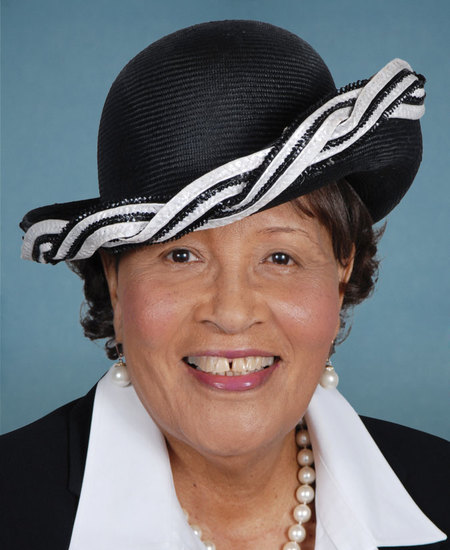
Rep. Alma S. Adams
Sponsored bills
Maddy summaryThe Clean Slate through Rehabilitation Act amends the Higher Education Act to change how defaulted federal student loans impact borrowers' credit histories. Specifically, it revises a provision to require the removal of *any* adverse credit information related to a defaulted loan - not just the default record itself - from a borrower's credit history. This change directly affects federal student loan borrowers who have defaulted and are rehabilitating their loans, as it would clear broader negative credit items that hinder credit rebuilding. The policy shift aims to improve credit outcomes for these borrowers by removing more types of adverse information tied to their loans.
Maddy summaryHR 4591, the Clean Slate through Consolidation Act, requires federal student loan holders to request credit bureaus to remove default marks from borrowers' credit reports when they consolidate a defaulted federal student loan under the Higher Education Act. It directly affects borrowers who obtain a Federal Direct Consolidation Loan that pays off their previously defaulted federal student loans. The key mechanism is a mandatory request to consumer reporting agencies to delete the adverse credit information related to the discharged defaulted loan. This policy change automatically clears the default from credit histories upon successful consolidation, without requiring additional action from the borrower.
Maddy summaryHR 4579, the Fairness for Farm Workers Act, amends the Fair Labor Standards Act to establish phased overtime requirements for agricultural workers. Starting in 2024, most farm employers must pay overtime for hours worked beyond 55 per week (reducing to 50 in 2025, 45 in 2026, and 40 in 2027), with small farms (25 or fewer employees) getting a 3-year delay on the full 40-hour standard. The bill also removes existing exemptions that allowed some agricultural employers to avoid overtime pay for certain workers. This directly affects farm workers in agriculture and their employers, requiring compliance with standard overtime rules previously not applied to this sector.
Maddy summaryHR 4515, the PRIME Act, provides competitive federal grants to qualifying colleges and universities to improve athletic facilities and equipment. It directly affects small-endowment institutions (with endowments under $900 million) that generate less than $20 million annually from athletic programs. Grants of at least $250,000 can be used to build or upgrade stadiums, gyms, fields, or purchase event-related materials like uniforms and equipment, following NCAA/NAIA guidelines. The bill targets schools with limited athletic revenue, aiming to support infrastructure without funding staff salaries or general operations.
Maddy summaryHR 4466 would rename the National School Lunch Program Act from "Richard B. Russell National School Lunch Act" to "Jean E. Fairfax National School Lunch Act" to honor Jean E. Fairfax, a civil rights activist who advocated for equitable access to the program. The bill would update this name in the law and over 40 other federal statutes referencing the current title, but does not alter the program's operations, funding, or eligibility. It directly affects legal references in federal law without changing how the program serves students.
Maddy summaryHRES 561 is a non-binding House resolution opposing state laws that criminalize access to essential health care. It specifically condemns using criminal penalties against people for pregnancy outcomes (such as miscarriages), seeking abortion or contraception, or receiving gender-affirming care, and disapproves of punishing health care providers or supporters for facilitating such care. The resolution affirms that patients deserve access to reproductive and gender-affirming health services without fear of prosecution or discrimination. It emphasizes that criminalizing these health care decisions violates patient rights and ethical provider obligations, without creating new legal requirements.
Maddy summaryThe Protecting Children Act increases penalties for employers who violate child labor laws, with higher civil fines and stronger criminal penalties for violations that endanger children. It creates a National Advisory Committee on Child Labor to provide expert guidance and establishes a fund using collected penalties to support enforcement, research, and education. The bill improves processes for updating safety standards for children, mandates periodic reviews of hazardous occupations, and requires better data collection on child labor and workplace injuries. These changes aim to strengthen protections for children in the workplace through enhanced enforcement, better research, and more robust standards. The bill directly affects employers who hire children in violation of labor laws, children working in hazardous conditions, and government agencies responsible for enforcement.
Maddy summaryHR 4340, the Therapeutic Fraud Prevention Act of 2023, prohibits paid providers from offering conversion therapy - defined as any commercial service attempting to change a person's sexual orientation or gender identity - and bans advertising that claims such therapy is effective or harmless. It directly affects therapists, counselors, or organizations offering paid conversion therapy services, including those advertising such services. Key provisions make it unlawful to provide, advertise, or facilitate paid conversion therapy, with enforcement led by the Federal Trade Commission (FTC) under consumer protection laws and allowing states to pursue civil actions. The bill explicitly excludes supportive care for gender transition or identity exploration from its definition of prohibited therapy.
Maddy summaryThe PRIDE Act of 2023 amends the Internal Revenue Code to replace gender-specific terms like "husband and wife" with gender-neutral language such as "married couple" or "spouses" across numerous tax code sections. This bill affects all legally married couples who file federal tax returns by updating language in over 30 sections of the tax code related to filing status, deductions, credits, and other tax matters. The bill is a language update that makes the tax code more inclusive without changing existing tax treatment for married couples. It does not alter tax rates, benefits, or policies, but ensures all provisions apply equally regardless of gender.