

Maddy summaryThe Safe Schools Improvement Act (HR 6031) requires public elementary and secondary schools to implement comprehensive anti-bullying policies that specifically prohibit harassment based on protected characteristics like race, gender identity, disability, religion, and sexual orientation. It mandates schools to collect and publicly report annual data on bullying incidents while establishing clear grievance procedures for students and parents. The bill also requires states to submit biennial reports on school compliance and supports evidence-based interventions, such as restorative practices, to reduce exclusionary discipline. This legislation directly affects all public K-12 schools and students in the U.S., aiming to create safer learning environments through standardized policy requirements and data transparency.
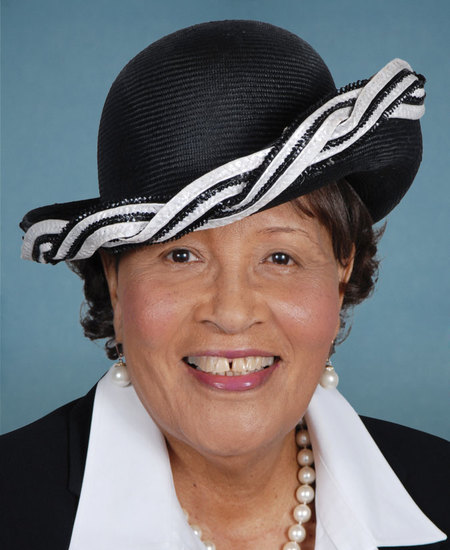
Rep. Alma S. Adams
Sponsored bills
Maddy summaryThis bill removes a previous exclusion that prevented temporary federal employees (including U.S. Postal Service staff and Members of Congress) from counting service after January 1, 1988, toward their retirement benefits. It allows these workers to have their post-1988 temporary service counted toward retirement eligibility if they pay a deposit to the retirement system. The change applies to anyone employed by the federal government on or after the bill's enactment date. The Office of Personnel Management must notify affected employees and create rules to implement this change.
Maddy summaryThe Medical Debt Relief Act of 2023 would prevent credit bureaus from reporting medical debt on credit reports and stop creditors from using medical debt information when making credit decisions. It defines medical debt as any debt related to medical services, products, or devices, and requires the removal of existing medical debt entries from credit reports. Within one year of enactment, the Consumer Financial Protection Bureau must update regulations to prohibit creditors from considering medical debt in loan or credit applications. This directly affects consumers with medical debt (who may see improved credit scores) and creditors (who must adjust their credit evaluation practices).
Maddy summaryThe America's College Promise Act of 2023 would make community college tuition free for eligible students by creating a Federal-State partnership where the federal government covers most of the cost. For the 2024-2025 academic year, the federal government would pay 100% of tuition costs for eligible students at community colleges, decreasing to 80% by 2028-2029. States would provide the remaining share, starting at 0% for 2024-2025 and increasing to 20% by 2028-2029. The bill requires states to implement reforms to improve student outcomes, including transfer pathways between community colleges and four-year institutions, as well as support services for underrepresented students. Tribal colleges and universities would receive different funding rules, with the federal government potentially covering 100% of costs.
Maddy summaryThis bill authorizes the presentation of a Congressional Gold Medal to the United Negro College Fund (UNCF) and its member Historically Black Colleges and Universities (HBCUs) to recognize the UNCF's 80-year service. It directs the U.S. Treasury to strike the medal and sell bronze duplicates to cover costs, with proceeds going to the U.S. Mint. The medal commemorates the UNCF's role in supporting HBCUs and African-American students through scholarships and fundraising, as detailed in the bill's findings. The measure is purely ceremonial and does not create new policy or funding.
Maddy summaryHR 5895 amends the Higher Education Act to allow historically Black colleges and universities (HBCUs) to use existing grant funds for specific arts-related activities. The bill adds new provisions enabling HBCUs to provide financial assistance to arts students, establish arts outreach programs, offer wraparound student services (like mentorship and career advising), maintain Black art collections, and create paid arts internships through partnerships. This directly affects HBCUs by expanding how they can allocate current funding to strengthen their arts programs and support Black artists. The key mechanism is modifying Section 323 of the Higher Education Act to include these new uses, with optional partnerships with the National Endowment for the Arts.
Maddy summaryThe Protecting America from Seasonal and Pandemic Influenza Act of 2023 establishes national goals to improve influenza preparedness and response, including delivering first doses of influenza vaccine within 12 weeks of a pandemic strain's emergence and developing a universal vaccine within 10 years. The bill authorizes $335 million annually for pandemic influenza activities, strengthens vaccine supply chains through public-private partnerships, and requires the development of rapid at-home diagnostic tests to improve access. It specifically focuses on addressing vaccine hesitancy through community partnerships targeting vulnerable populations including racial and ethnic minorities, seniors, and people with chronic conditions. The legislation mandates annual reports on implementation progress and requires incorporating health equity into influenza planning and response efforts. This comprehensive approach aims to build a more resilient system for preventing and responding to both seasonal and pandemic influenza.
Maddy summaryHRES 753 is a non-binding resolution commemorating the fifth anniversary of Jamal Khashoggi's murder in 2018 and calling for accountability from the Saudi government. It urges Saudi Arabia to ensure accountability for those responsible for his killing, release wrongfully detained individuals (including human rights defenders), lift travel bans on dissidents, and respect freedoms of assembly, association, and press. The resolution acknowledges U.S. sanctions under the Global Magnitsky Act targeting 17 Saudi officials linked to Khashoggi's murder. As a symbolic congressional statement, it does not impose new legal obligations but expresses support for accountability and human rights.
Maddy summaryHR 5827, the Tenants’ Right to Organize Act, grants tenants in federally assisted housing the right to form and join tenant organizations to address housing issues without fear of retaliation. It directly affects tenants receiving tenant-based rental assistance (like Section 8 vouchers) and tenants in low-income housing tax credit (LIHTC) properties. Key provisions require public housing agencies and property owners to recognize tenant organizations, allow protected activities (such as leafleting and door-to-door outreach), and prohibit retaliation - while establishing an enforcement protocol for complaints and quarterly reporting to Congress. The bill also mandates annual notifications to tenants about their organizing rights and includes specific protections for LIHTC properties through owner compliance requirements and fines for violations.
Maddy summaryThe CEDS Act requires state and local governments receiving federal economic development funds to include affordable, quality care services - such as child care, early education, disability care, and elder care - in their economic development plans. It directs the Commerce Secretary to issue implementation guidance within one year, explaining how to integrate these care services into existing development strategies. Existing approved plans will only need updates during scheduled reviews, not immediately upon the law's enactment. This change directly affects communities and organizations using federal grants under the Public Works and Economic Development Act of 1965.