

Maddy summaryHR 7639 establishes a 14-member National Advisory Council to address unpaid school meal fees in child nutrition programs. The Council, composed of diverse members including school nutrition directors, parents, FNS officials, and food service workers, will provide recommendations to the Food and Nutrition Service Administrator within three years. Its key focus is ensuring students aren’t shamed for unpaid fees while helping schools maintain financial stability for meal programs. The Council’s report will guide future policy guidance, but the bill itself creates no immediate changes to school meal eligibility or funding. This procedural bill sets up a process for studying the issue, not implementing new rules.
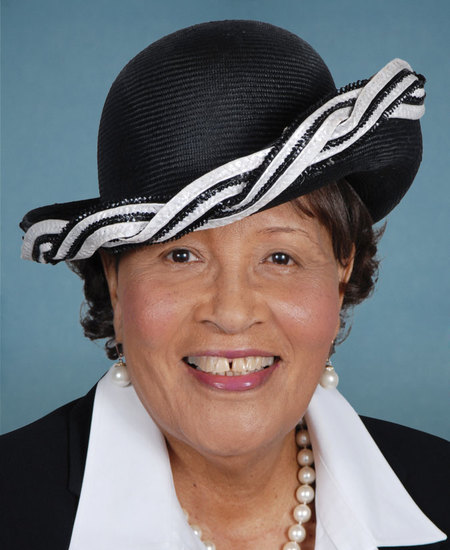
Rep. Alma S. Adams
Sponsored bills
Maddy summaryThis bill requires states to immediately stop Medicaid recovery claims against beneficiaries' estates. Specifically, it mandates that states withdraw all existing liens within 90 days of enactment and notify affected individuals or their estates about the withdrawal. The law also prohibits states from initiating, maintaining, or collecting any future Medicaid recovery claims for benefits correctly paid. It directly affects Medicaid recipients and their heirs who were previously subject to state recovery efforts. The key mechanism is the 90-day deadline for states to remove existing liens and cease all new recovery actions.
Maddy summaryThis resolution (HRES 1050) designates March 2024 as National Colorectal Cancer Awareness Month. It symbolically supports existing public awareness efforts around colorectal cancer prevention, screening, and early detection, without creating new requirements or funding. The resolution encourages the public to observe the month with educational activities, aligning with ongoing annual campaigns. It directly affects public awareness efforts but has no binding policy impact.
Maddy summaryHRES 1048 is a non-binding House resolution calling on the Department of Homeland Security (DHS) to establish a humanitarian parole program for Cameroonians fleeing violence in their home country. It specifically targets Cameroonians who arrived in the U.S. after October 5, 2023 - after the expiration of temporary protected status (TPS) that covered earlier arrivals - and who face risks of deportation to Cameroon amid ongoing conflicts, human rights abuses, and discriminatory treatment in U.S. immigration enforcement. The resolution cites over 6,000 deaths from violence in Cameroon since 2016, 1.7 million needing humanitarian aid, and DHS’s existing authority under Section 212(d)(5)(A) of the Immigration and Nationality Act to create such a program. It emphasizes that no African nation has ever received a humanitarian parole program under this mechanism, highlighting systemic gaps in U.S. immigration policy.
Maddy summaryHR 6148, the Advancing Tribal Parity on Public Land Act, requires federal agencies to consult with Native American tribes before selling public land that contains culturally significant sites. The bill creates a "tribal right of first refusal," allowing tribes with cultural or historical connections to the land to purchase it at fair market value within 60 days of notification. If multiple tribes bid, the sale is deferred for up to 180 days to allow for negotiation, and land purchased by tribes must be held in trust by the Department of the Interior. The bill defines "cultural sites" to include sacred sites, historic properties, and traditional gathering areas, and amends federal land management laws to require tribal consultation in land disposal decisions. This legislation directly affects Native American tribes with connections to specific public lands and federal agencies managing those lands.
Maddy summaryThe Tribal Cultural Areas Protection Act would establish a system to permanently protect Tribal cultural sites on public land by designating them as Tribal cultural areas, directly affecting Indian Tribes, federal land management agencies (Interior and Agriculture), and the public. Federal agencies must manage these areas in consultation with Tribal commissions, limiting new development that would disturb the land while preserving existing traditional practices like religious ceremonies and gathering of medicinal plants. The law requires management plans that incorporate Native knowledge and traditional practices, with special protections for sacred sites including restrictions on public disclosure of their locations. This bill ensures existing treaty rights are preserved while preventing commercial development that would harm cultural resources, without affecting existing water rights or federal environmental laws.
Maddy summaryThis resolution honors the Greensboro Four (Joseph McNeil, Jibreel Khazan, Franklin McCain, and David Richmond) for their 1960 sit-in at a Greensboro, North Carolina Woolworth's store, which sparked the civil rights movement. It formally recognizes their role in challenging racial segregation and inspiring nationwide protests during Black History Month. The resolution encourages schools to include the Greensboro Four's story in their educational curriculum to highlight their contributions to civil rights. As a commemorative resolution, it has no binding effect but aims to promote historical awareness.
Maddy summaryHRES 1040 is a ceremonial House resolution recognizing February as Black History Month. It formally acknowledges the achievements of Black Americans throughout U.S. history and encourages continued celebration of this observance. The resolution highlights the cultural and artistic contributions of Black Americans, including historical figures and movements like the Harlem Renaissance and hip-hop. As a non-binding resolution, it does not create new programs or affect any specific group, but serves to affirm the importance of commemorating Black history.
Maddy summaryHRES 1032 is a symbolic resolution designating the week of February 26-March 1, 2024, as "Public Schools Week" in the U.S. House of Representatives. It expresses congressional support for public education, highlighting its role in preparing students and communities. The resolution has no legal effect or funding provisions - it solely serves as a formal expression of backing for public schools. It directly affects no individuals or entities but aims to raise awareness about public education. This is a non-binding gesture, not a policy change.
Maddy summaryThis symbolic resolution (HRES 1026) recognizes Black History Month and honors the 94 African-American recipients of the Congressional Medal of Honor for their military bravery, heroism, and valor. It does not create new laws or policies but formally acknowledges their contributions, referencing historical context like Sergeant William Harvey Carney’s 1863 actions and the 1993 study revealing racial discrimination in Medal of Honor awards during WWII. The resolution specifically calls for the House to recognize Black History Month and honor these 94 service members. It is a non-binding expression of support with no concrete policy changes.