

Maddy summaryHRES 1105 designates March 21, 2024, as "National Women in Agriculture Day" to recognize the contributions of women in the agricultural sector. It specifically highlights women as producers, educators, mentors, and leaders who drive economic impact (accounting for 36% of U.S. agricultural sales in 2022) and support workforce development. The resolution encourages all citizens to acknowledge these women’s roles in food production, agricultural innovation, and mentoring through programs like 4-H and FFA. As a symbolic resolution, it does not create new laws or funding but formally celebrates their ongoing contributions to U.S. agriculture.
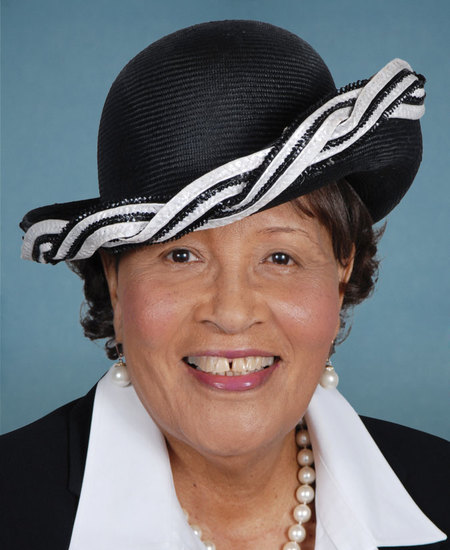
Rep. Alma S. Adams
Sponsored bills
Maddy summaryThis symbolic resolution (HRES 1083) declares March 14 as "Black Midwives Day" to honor the historical and ongoing contributions of Black midwives to maternal and infant health. It does not create new laws or allocate funding but urges federal, state, and local governments to address racial disparities in maternal care through initiatives like diversifying the perinatal workforce and expanding access to culturally congruent care. The resolution highlights systemic barriers Black birthing people face, including higher maternal mortality rates and lack of culturally competent providers, and calls for policy changes to support Black midwifery. It emphasizes recognizing the role of midwives in reducing health inequities without prescribing specific legislative action.
Maddy summaryThis bill establishes a federal committee composed of agency heads from Education, Justice, Consumer Financial Protection, and other departments to coordinate oversight of for-profit colleges. The committee will share data across agencies, create a centralized complaint system for students, and publish an annual report with detailed data on for-profit institutions' finances, student outcomes, and complaints. It also creates a "For-Profit College Warning List" that identifies institutions with serious issues like fraud or misrepresentation, providing plain-language summaries for parents and students. The bill directly affects for-profit colleges, their students, and the federal agencies that oversee higher education programs.
Maddy summaryHRES 1101 is a non-binding resolution expressing the House of Representatives' support for collaborating with the Congressional Black Caucus to develop a "Black Wealth Agenda." It commits the House to outlining legislative priorities focused on closing the racial wealth gap through key areas like expanding Black entrepreneurship, reforming housing policies, building workforce development programs, and updating the federal minimum wage. The resolution emphasizes addressing systemic barriers in homeownership, education access, employment discrimination, and tax policy to advance economic equity for Black communities. It does not create new laws but directs the House to coordinate with the CBC on policy solutions targeting wealth-building opportunities.
Maddy summaryThis is a commemorative resolution (HRES 1100) passed by the U.S. House of Representatives to mark Duke University's 100th anniversary. It formally celebrates Duke's founding in 1924, recognizes its historical milestones (including medical advancements, desegregation, and athletic achievements), and encourages North Carolina residents to participate in anniversary events. The resolution directs the House Clerk to provide five copies to Duke University President Vincent E. Price. As a symbolic gesture with no policy impact, it directly affects Duke University and its community through recognition, not legislative action.
Maddy summaryHR 7770, the Rosie the Riveter Commemorative Coin Act, authorizes the U.S. Mint to produce and sell three commemorative coins honoring women who worked on the U.S. home front during World War II. It specifies $5 gold coins (max 50,000), $1 silver coins (max 400,000), and half-dollar coins (max 750,000), all to be issued between January 1, 2025, and December 31, 2025. Each coin sale includes a surcharge ($35 for gold, $10 for silver, $5 for half-dollar), with all surcharge funds directed to the Rosie the Riveter Trust for maintaining the Rosie the Riveter WWII Home Front National Historical Park and educational programs. The coins will feature designs reflecting the legacy of diverse women workers and must meet specific weight, diameter, and composition standards.
Maddy summaryThe PTO Act establishes a standard for paid annual leave, requiring most employers to provide employees with 1 hour of paid leave for every 25 hours worked, up to a maximum of 80 hours per 12-month period. It directly affects private sector employees and certain government workers, including those at the Government Accountability Office, Library of Congress, and federal agencies covered under the Congressional Accountability Act. The bill prohibits employers from interfering with employees' use of leave for any reason, requires clear notice of leave policies, and protects employees from retaliation for taking leave. It includes enforcement mechanisms through the Department of Labor, allowing employees to file complaints or lawsuits for violations of their leave rights. The Act takes effect 180 days after enactment, with specific provisions for collective bargaining agreements.
Maddy summaryHR 6610, the Passport System Reform and Backlog Prevention Act, aims to reduce delays in U.S. passport processing for citizens applying for routine new or renewal passports. It mandates a 30-day processing standard from document submission to mailing, requires technology upgrades like digital tracking dashboards and mobile apps for applicant updates, and authorizes hiring up to 100 temporary staff annually for passport offices. The bill also sets cybersecurity standards, maintains affordable fees, and requires regular progress reports to Congress on implementation. These changes directly affect U.S. citizens seeking passports, particularly those in remote areas with limited access to processing centers.
Maddy summaryThis concurrent resolution (HCONRES 97) recognizes the gender wage gap, noting that women working full-time earn 84 cents for every dollar earned by men. It highlights racial disparities (e.g., Latinas earn 57 cents, Black women 69 cents) and the economic impact of the gap, including $965 billion in annual lost wages for women. As a symbolic resolution, it does not create new laws or policies but formally acknowledges the issue and reaffirms Congress’s commitment to addressing wage inequality.
Maddy summaryHR 7629, the Protect Our Letter Carriers Act of 2024, allocates $1.4 billion annually (2025-2029) to the U.S. Postal Service for high-security collection boxes and replacing physical universal mailbox keys with electronic versions, directly affecting USPS operations and letter carriers. It requires the Attorney General to appoint specialized prosecutors in each district to coordinate investigations and prosecutions of postal-related crimes, such as assaults on carriers or mail theft. The bill also mandates the U.S. Sentencing Commission to adjust guidelines so that assaults or robberies against postal employees are treated with the same severity as assaults against law enforcement officers. These provisions aim to enhance safety through infrastructure upgrades, improved prosecution, and stricter sentencing for crimes targeting postal workers.