

Maddy summaryHCONRES 28 is a symbolic resolution expressing Congress's view that tax-exempt fraternal benefit societies - organizations providing life, health, and accident benefits to members - have long delivered critical community support. It states these societies, with about 7 million members nationwide, generate significant annual value through charitable work and volunteer activities (estimated at over $3.8 billion yearly). The resolution affirms that their tax-exempt status under Section 501(c)(8) of the tax code is essential for sustaining their volunteer-driven model and relieving pressure on government safety programs. As a non-binding expression of congressional sentiment, it does not alter existing laws or create new obligations.
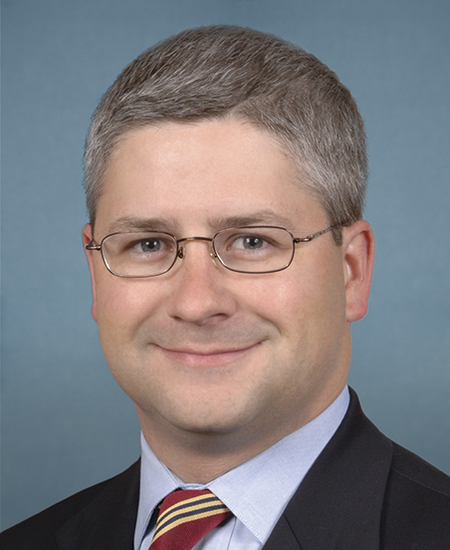
Rep. Patrick T. McHenry
Sponsored bills
Maddy summaryHR 1533 requires federal banking regulators (like the Fed, OCC, and FDIC) to study challenges faced by new banks - especially minority-owned depository institutions and community development financial institutions - seeking charters. Within 18 months, they must submit a public report and strategic plan to Congress, outlining steps to help these institutions successfully apply for charters while expanding banking access in underserved areas. The plan must address safety, consumer protection, and creating a "level playing field" for new institutions. It directly affects proposed minority depository institutions and communities lacking branch banking access, with no funding or immediate policy changes - only a regulatory study and planning process.
Maddy summaryHR 1414, the Keep Innovation in America Act, clarifies the definition of "broker" under tax law to include entities facilitating digital asset sales at customer direction, directly affecting digital asset exchanges and platforms. It defines "digital asset" as value recorded on a secure ledger and requires brokers to report certain transactions involving digital assets starting in 2025. The bill also mandates a Treasury study on treating digital assets as "cash" under specific tax rules, analyzing privacy, innovation, and competitiveness impacts. These changes aim to align tax reporting with digital asset technology while avoiding burdens on non-broker developers like miners or validators.
Maddy summaryThis bill requires the President to assess the inflation impact of major executive orders before issuing them. For any executive order projected to cost at least $1 billion annually in budget effects (excluding emergency relief, national security actions, or treaty implementation), the President must prepare a statement estimating its effect on inflation - whether it has no impact, quantifiable impact, or significant but undeterminable impact. Federal agencies must provide necessary data to support this assessment, and the President must submit an annual report to Congress detailing all such assessments. The bill does not change inflation policy but mandates a new procedural review for major executive actions.
Maddy summaryHR 1200, the National Right-to-Work Act, prohibits requiring workers to join a union or pay dues as a condition of employment in both private-sector workplaces (covered by the National Labor Relations Act) and railroad industries (covered by the Railway Labor Act). The bill amends key sections of these laws to eliminate provisions that allowed union security agreements, meaning workers in unionized settings would no longer be forced to pay dues to retain their jobs. This directly affects employees in unionized workplaces across the U.S., particularly those in industries with existing union contracts that included mandatory dues. The law changes the legal framework to ensure union membership and dues payment remain voluntary for all workers.
Maddy summaryThis bill designates seven specific creeks in North Carolina with new names honoring individuals (Noah Styron Creek, Hunter Parks Creek, etc.), including their exact geographic coordinates. It updates all federal references in laws, maps, and documents to use these new names. The bill has no policy impact beyond renaming geographic features and affects no groups or programs. As a purely procedural naming resolution, it does not alter laws or regulations.
Maddy summaryHRES 138 allocates $20.37 million in funding for the Committee on Financial Services during the 118th Congress (2023-2025). The resolution specifies that $10.185 million is available for expenses incurred between January 2023 and January 2024, with the remaining $10.185 million covering expenses from January 2024 to January 2025. This funding covers all committee operations, including staff salaries and administrative costs, as approved by the committee chair and House Administration. The bill is procedural, solely addressing budgetary allocations for the committee’s expenses.
Maddy summaryThis resolution (HRES 139) celebrates the 75th anniversary of NASCAR, marking its founding on February 21, 1948. It commends NASCAR's contributions to the U.S. economy and society, highlighting its role as a global motorsports leader that hosts over 1,200 races annually, supports community initiatives (like donating $43 million to children via the NASCAR Foundation), and drives tourism and entertainment. As a ceremonial resolution, it does not create new laws or affect any individuals or entities. The House formally recognizes NASCAR's historical significance and ongoing impact through this symbolic gesture.
Second Chance at Life Act of 2023 This bill requires abortion providers to disclose information about the possibility of reversing a medication abortion. This is a procedure that uses a medication regimen to terminate a pregnancy, typically with a two-drug protocol. Providers must inform patients that it may be possible to reverse the effects of a medication abortion after taking the first drug. They must also let patients know that more information and assistance is available on the Department of Health and Human Services (HHS) website. At least 24 hours before the procedure, the provider must share this information with the patient in person or by telephone. The provider must also include the information in written discharge instructions after the first drug is dispensed. The bill sets out an exception to these notification requirements when an abortion is necessary to resolve a physical injury or condition that threatens the life of the woman. The provider must document the circumstances giving rise to the exception in the patient's medical file. Furthermore, providers must post signs with this information in their offices or facilities, and HHS must maintain information about reversing medication abortions on its website.
Maddy summaryHCONRES 13 is a concurrent resolution expressing Congress's support for maintaining the current policy that prohibits imposing new fees on local radio stations for playing music. It states that Congress should not impose any performance fee, tax, royalty, or charge on local radio stations for broadcasting sound recordings over the air, or on businesses like bars and restaurants that play music publicly. The resolution argues that such fees would harm local radio stations - critical sources for emergency information and community programming - and jeopardize the economic model that has supported both radio and the music industry for decades. This resolution does not create new law but formally opposes potential legislative changes to the existing fee structure.