

Maddy summaryHR 2609, the SEED Act of 2023, creates a simplified exemption for small businesses to raise up to $250,000 in investment funds annually without full Securities and Exchange Commission registration. This directly affects small businesses seeking modest capital, allowing them to offer securities (like shares or debt) through a streamlined process. Key safeguards include disqualifying businesses with recent fraud convictions, regulatory bans in finance or banking, or final orders related to deceptive conduct within the past decade. The bill also permits states to maintain regulatory authority over these small offerings while aligning with federal standards.
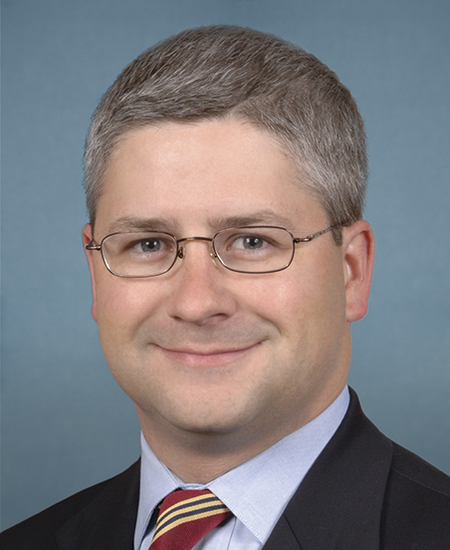
Rep. Patrick T. McHenry
Sponsored bills
Maddy summaryThis bill extends access to equity compensation (like stock options) for gig workers - individuals providing services through platforms - who are currently classified as independent contractors, not employees. It modifies a Securities and Exchange Commission (SEC) rule to apply equally to these workers and traditional employees, requiring the SEC to adjust the compensation threshold annually for inflation. The bill also preempts state laws that assume gig workers are employees, overriding such rules regarding wage or benefit classifications. A study by the Government Accountability Office (GAO) will assess the bill’s effects within three years of enactment. The policy directly affects gig workers, platform companies, and state labor regulations.
Maddy summaryHR 2607, the Improving Crowdfunding Opportunities Act, simplifies regulations for crowdfunding platforms and increases funding limits for small businesses. It exempts crowdfunding platforms from state securities regulation and removes certain Bank Secrecy Act requirements (Section 2(c)), clarifies platforms aren't liable for misstatements unless knowingly deceptive (Section 2(b)), and raises the annual investment cap for non-accredited investors from $1 million to $10 million (Section 2(g)). The bill also adjusts target funding amounts for certain offerings and clarifies that platforms providing impersonal investment advice aren't considered issuers (Section 2(d)). This directly affects crowdfunding platforms, small businesses seeking capital, and individual investors.
Maddy summaryHR 2606 modifies auditor independence rules for companies transitioning from private to public status. It allows auditors of private companies preparing to go public to be considered independent during their private phase if they meet standard professional guidelines (like AICPA rules), rather than the stricter public company standards. This applies specifically to audits conducted before the company filed its registration statement to become public. The bill directly affects private companies planning to go public and their auditors, easing compliance for past audits.
Maddy summaryHR 2605 would change how companies count shareholders for securities registration under the Securities Exchange Act of 1934. It excludes qualified institutional buyers (large investment firms) and institutional accredited investors from the count used to determine if a company must register with the SEC. This means companies with significant holdings from these institutional investors would not need to register solely because of them. The bill directly affects public companies that rely on institutional investors, potentially reducing their regulatory burden. It modifies Section 12(g)(1) of the Securities Exchange Act to implement this exclusion.
Eliminating Paperwork for Startups Act This bill requires the Internal Revenue Service to allow the election relating to property transferred in connection with services (i.e., to include in gross income the amount of such property in the year of transfer) to be made in electronic form.
Maddy summaryHR 2630, the Safe Step Act, requires group health plans and health insurance issuers to establish a clear, transparent process for patients or their doctors to request exceptions to medication step therapy protocols. These protocols typically force patients to try cheaper drugs first before covering more expensive alternatives. The bill mandates that plans must approve exceptions when prior treatments failed, delay would cause serious harm, a treatment is unsafe, or a patient is stable on a previously approved drug, with strict 72-hour (or 24-hour in emergencies) decision timelines. It also requires plans to publish the exception process online and limit documentation requests to only necessary medical information. This law directly affects health insurers, employers offering health plans, and patients using step therapy for prescription drugs.
This bill designates U.S. Route 74 from Columbus, North Carolina, to Kings Mountain, North Carolina, as (1) a high priority corridor on the National Highway System, and (2) a future part of the Interstate System.
Protecting Life in Foreign Assistance Act This bill prohibits using federal funds for certain abortion-related purposes outside the United States. The bill prohibits federal funding for certain foreign and domestic organizations that are engaged in activities such as performing abortions, furnishing items intended to procure abortions, or providing financial support to other organizations that conduct such activities. The prohibition does not apply to abortions resulting from rape or incest, or when the life of the mother would be endangered if the fetus were carried to term.
Purple Heart Freedom to Work Act This bill increases the monthly income limit that is used to determine whether certain Purple Heart recipients are eligible for Social Security Disability Insurance (SSDI) benefits. Specifically, when making such determinations with respect to Purple Heart recipients who are entitled to SSDI benefits based on combat-related injuries, the Social Security Administration must use the limit that applies to individuals who are blind rather than the lower limit that applies to other SSDI recipients. In addition, the bill phases out SSDI benefits for these Purple Heart recipients, with benefits reduced by $1 for every $4 of earnings in excess of the limit.