

Wage Equity Act of 2021 This bill addresses workplace wage discrimination based on sex. Specifically, it limits the acceptable reasons for wage disparities based on sex to legitimate business-related factors unrelated to sex. Italso protects from liability for such discrimination those employers who conduct a job and wage analysis audit to identify wage disparities and take reasonable steps to remedy any such disparities. Further, the bill prohibits employers from relying on, or requesting, the wage history of a prospective employee for hiring and wage determination purposes unless it is voluntarily provided by the prospective employee. Employers generally may not prohibit employees from inquiring about, or discussing, wage information concerning another employee or from requesting information from an employer about wage differentials. Finally, the bill permits the Department of Labor to establish a grant program for negotiation skills education for women and girls. It also requires the Government Accountability Office to study and report on the causes and effects of sex-based wage disparities.
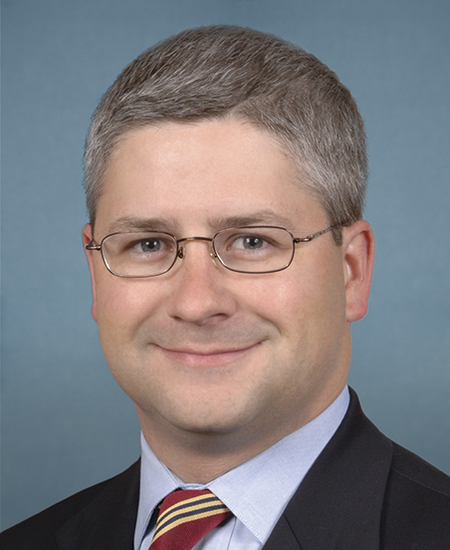
Rep. Patrick T. McHenry
Sponsored bills
Born-Alive Abortion Survivors Protection Act This bill establishes requirements for the degree of care a health care practitioner must provide in the case of a child born alive following an abortion or attempted abortion. Specifically, a health care practitioner who is present must (1) exercise the same degree of care as would reasonably be provided to any other child born alive at the same gestational age, and (2) ensure the child is immediately admitted to a hospital. Additionally, a health care practitioner or other employee who has knowledge of a failure to comply with the degree-of-care requirements must immediately report such failure to law enforcement. A health care practitioner who fails to provide the required degree of care, or a health care practitioner or other employee who fails to report such failure, is subject to criminal penalties—a fine, up to five years in prison, or both. An individual who intentionally kills or attempts to kill a child born alive is subject to prosecution for murder. The bill bars the criminal prosecution of a mother of a child born alive under this bill and allows her to bring a civil action against a health care practitioner or other employee for violations.
This resolution expresses the sense of the House of Representatives that the Congress should not impose a financial transaction tax on individuals or market intermediaries in connection with trades executed on the National Market System or alternative trading systems.
Global War on Terrorism Memorial Location Act This bill authorizes the establishment of a National Global War on Terrorism Memorial in the area of the National Mall.
Protecting Consumer Access to Credit Act This bill revises requirements related to credit reporting agencies and the reporting of adverse credit information. Credit reporting agencies are prohibited from using social security numbers in credit reports and as a method of verifying a consumer's identity. The Consumer Financial Protection Bureau must supervise and examine the cybersecurity of certain credit reporting agencies. The bill prohibits a credit reporting agency from reporting paid, medically-necessary debt if the debt was paid over a year prior. A credit reporting agency is also prohibited from reporting certain adverse credit information related to financial abuse, unfair or fraudulent mortgage lending, or fraudulent private student lending. The bill extends the time credit reporting agencies have to place a credit security freeze when receiving such a request by phone or through electronic means from one to three business days. It also extends the time agencies have to remove a freeze from one hour to three days.
International Nuclear Energy Financing Act of 2021 This bill requires the U.S. Executive Director at the International Bank for Reconstruction and Development (and the U.S. Executive Director at any other international financial institution deemed appropriate) to support financial assistance for the generation and distribution of nuclear energy, consistent with U.S. national security interests.
This joint resolution proposes an amendment to the Constitution to require that the Supreme Court consist of nine Justices.
Concealed Carry Reciprocity Act This bill establishes a federal statutory framework to regulate the carry or possession of concealed firearms across state lines. Specifically, an individual who is eligible to carry a concealed firearm in one state may carry or possess a concealed handgun (other than a machine gun or destructive device) in another state that allows its residents to carry concealed firearms. It sets forth requirements for the lawful concealed carry across state lines. The bill preempts most state and local laws related to concealed carry and establishes a private right of action for a person adversely affected by interference with a concealed-carry right established by this bill.
Hospitality and Commerce Job Recovery Act of 2021 This bill extends existing and establishes new tax credits that assist the hospitality and restaurant industry. Specifically, it allows a conventionand trade show restart tax credit; extends the employee retention tax credit through 2021; suspends for taxable years 2021 through 2022, the limitation on entertainment expenses related to a trade or business, allows a restaurant and dining restart credit for businesses closed or forced to reduce services due to COVID-19 (i.e., coronavirus disease 2019); allows a 50% tax credit for travel expenditures; and allows a tax credit for unmerchantable inventory for the period between December 31, 2019, and before April 1, 2021.
National Right-to-Work Act This bill repeals those provisions of the National Labor Relations Act and the Railway Labor Act that permit employers to make an agreement with a labor union to require employees to join such union as a condition of employment. Currently, at least 27 states have enacted laws prohibiting employers from compelling employees to become members of a union as a condition of employment.