

Protecting Seniors Through Immunization Act of 2021 This bill specifies that certain deductible, coinsurance, initial coverage limit, and cost-sharing requirements that apply under the Medicare prescription drug benefit shall not apply with respect to vaccines that are recommended by the Advisory Committee on Immunization Practices of the Centers for Disease Control and Prevention. The Centers for Medicare & Medicaid Services must provide to Medicare beneficiaries specified information regarding (1) coverage of vaccines for seniors, and (2) access to recommended vaccines without cost-sharing.
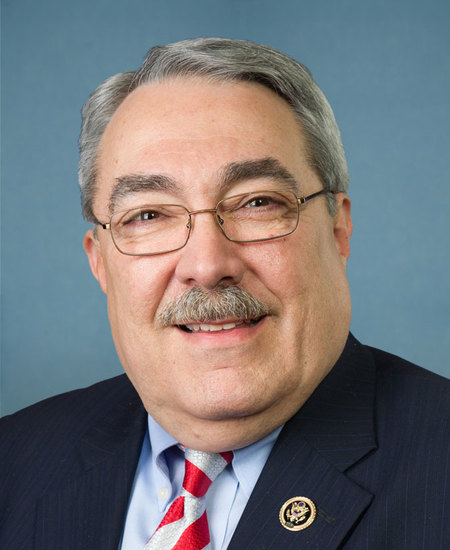
Rep. G. K. Butterfield
Sponsored bills
Data to Save Moms Act This bill expands data collection and research on maternal morbidity and mortality among minority populations. Specifically, the bill adds requirements to a program within the Centers for Disease Control and Prevention (CDC) that supports maternal mortality review committees. To the extent practicable, the committees must use the most up-to-date indicators of severe maternal morbidity; review deaths caused by suicide, overdose, or other behavioral health conditions attributed to or aggravated by pregnancy or childbirth; and consult with representatives of communities about nonclinical factors that may contribute to adverse maternal outcomes. The CDC may also award grants to committees to increase their engagement with local communities, such as by bringing on community representatives as committee members. Additionally, the Centers for Medicare & Medicaid Services and the Agency for Healthcare Research and Quality must consult with diverse stakeholders to review maternal health data collection processes and quality measures and make recommendations to improve them. The Indian Health Service and the Department of Health and Human Services must also arrange for studies on adverse maternal health outcomes among tribal and minority populations, respectively.
Access to Assistive Technology and Devices for Americans Study Act or the Triple A Study Act This bill directs the Government Accountability Office (GAO) to study issues related to health insurance and other coverage for assistive technologies, such as prosthetic devices and custom orthoses, for those who experience amputations or live with a limb difference. In conducting this study, the GAO must include comparisons of claims and other data from Medicare, the Department of Veterans Affairs, and commercial health insurers.
This resolution expresses support for the designation of Journeyman Lineworkers Recognition Day. (A journeyman lineworker is a person who builds and maintains electrical power systems.)
Preserving Rules Ordered for The Entities Covered Through 340B Act of 2021 or the PROTECT 340B Act of 2021 This bill prohibits pharmacy benefit managers (PBMs) and health insurance plans from discriminating against health providers participating in the 340B drug pricing program, including pharmacies contracted with such providers to dispense 340B drugs. The 340B program allows certain providers to receive covered outpatient drugs at reduced prices from manufacturers. Specifically, PBMs and insurance plans may not reimburse 340B participants at a lower rate than other entities not participating in the program; impose differing terms (such as fees, charge-backs, or audits) on 340B participants; interfere with an individual's choice to receive drugs from a 340B participant; require 340B participants to identify which drugs fall within the program; or refuse to contract with a 340B participant on the basis that they utilize the program. Violations of this bill are subject to a civil penalty of not more than $5,000 per violation per day. These prohibitions also apply to prescription drug (Part D) sponsors under Medicare. The bill also provides for a process to prevent duplicate 340B drug discounts to states under Medicaid.
Tribal Family Fairness Act This bill revises two programs to provide tribes with additional resources for child and family services. First, the bill revises the MaryLee Allen Promoting Safe and Stable Families program by establishing a minimum grant award for tribes, increasing funds reserved for state court improvement grants, increasing the set-aside for tribes or tribal consortia, exempting certain plans from reporting requirements, allowing funds to be used for tribal customary adoptions, authorizing in-kind contributions to meet tribal matching requirements, and allowing tribal organizations to use the federal negotiated indirect cost rate in lieu of the administrative costs cap. In addition, the bill revises the Stephanie Tubbs Jones Child Welfare Services program by modifying reporting requirements, authorizing in-kind contributions to meet tribal matching requirements, and allowing tribal organizations to use the federal negotiated indirect cost rate in lieu of the administrative costs cap.
Medicare Dental, Vision, and Hearing Benefit Act of 2021 This bill provides for Medicare coverage of dental, vision, and hearing care. Coverage includes (1) routine dental cleanings and exams, basic and major dental services, emergency dental care, and dentures; (2) routine eye exams, eyeglasses, and contact lenses; and (3) routine hearing exams, hearing aids, and exams for hearing aids. With respect to such care, the bill establishes special payment rules, limitations, and coinsurance requirements.
Taskforce Recommending Improvements for Unaddressed Mental Perinatal & Postpartum Health for New Moms Act of 2021 or the TRIUMPH for New Moms Act of 2021 This bill temporarily establishes within the Department of Health and Human Services the Task Force on Maternal Mental Health. The task force must develop a national strategy for maternal mental health and report on best practices, policies, and programs to prevent, screen for, diagnose, treat, and reduce disparities in maternal mental health conditions. The report must identify opportunities for state- and local-level partnerships to address maternal mental health, and the task force must share those opportunities with state governors.
Rebuilding Communities After Disasters Act This bill requires the Small Business Administration (SBA) to increase the loan limits for the disaster loan program and to communicate certain information about the program following disasters. Specifically, the bill raises from $40,000 to $75,000 the loan amount for repair or replacement of household and personal effects and from $200,000 to $400,000 the loan amount for repair or replacement of a primary residence. Further, the bill requires the SBA to communicate through radio, television, print, and web-based outlets all relevant information needed by disaster loan applicants if a disaster is declared or the SBA declares eligibility for additional disaster assistance. (Currently, the SBA is only required to endeavor to communicate such information.) The SBA must submit a report on the disaster loan program that includes information such as the number and dollar value of program loans and the average estimated dollar value of damage sustained by borrowers.
Improving Medicaid Programs' Response to Overdose Victims and Enhancing Addiction Care Act or the IMPROVE Addiction Care Act This bill establishes additional requirements for state Medicaid drug-use review programs with respect to individuals who experience opioid-related overdoses. Specifically, programs must include protocols that (1) connect individuals who have experienced an opioid-related overdose within the last five years to appropriate treatment; (2) notify providers who prescribe opioids about subsequent fatal overdoses; (3) ensure providers are notified about an individual's history of opioid-use disorder, overdoses, or poisonings; and (4) educate providers about proper prescribing practices for these individuals.