Medicaid Saves Lives Act This bill requires and provides funds for the Department of Health and Human Services to establish a program that provides health benefits to the Medicaid expansion population in states that have not expanded Medicaid. Specifically, the program must provide coverage for individuals who are newly eligible for Medicaid under the Patient Protection and Affordable Care Act (i.e., the Medicaid expansion population) without premiums and in accordance with Medicaid cost-sharing and other requirements. The bill also extends and increases the temporarily enhanced Federal Medical Assistance Percentage (i.e., federal matching rate) for states that elect to participate in Medicaid expansion if they have not already done so.
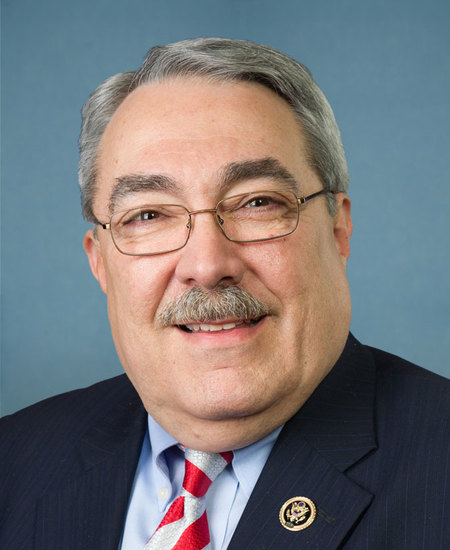
Rep. G. K. Butterfield
Sponsored bills
PFAS Action Act of 2021 This bill establishes requirements and incentives to limit the use of perfluoroalkyl and polyfluoroalkyl substances, commonly referred to as PFAS, and remediate PFAS in the environment. PFAS are man-made and may have adverse human health effects. A variety of products contain PFAS, such as nonstick cookware or weatherproof clothing. The bill directs the Environmental Protection Agency (EPA) to designate the PFAS perfluorooctanoic acid (PFOA) and perfluorooctanesulfonic acid (PFOS) as a hazardous substances under the Comprehensive Environmental Response, Compensation, and Liability Act of 1980, thereby requiring remediation of releases of those PFAS into the environment. Within five years, the EPA must determine whether the remaining PFAS should be designated as hazardous substances. The EPA must publish human health water quality criteria under the Clean Water Act for each measurable PFAS and class of such substances and establish standards to limit discharges of PFAS from industrial sources into waters of the United States. In addition, the EPA must issue a national primary drinking water regulation for PFAS that, at a minimum, includes standards for PFOA and PFOS. Among other requirements, the EPA must also issue a final rule adding PFOA and PFOS to the list of hazardous air pollutants, test all PFAS for toxicity to human health, and regulate the disposal of materials containing PFAS. The EPA must also require PFAS manufacturers to submit analytical reference standards for PFAS. The EPA and states may use those standards for (1) the development of information, protocols, and methodologies, and (2) activities relating to the implementation of enforcement of requirements. Finally, the bill provides incentives to address PFAS, such as grants to help community water systems treat water contaminated by PFAS and grants to schools for testing and filtrating PFAS from drinking water.

Care That's Fair Act This bill authorizes and provides funds for a grant program to analyze racial and ethnic disparities or other factors that may affect health outcomes for Medicaid enrollees. Specifically, the Centers for Medicare & Medicaid Services may award grants to states to analyze (1) variations in health care outcomes and utilization that are related to race and ethnicity for clinically similar enrollees, or (2) clinical and social factors that contribute to poor infant and maternal health outcomes for enrollees.
Supporting Medicaid in the U.S. Territories Act of 2021 This bill extends, increases, and otherwise modifies Medicaid funding for U.S. territories. Specifically, the bill extends (1) the temporarily increased Federal Medical Assistance Percentage (i.e., federal matching rate), and (2) a higher cap on Medicaid funding. Such provisions apply to Puerto Rico through FY2026 and to other territories through FY2029. The bill also requires Puerto Rico to implement an asset verification program and to report on its ability to comply with certain reporting requirements, procurement standards, and other Medicaid program integrity measures.
Consumer Protection and Recovery Act This bill authorizes the Federal Trade Commission (FTC) to seek monetary relief in federal court from businesses that engage in unlawful commercial practices such as false advertising, consumer fraud, and anticompetitive conduct. Specifically, the FTC may seek restitution in these cases for losses, rescission or reformation of contracts, refund of money, return of property, or disgorgement of unjust enrichment. On April 22, 2021, the Supreme Court held in AMG Capital Management, LLC v. Federal Trade Commission that the Federal Trade Commission Act does not authorize the FTC to seek, or a court to award, such relief.
Strengthening the Vaccines for Children Program Act of 2021 This bill modifies vaccination programs and coverage for children under Medicaid and the Children's Health Insurance Program (CHIP). Specifically, the bill expands and otherwise modifies the Vaccines for Children Program, which provides free vaccinations to individuals 18 years of age or younger who are uninsured or underinsured (i.e., with limited or no insurance for vaccines), are eligible for Medicaid, or are American Indians or Alaskan Natives. The bill expands the program to include children enrolled in CHIP and temporarily provides for additional payments to incentivize provider participation. The Government Accountability Office must report on the related effects of the bill's changes. The bill also expands coverage under Medicaid and CHIP to include vaccine counseling and educational services for children and temporarily requires payments to be made at a rate that is no less than the rate under Medicare for equivalent services. It also temporarily increases the Federal Medical Assistance Percentage (i.e., federal matching rate) for states that conduct culturally appropriate outreach regarding the benefits of vaccinations for children.
This resolution expresses support for the designation of Black Maternal Mental Health Awareness Week.
This resolution reaffirms the House of Representatives' commitment to media diversity and expresses its pledge to eliminate barriers to such diversity.
Helping Ensure Access to Local TeleHealth Act of 2021 or the HEALTH Act of 2021 This bill modifies requirements relating to Medicare coverage of telehealth services, including services that are furnished by federally qualified health centers (FQHCs) and rural health clinics (RHCs). Specifically, the bill expands coverage to include audio-only telehealth services. It also permanently allows FQHCs and RHCs to serve as the distant site (i.e., the location of the health care practitioner) for telehealth services and excludes such services from certain geographic restrictions. Payment must be made in the same manner as for non-telehealth services, rather than in accordance with a separate methodology determined by the Centers for Medicare & Medicaid Services.
Social Determinants Accelerator Act of 2021 This bill establishes the Social Determinants Accelerator Interagency Council to increase coordination among health and social service programs and provide technical assistance to increase the impact of such programs. The council must also assist the Centers for Medicare & Medicaid Services to award up to 25 grants to state, local, or tribal health or human services agencies for social determinants accelerator plans. These plans must address at least one health and one social outcome for a specified target population.