

Maddy summaryThe EASE Act of 2024 requires the Centers for Medicare & Medicaid Services (CMS) to test a new model improving access to specialty health care for Medicare and Medicaid beneficiaries in rural or underserved areas. It mandates CMS to partner with selected provider networks - comprising at least 50 community health clinics, nonprofits with proven community health work, and commitment to research - to deliver specialty care via telehealth and remote technology, coordinated with patients’ primary care providers. This model directly affects Medicare Part A/B beneficiaries and Medicaid enrollees living in designated underserved regions. The bill establishes specific criteria for network selection and defines "eligible individuals" based on coverage type and geographic location.
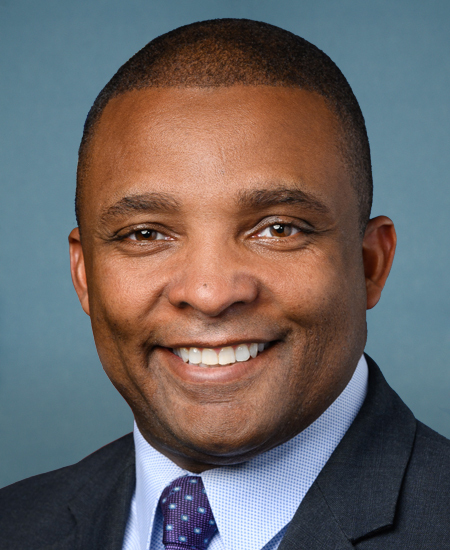
Rep. Donald G. Davis
Sponsored bills
Maddy summaryThis bill amends Medicare eligibility rules to explicitly include occupational therapy as a qualifying service for home health care. It changes the Social Security Act to state that beneficiaries need "occupational, or speech therapy" (instead of only "speech therapy") to qualify for home health services. This change directly affects Medicare beneficiaries requiring occupational therapy at home, expanding access to this specific care. The policy takes effect for services provided on or after January 1, 2025.
Maddy summaryThe "You Earned It, You Keep It Act" (HR 7084) establishes a $250,000 annual income threshold for Social Security taxes. Income above this threshold will no longer be subject to Social Security taxes but will still count toward Social Security benefits. This affects high earners who would have paid Social Security taxes on income above the current wage base. The bill also includes special rules for workers with multiple employers and applies to calendar years after 2024.
Maddy summaryThis bill requires heads of Executive agencies who serve on the National Security Council (like the Secretary of Defense or Homeland Security) to notify key government officials within 24 hours if they become unable to perform their duties due to illness. If they fail to meet this deadline, they must submit a detailed report within 30 days explaining the delay, listing acting officials and resources used, and documenting the incapacity period. It directly affects top national security agency leaders and ensures transparency during leadership gaps. The law aims to prevent confusion about who is temporarily in charge during medical emergencies involving critical national security roles.
Maddy summaryHR 6780 establishes a 4-year Medicare demonstration program testing whether hospitals providing medically tailored home-delivered meals to specific patients improves health outcomes and reduces hospital readmissions. The program targets Medicare beneficiaries with diet-sensitive chronic conditions (like diabetes or heart failure) who are at high risk of readmission and meet specific discharge criteria, such as limited daily living activities. Selected hospitals must screen patients, provide at least two tailored meals daily for 12 weeks, and offer medical nutrition therapy, all without patient cost-sharing. The program requires hospitals to submit data for evaluation, with the goal of assessing impacts on hospital admissions, care costs, and patient satisfaction before reporting to Congress in 2027 and 2030.
Maddy summaryHR 6790 establishes National Institutes of Health centers to advance research, early detection, and public awareness of rare kidney diseases, with a focus on rural and underserved communities. It mandates a federal study on genetic testing barriers, treatment patterns, and public awareness for rare kidney diseases affecting disproportionately impacted populations, including barriers to insurance coverage and access to specialists. The bill also funds nephrology training programs to increase specialists serving these communities and requires experiments to delay or prevent the need for dialysis and transplants. Total funding of $7 million is authorized for fiscal years 2024-2028 to support these research, education, and early intervention efforts.
Maddy summaryThe Preserving Seniors’ Access to Physicians Act of 2023 increases the Medicare payment adjustment rate for physicians from 1.25% to 4.62%, directly affecting doctors who treat Medicare patients (primarily seniors). It also reduces the funding for the Medicaid improvement fund from $5,796,117,810 to $3,973,117,810. These changes impact Medicare providers and Medicaid programs, with the Medicare adjustment aimed at supporting physicians adjusting to payment changes. The bill does not specify how the Medicaid funding reduction relates to its stated goal of preserving seniors' access to physicians.
Maddy summaryThis bill updates the "competitive need limitation" for duty-free imports from beneficiary developing countries under the Trade Act of 1974. It increases the annual cap for eligible imports from $75 million to $600 million and changes how the limit is calculated to count only duty-free entries during a calendar year. The President must restore duty-free treatment for most eligible articles within 120 days of the bill's enactment, with a one-year review period for sensitive products requiring continued withholding. The bill also requires a report to Congress within one year detailing restored and withheld duty-free treatments. This directly affects importers of goods from designated developing countries eligible for trade benefits.
Maddy summaryThis bill updates Medicare's physician fee schedule to better align with current healthcare costs and support providers. It extends a key deadline for geographic payment adjustments from 2024 to 2025, increases the rate for payment adjustments from 1.25% to 3%, and extends incentive payments for doctors in alternative payment models (APMs) through 2026. For 2026, it imposes payment reductions (34% for 4-6 years in APMs, 67% for 7+ years) but allows exceptions if providers increased their financial risk compared to 2025. The bill also raises Medicare's budget neutrality threshold to $53 million in 2025 and requires regular updates to cost data (like staff wages and equipment prices) every five years. These changes directly affect Medicare-participating physicians, especially those in APMs, by altering payment calculations and incentives.
Maddy summaryThis bill prohibits health insurance plans from charging healthcare providers fees for electronic payments (EFTs) and payment advice transactions. It directly affects doctors, hospitals, and clinics that receive electronic payments from health plans by banning any charges, including withholdings, for these transactions. The law, effective January 1, 2024, amends the Social Security Act to require health plans to cover these costs themselves, eliminating fees for providers.