

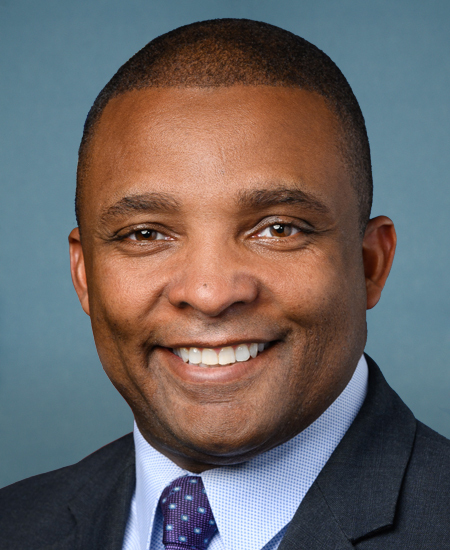
Photo of Donald G. Davis
D United States House · District 1 · North Carolina On the 2026 ballot

Rep. Donald G. Davis

Compare
Total votes
1,879
all sessions
Attendance
97%
53 missed
Near the chamber average
With party
82%
of cast votes
Among the lowest in the chamber
Bipartisan score
9%
crosses aisle rarely
Higher than 98% of chamber peers
Sponsored
1,618
bills & resolutions
Higher than 96% of chamber peers
Committees
7
assignments
1,618 bills and resolutions

Sponsored bills

Total
1,618
Primary
56
Co-sponsor
1,562
This page
1,618
matching current filters
Co-sponsor HR 9975
In committee · United States House · Co-sponsor
Gabriel Rosenberg Dyspraxia/DCD Coverage Act

Maddy summaryThis bill requires a study to examine insurance coverage for dyspraxia/developmental coordination disorder (DCD) treatments. The Comptroller General must report to Congress on coverage gaps under Medicare, Medicaid, private health plans, and other federal programs, including age limits, barriers to care, and compliance with existing laws. The study will specifically investigate why coverage might end when children with dyspraxia/DCD turn 18 and whether current policies adequately cover these conditions. It does not change coverage rules but aims to identify issues for potential future policy adjustments. The report will inform recommendations for improving access to treatment for people with dyspraxia/DCD.

In committee Dec 17, 2024 1 co-sponsor
Co-sponsor HR 9812
In committee · United States House · Co-sponsor
Health Care Workforce Investment Act

Maddy summaryHR 9812, the Health Care Workforce Investment Act, aims to address national shortages of healthcare professionals by providing federal grants to states. States must create "Workforce Improvement Plans" through State Health Care Workforce Councils, which will establish investment funds to support healthcare training programs (including high school vocational programs) and offer scholarships to students. These scholarships require recipients to work in healthcare for one year per scholarship year in the state where they trained, with a focus on underserved areas. The bill mandates reporting on program outcomes, scholarship use, and workforce metrics to ensure funds target areas with the greatest healthcare workforce needs.

In committee Dec 17, 2024 1 co-sponsor
Co-sponsor HR 9774
In committee · United States House · Co-sponsor
Health Care Affordability Act of 2024

Maddy summaryHR 9774, the Health Care Affordability Act of 2024, would expand premium tax credits under the Affordable Care Act for households earning between 150% and 400% of the federal poverty level. It modifies the sliding scale calculation to reduce the percentage of monthly insurance premiums these households must pay, with the lowest out-of-pocket costs for those near 400% of poverty. This directly affects individuals and families purchasing health insurance through marketplace plans who qualify for these tax credits. The changes apply to tax years beginning after December 31, 2025.

In committee Dec 17, 2024 1 co-sponsor
Co-sponsor HR 9546
In committee · United States House · Co-sponsor
VALOR Act of 2024

Maddy summaryThe VALOR Act of 2024 establishes specific criteria for determining when a democratically elected government is in power in Venezuela, requiring free and fair elections with international observers, respect for human rights, release of political prisoners, and restoration of democratic institutions. The bill authorizes sanctions against the Maduro regime, including financial restrictions on debt instruments, cryptocurrency transactions, and blocking property of the Venezuelan government. It creates mechanisms for the U.S. to provide humanitarian and democracy-building assistance through independent NGOs once a democratically elected government is recognized, with safeguards to ensure aid reaches the people of Venezuela. The bill requires regular reporting to Congress on sanctions implementation, assistance programs, and foreign entities doing business with the Maduro regime.

In committee Dec 17, 2024 1 co-sponsor
Primary HR 9365
In committee · United States House · Lead sponsor
Pharmacy and Medically Underserved Areas Enhancement Act

Maddy summaryHR 9365, the Pharmacy and Medically Underserved Areas Enhancement Act, expands Medicare coverage to include pharmacist services in designated underserved areas. It directly affects Medicare beneficiaries in health professional shortage areas, medically underserved areas, or medically underserved populations, as well as pharmacists licensed to provide these services under state law. The bill adds new coverage criteria requiring services to be legally authorized by state law, equivalent to physician-covered services, and provided in an eligible location. It also establishes payment rates at 80% of the lesser of actual charges or 85% of physician fee schedule amounts for these services, effective January 1, 2024. The bill requires the development of specific codes for pharmacist services under Medicare’s physician fee schedule.

In committee Dec 17, 2024 0 co-sponsors
Co-sponsor HR 9334
In committee · United States House · Co-sponsor
Steel Modernization Act of 2024

Maddy summaryThe Steel Modernization Act of 2024 provides financial assistance and tax credits to U.S. steel manufacturers adopting technologies that reduce greenhouse gas emissions from steel production. It requires recipients to produce "near-zero emissions intensity steel" by 2035, report emissions data, and implement community benefits plans that address local environmental and economic concerns. The bill also imposes a tariff on imported steel based on its emissions intensity, with revenues funding clean energy programs and administrative costs. This affects steel manufacturers, workers, and communities near steel facilities by promoting cleaner production while supporting domestic steel industry competitiveness.

In committee Dec 17, 2024 1 co-sponsor
Co-sponsor HR 9275
In committee · United States House · Co-sponsor
End Kidney Deaths Act

Maddy summaryThis bill creates a $10,000 annual tax credit for individuals who make non-directed living kidney donations (where donors don’t know the recipient’s identity) for five years (the donation year plus four subsequent years). It directly affects living kidney donors who qualify under these specific conditions, covering costs related to the donation process. The credit applies to kidneys removed after December 31, 2024, and expires December 31, 2034. The bill does not alter organ transplant recipient eligibility or medical procedures, focusing solely on financial incentives for donors.

In committee Dec 17, 2024 1 co-sponsor
Co-sponsor HR 9173
In committee · United States House · Co-sponsor
Long Term Care Stabilization Act

Maddy summaryThis bill temporarily caps Medicare payments for high-cost long-term care hospital patients, limiting fixed loss amounts to $50,000 for fiscal years 2025 and 2026. It also creates a temporary exception (2025-2027) allowing standard Medicare payments for patients with severe wounds (like stage 3/4 wounds, infections, or osteomyelitis) instead of site-neutral rates. The bill requires two studies: one on reforming high-cost outlier payment methodology and another analyzing whether the severe wound payment exception should become permanent. These changes directly affect long-term care hospitals treating Medicare beneficiaries with high resource needs or severe wounds. The studies will inform future policy decisions but do not alter current payment rules beyond the specified temporary periods.

In committee Dec 17, 2024 1 co-sponsor
Co-sponsor HR 9157
In committee · United States House · Co-sponsor
Access to Pediatric Technologies Act of 2024

Maddy summaryThis bill establishes a process for Medicare to set payment rates for certain pediatric medical devices used in children's care. Manufacturers of qualifying pediatric technologies (devices approved by the FDA, covered under Medicare, and designed specifically for children or used predominantly in pediatric procedures) can request the Secretary to create national payment rates under the physician fee schedule. The Secretary must then set these rates using available data like claims or pricing information, with specific deadlines for processing requests (by May 1 for same-year implementation). This affects Medicare payments for these devices but does not change coverage requirements or guarantee payment for new technologies.

In committee Dec 17, 2024 1 co-sponsor
Co-sponsor HR 9138
In committee · United States House · Co-sponsor
ADAPT Act

Maddy summaryHR 9138, the ADAPT Act, expands Medicare coverage to include services provided by psychology trainees (doctoral interns or postdoctoral residents in APA-accredited programs) under the general supervision of a licensed psychologist. It requires the creation of a new billing code (GC modifier) for these services and directs the HHS Secretary to issue guidance to states on covering similar services through Medicaid and CHIP programs. The bill affects psychology trainees seeking licensure and healthcare systems billing Medicare/Medicaid, enabling reimbursement for supervised trainee services. Key provisions include defining "advanced psychology trainee," establishing billing protocols, and providing states with strategies to implement coverage. The changes take effect one year after enactment.

In committee Dec 17, 2024 1 co-sponsor
Showing 741 to 750 of 1,618 bills
Previous 1 … 74 75 76 … 162 Next