

Maddy summaryThe Treat and Reduce Obesity Act of 2023 expands Medicare coverage for obesity treatment by allowing a wider range of healthcare providers - including nurse practitioners, dietitians, psychologists, and community-based counseling programs - to deliver intensive behavioral therapy for obesity, provided they coordinate with primary care providers. It also adds Medicare Part D coverage for medications used to treat obesity or for weight loss management in overweight individuals with related health conditions like diabetes or high blood pressure. These changes directly affect Medicare beneficiaries, particularly older adults (65+), who face higher obesity rates and associated costs, including $50 billion annually in Medicare spending for obesity-related care. The bill requires annual reports to Congress on implementation to improve coordination of obesity care across federal health programs.
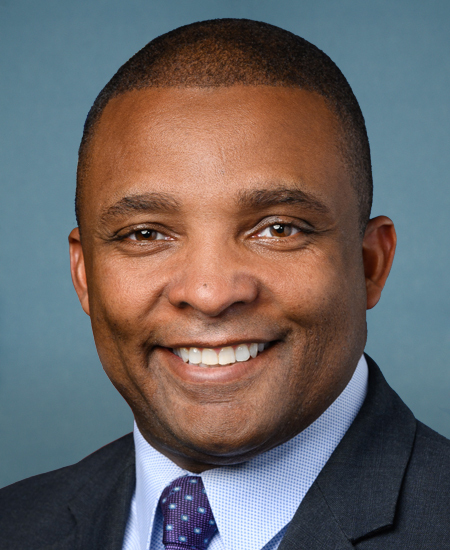
Rep. Donald G. Davis
Sponsored bills
Maddy summaryThis bill creates a 4-year transitional coverage period for Medicare to automatically cover "breakthrough medical devices" - new FDA-prioritized devices approved after March 2021 - as "reasonable and necessary" for treatment. During this period, these devices qualify for additional payments under Medicare's hospital and outpatient payment systems without requiring separate approval. After the 4-year period, Medicare must develop regular coverage based on additional data, with automatic coverage for all approved uses if no action is taken within two years. The bill requires Medicare to assign unique codes for these devices within three months of FDA approval and to update payment systems regularly. It also includes special provisions for "specified breakthrough devices" that lack existing Medicare benefit categories, requiring reports on their impact and cost to Congress.
Maddy summaryHR 8663, the DETECT Fentanyl and Xylazine Act of 2024, requires the Department of Homeland Security’s Science and Technology Directorate to develop improved detection tools for low-concentration drugs like fentanyl and xylazine. It mandates research into portable equipment for field use, technology to separate complex drug mixtures, and machine learning tools to identify new synthetic substances. These advancements aim to help federal, state, local, tribal, and territorial law enforcement agencies more accurately detect dangerous drugs during investigations. The bill specifically targets enhancing safety and effectiveness for agencies already handling drug evidence, without changing drug laws or regulations.
Maddy summaryThe Autism CARES Act of 2024 reauthorizes and enhances federal programs supporting individuals with autism spectrum disorder. It requires the National Institutes of Health to expand research to include more fields like gerontology and psychiatry, and to ensure research reflects the full range of needs of people with autism, including those with co-occurring conditions. The bill mandates regular reports to Congress on progress, mental health needs, and transition services for young adults with autism, while increasing funding for autism-related programs from fiscal year 2025 through 2029. This legislation directly affects individuals with autism, their families, caregivers, and healthcare providers by improving access to evidence-based services and research.
Maddy summaryThis bill reauthorizes the Emergency Medical Services for Children (EMSC) program through fiscal year 2029, increasing annual funding from $22.3 million (2020-2024) to $24.3 million (2025-2029). It directly supports states and communities providing specialized emergency medical care for children, including pediatric trauma and transport services. The key provision extends and increases federal funding to maintain existing EMSC grant programs that train healthcare providers and improve pediatric emergency response systems. This ensures continued access to coordinated care for children in emergency situations across the United States.
Maddy summaryThe Stop Campus Hazing Act requires colleges and universities to publicly report hazing incidents involving student organizations. It defines hazing as intentional acts causing physical or psychological harm during initiation or membership in student groups, including activities like forced substance consumption, sleep deprivation, or sexual acts. Institutions must include hazing statistics in annual security reports and publish a "Campus Hazing Transparency Report" on their websites by July 1, 2025, detailing findings about organizations violating hazing policies. The reports must include organization names, violation descriptions, and key dates while excluding personally identifiable student information. This applies to all colleges participating in federal student aid programs.
Maddy summaryThis bill, HR 1097 (Everett Alvarez, Jr. Congressional Gold Medal Act of 2023), authorizes the award of a Congressional Gold Medal to Everett Alvarez, Jr., in recognition of his service as a U.S. Navy pilot and Vietnam War prisoner of war. It directly honors Alvarez, who was the first U.S. pilot shot down in the Vietnam War, spent over 8.5 years in captivity, and later served in the Peace Corps and Veterans Administration. The bill’s key mechanism is directing the U.S. Mint to strike a gold medal bearing his name and image, with bronze duplicates available for sale to cover costs. It does not create new policies or affect any group beyond the honoree.
Maddy summaryThe Federal Information Security Modernization Act of 2024 modernizes federal cybersecurity by requiring agencies to implement continuous security risk assessments, adopt zero trust architecture, and conduct regular penetration testing. It establishes new requirements for agencies to report major incidents to Congress within 72 hours and notify affected individuals within 45 days of discovering a breach. The bill creates a new Federal Chief Information Security Officer position to oversee agency cybersecurity efforts and coordinates with the National Cyber Director. It also mandates improved information sharing between agencies and the Cybersecurity and Infrastructure Security Agency (CISA), along with enhanced vulnerability disclosure processes for contractors and awardees.
Maddy summaryThis bill allows Medicaid programs to enter into value-based purchasing (VBP) arrangements with drug manufacturers for innovative treatments like gene therapies. It codifies these arrangements by requiring states to report pricing structures based on patient outcomes and best prices for drugs sold under these agreements. The bill enables payments to be tied to treatment effectiveness, potentially reducing long-term healthcare costs by decreasing hospitalizations and other medical expenses. It also creates a requirement for a GAO study to evaluate how these arrangements impact patient access, outcomes, and healthcare system costs. The bill will sunset after 5 years, though existing VBP arrangements will continue beyond that date.
Maddy summaryHR 2367, the Truck Parking Safety Improvement Act, creates a federal grant program to address commercial truck parking shortages on highways. It provides competitive grants (totaling $175M-$320M over three years) for projects like building new rest areas, expanding parking at ports or truck stops, or improving safety at existing facilities. The program requires all funded parking to be free, publicly accessible to all truck drivers, and maintained without user fees. This directly affects commercial truck drivers, motor carriers, and highway safety by aiming to improve parking access, reduce traffic congestion, and enhance safety on federal-aid highways.