

Maddy summaryHR 4081, the Foreign Adversary Federal Offense Act of 2025, increases penalties for economic espionage and defense information offenses committed to benefit nations designated as adversaries by the U.S. government. It adds mandatory minimum 10-year prison terms (up to 20 years for severe harm) and fines up to $5 million for individuals, while imposing organizational fines of up to $20 million or 5 times the value of stolen trade secrets. The law specifically targets offenses involving critical infrastructure data - such as security vulnerabilities of systems covered under the USA PATRIOT Act - that could cause significant harm if exploited. This directly affects individuals and organizations convicted of sharing U.S. economic or defense secrets with foreign adversaries.
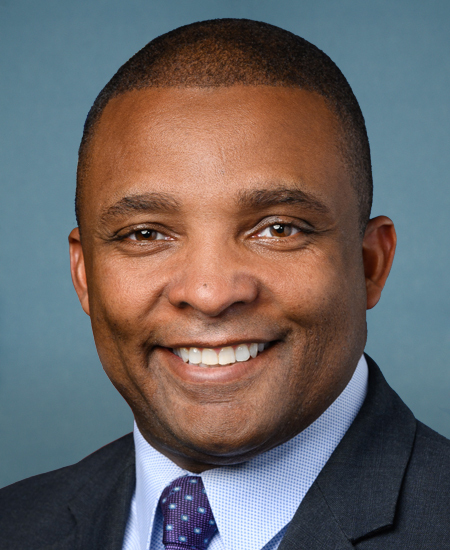
Rep. Donald G. Davis
Sponsored bills
Maddy summaryThe Occupational Therapy Mental Health Parity Act requires the U.S. Department of Health and Human Services to provide education and outreach about Medicare coverage for occupational therapy services treating mental health and substance use disorders. Specifically, it directs the Secretary to clarify how these services are covered under the Medicare Benefit Policy Manual using standard medical billing codes (HCPCS). This education must be completed within one year of the bill's enactment. The goal is to improve understanding of existing Medicare coverage for occupational therapy in mental health and substance use treatment, without changing current benefit rules.
Maddy summaryThe Cybersecurity in Agriculture Act of 2025 establishes five regional centers to strengthen cybersecurity for the agriculture sector, directly benefiting farmers, food producers, and supply chain businesses. Funded with $25 million annually from 2026-2030, the centers will research and develop sector-specific tools like threat-monitoring systems, intrusion detection, and secure network protocols. They will create testing environments for cybersecurity solutions, conduct training for agricultural workers, and coordinate with industry partners to address digital threats. This program aims to improve the sector’s resilience against cyberattacks without advocating for specific policy outcomes.
Maddy summaryHR 4011, the Community Paramedicine Act of 2025, creates a federal grant program to fund community paramedicine programs in rural areas. It provides grants to eligible entities - such as emergency medical services agencies, local governments, or Tribal organizations - to hire personnel, purchase equipment, cover training costs, and conduct outreach. The bill specifically reserves 15% of annual funding for programs serving Tribal communities and limits grants to $750,000 per entity (or $1.5 million for joint applications) over a maximum 5-year period. These programs aim to reduce unnecessary emergency room visits by using specially trained paramedics to address health issues and improve access to primary care for underserved populations.
Maddy summaryThe Streamline Emergency Care Act provides federal grants to nonprofit health care providers operating emergency departments (EDs) to improve their efficiency and patient care. Grants of up to $500,000 per recipient can fund hiring staff, modernizing facilities (like renovating spaces or buying equipment), or training existing staff to improve patient flow through the ED. The program, funded at $20 million annually from 2026 to 2030, directly affects hospitals that already run EDs and are nonprofit. It aims to reduce wait times and enhance care capacity by supporting practical operational upgrades.
Maddy summaryHR 3946, the FIGHT Act of 2025, amends the Animal Welfare Act to specifically prohibit gambling on animal fighting events and restrict the interstate transport of roosters used in such ventures. It defines "rooster" as male chickens over six months old and makes it unlawful to sponsor, exhibit, attend (for those under 16), or gamble on animal fighting events - whether in-person or broadcast. The bill creates a civil enforcement mechanism allowing any person to file a lawsuit to stop violations after providing 60 days' notice to authorities, with potential fines up to $5,000 per violation. It also establishes seizure of property used to facilitate violations and clarifies that state laws on animal fighting remain in effect unless directly conflicting with federal provisions.
Improving Access to Medicare Coverage Act of 2025 This bill deems an individual receiving outpatient observation services in a hospital as an inpatient for purposes of satisfying the three-day inpatient hospital-stay requirement with respect to Medicare coverage of skilled nursing facility (SNF) services. (Generally, individuals must have been an inpatient at a hospital for at least three days in order to qualify for SNF services. An individual's time spent under observation at a hospital for purposes of determining whether the individual should be admitted does not count towards this requirement.)
Maddy summaryHR 3981 would grant a federal charter to the Veterans Association of Real Estate Professionals (VAREP), a California-based nonprofit already recognized as a veterans service organization under IRS rules. This charter would formalize VAREP's status as a federally chartered entity under Title 36 of the U.S. Code, requiring it to maintain its tax-exempt status under the IRS Code to keep the charter. The bill outlines VAREP's purposes, including advocating for veterans' homeownership, providing financial literacy education, offering housing counseling, and connecting real estate professionals with veterans' needs, while prohibiting political activities, stock issuance, or profit distribution. This is a procedural bill focused on organizational structure, not policy changes.
Maddy summaryHR 3999, the American Flags to Honor Our Veterans Act of 2025, amends federal law to allow permanent, upright American flags to be displayed adjacent to the graves of deceased veterans. It directly affects families of veterans and cemetery operators by permitting this flag placement at burial sites. The key provision modifies Title 4, U.S. Code, to specifically authorize secured flag displays next to graves of veterans (as defined in Title 38) or Armed Forces members (as defined in Title 10), replacing temporary flag displays with a permanent, standardized practice.
Maddy summaryThis bill mandates annual funding for USDA programs to prevent, detect, and respond to foreign animal diseases affecting livestock. It requires $30 million annually for 2023-2025, increases to $233 million yearly for 2026-2029, and then reduces to $75 million annually after 2030, with specific allocations for surveillance, laboratory networks, and emergency response. The funds directly support state and federal animal health programs, including the National Animal Health Laboratory Network and the National Animal Disease Preparedness Program. These provisions aim to strengthen protections for U.S. agriculture by ensuring consistent resources for disease monitoring and rapid containment.