

Maddy summaryHR 7996, the Improving CARE for Youth Act, changes Medicaid rules to ensure states cannot block payment when a person receives both mental health and primary care services on the same day at the same facility. It directly affects Medicaid recipients, particularly youth, by removing a barrier that previously prevented coverage for integrated care during a single visit. The key provision adds a new rule to Medicaid coverage requirements, explicitly stating that states must pay for both services if provided together at the same location. This simplifies access to coordinated care without requiring separate appointments.
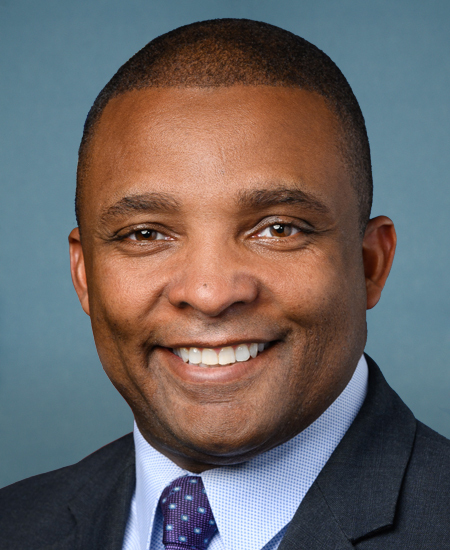
Rep. Donald G. Davis
Sponsored bills
Maddy summaryHR 8061, the Crime Victims Fund Stabilization Act of 2024, ensures stable funding for the Crime Victims Fund by directing certain False Claims Act collections into it from 2024 through 2029. Specifically, it adds a provision requiring that amounts collected under the False Claims Act (excluding whistleblower rewards and government reimbursement for damages) be deposited into the fund during this period. This directly affects crime victims who rely on the fund for services like counseling and emergency aid, as it prevents potential shortfalls in funding. The bill makes a concrete policy change by redirecting specific federal civil penalties into the fund, rather than altering the fund's existing purposes or eligibility rules.
Maddy summaryThe No More Narcos Act creates an educational campaign targeting middle and high school students living within 100 miles of the U.S.-Mexico border, focusing on the dangers of working with cartels. It requires the Attorney General and Homeland Security Secretary to develop a national strategy specifically to combat cartels recruiting minors for smuggling or trafficking. The bill also allocates funding from the DOJ Assets Forfeiture Fund to support both the student education program and the national strategy. This law directly affects border-area students aged under 18 by providing prevention resources, without changing existing laws or creating new criminal penalties.
Maddy summaryHR 8045, the POSTAL Act, prohibits the U.S. Postal Service from closing, consolidating, or downgrading any processing and distribution center in a state if the action would eliminate all such facilities in that state or harm mail delivery. The bill specifically protects states (including DC) by preventing the loss of local mail processing infrastructure. It defines "processing and distribution centers" as facilities handling mail sorting, dispatch, and instructions for mailers, including sectional center facilities. The law directly affects USPS operations by restricting facility changes that would leave any state without a central mail processing location. This ensures continued local mail service access for all states.
Maddy summaryThis bill expands VA home loan eligibility to include National Guard and Reserve members who complete 30 consecutive days of active duty for training (ADT), excluding basic training. Currently, VA home loans typically require 90+ days of active duty service, excluding many Guard/Reserve members with shorter training periods. The bill amends Title 38 of the U.S. Code to add new definitions, explicitly including these service members under "veteran" for home loan purposes. It directly affects Guard and Reserve members with 30+ days of ADT who previously did not qualify for VA home loans.
Maddy summaryHR 5917, the "Strengthening Tools to Counter the Use of Human Shields Act," expands sanctions against foreign individuals and entities that direct the use of civilians as human shields. It specifically adds members or agents of Palestine Islamic Jihad (PIJ) to the list of targets for sanctions when they order or control civilians to shield military objectives. The bill requires the President to justify sanction decisions to Congress within 120 days and extends the sunset date for related sanctions from 2023 to 2030. Additionally, it mandates a Department of Defense report within 120 days detailing strategies to counter human shield tactics used by groups like Hamas and PIJ, including plans for international coordination.
Maddy summaryHRES 1151 is a symbolic resolution recognizing the Interstate Compact on Educational Opportunity for Military Children and designating April 2024 as "Month of the Military Child." It directly affects military-connected children (over 1.5 million in the U.S.) who face frequent school transitions due to parental service. The resolution expresses congressional support for the Compact - which helps streamline educational transitions for military students - and encourages nationwide recognition through events like "Purple Up!" to honor these children. As a non-binding resolution, it does not create new policies or funding but aims to raise awareness of military-connected students' educational challenges.
Maddy summaryHR 8025, the Blast Overpressure Safety Act, requires the Department of Defense to implement new protocols for monitoring and addressing blast-related brain injuries among military personnel. The bill mandates baseline and annual neurocognitive assessments for all service members, establishes detailed blast exposure logs tracking each member's cumulative exposure to weapons firing and training, and sets safety thresholds for blast overpressure exposure. It also creates a Warfighter Brain Health Initiative requiring evidence-based prevention strategies, specialized treatment programs for high-risk personnel, and regular reporting on brain injury incidents to Congress. The legislation requires the Department to document all blast exposures, track treatment outcomes, and publish annual reports on the effectiveness of these safety measures.
Maddy summaryThis bill requires the Department of Veterans Affairs to provide annual preventative health evaluations to veterans with spinal cord injuries or disorders. The evaluations cover health risk assessments, chronic pain management, dietary needs, prosthetic equipment functionality, and assistive technology options (like mobility devices or speech generators). The VA must also report annually to Congress on how many veterans receive these evaluations and assistive technologies, and consider these evaluations when assessing VA network performance. The law directly affects veterans with spinal cord injuries/disorders by mandating proactive health checks focused on preventing complications and improving mobility.
Maddy summaryHR 5530, the VA Emergency Transportation Access Act, prevents the Department of Veterans Affairs (VA) from lowering payment rates for specialized transportation used by veterans and eligible individuals (like ambulances or wheelchair vans) without strict requirements. It mandates that any rate change that could reduce access to care must first undergo a detailed review analyzing economic impacts on the VA and transportation industry, and ensure the new rate covers actual costs. The VA must also develop a formal process for rate changes and consult with industry experts, veterans' groups, and healthcare agencies before implementing such changes. This bill directly affects veterans relying on specialized transportation for medical care, particularly those in rural or underserved communities, by safeguarding their access to necessary emergency transport services.