

Maddy summaryThis bill prevents veterans and eligible persons from being held liable for overpayments of educational benefits caused by errors from the Department of Veterans Affairs (VA) or incorrect information from the Department of Defense (DoD). It requires the VA to waive debt if an overpayment resulted from a VA eligibility error or flawed DoD information provided to the VA. For overpayments that would disrupt a veteran's education, the VA must first review for hardship before attempting recovery, and if recovery fails, must establish a repayment plan. The bill applies only to overpayments identified after January 5, 2021, and within ten years of occurrence.
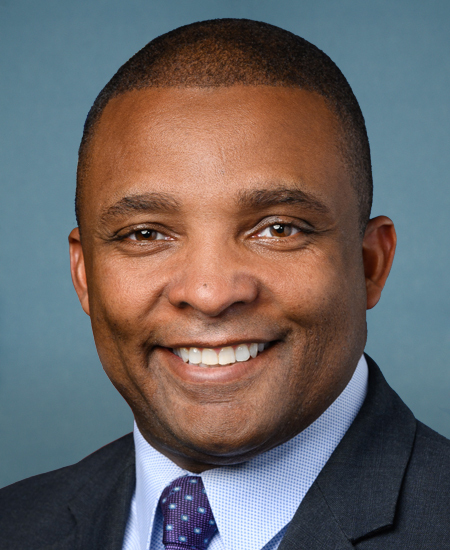
Rep. Donald G. Davis
Sponsored bills
Maddy summaryThe Warriors to Workforce Act increases the percentage of educational costs covered by the Department of Veterans Affairs for veterans' first year of full-time apprenticeship or on-the-job training from 80% to 90%. This change applies specifically to veterans using Post-9/11 GI Bill benefits for these programs. The bill directly affects veterans enrolled in such training as they transition from military service to civilian careers. It represents a concrete policy change that enhances financial support during initial training.
Maddy summaryThis bill requires the Secretary of Commerce to standardize and publish geospatial data about public ocean and waterway access rules on a public website within 4 years. It mandates detailed information on where fishing is restricted, waterway closures, speed limits, allowed vessel types (like motorboats or kayaks), and fishing method rules. The data will include geographic boundaries of protected areas, seasonal closures, and navigation details like depth charts. This directly affects recreational users (boaters, anglers) and commercial operators who need clear, up-to-date access information for Federal waterways and fishing areas. The bill does not change existing fishing regulations but makes compliance information more accessible.
Maddy summaryThis bill expands eligibility for Veterans Affairs (VA) education benefits to include independent study programs offered by institutions already participating in federal student aid programs (like Pell Grants). It directly affects veterans using VA education benefits and qualifying educational institutions. The key change amends VA rules to count these independent programs as eligible for benefit coverage, effective August 1, 2024. This allows veterans to use their benefits for non-traditional education options, such as online or self-paced courses, at schools that meet federal financial aid requirements.
Maddy summaryHR 6841 creates a new Coastal and Estuarine Resilience and Restoration Program under the Coastal Zone Management Act, authorizing the Secretary of Commerce to protect and restore coastal and estuarine areas. The program prioritizes lands with ecological, recreational, or community value that face development threats or climate impacts, with special focus on low-income communities and climate mitigation. It requires non-governmental organizations applying for grants to demonstrate public access or ecological protection, and includes $47 million annually (2024-2028) for these efforts. This directly affects coastal states, local communities, and conservation groups managing vulnerable coastal lands.
Maddy summaryHCONRES 115 is a procedural resolution calling for a joint session of Congress in Philadelphia, Pennsylvania, on July 2, 2026. It directs both the House and Senate to convene together at Independence National Historical Park to commemorate the 250th anniversary (semiquincentennial) of the Declaration of Independence. The resolution does not create new laws or affect any specific group; it solely schedules a ceremonial event honoring Philadelphia's historical role as the site where the Declaration was approved. This is a non-binding commemorative measure focused on marking a historical milestone.
Maddy summaryHRES 1304 is a symbolic resolution designating June 19, 2024, as "World Sickle Cell Awareness Day" to raise public awareness about sickle cell disease (SCD) globally. It does not create new laws but urges increased focus on SCD research, early detection screenings, equitable access to treatments, and preventative care programs for those affected. The resolution specifically calls on the Department of Health and Human Services to develop global policies supporting newborn screening and treatment access, and recommends forming an interagency group to address barriers in Medicare/Medicaid for SCD therapies. It directly affects public awareness efforts and healthcare policy discussions for the estimated 100,000 SCD patients in the U.S. and millions worldwide, particularly in communities disproportionately impacted by the disease.
Maddy summaryThis bill amends the Occupational Safety and Health Act to explicitly include public employees - such as those working for federal, state, or local government agencies - under OSHA's coverage. It changes the definition of "employee" to specify that public sector workers are protected, removing previous exclusions. The law takes effect 90 days after enactment for most workplaces, but gives states and local governments without OSHA-approved plans up to 36 months to comply. This directly affects public service workers in government roles by bringing their workplace safety protections under the same federal OSHA framework as private-sector employees.
Maddy summaryHR 8730, the Postal Processing Protection Act, broadens the legal definition of protected facilities under existing law. It updates references from "post office" to include all Postal Service facilities that support mail operations, such as acceptance, processing, shipping, delivery, distribution, and other support centers. This change directly affects the Postal Service by expanding the scope of facilities covered under current protections. The bill does not create new rules but clarifies which facilities are subject to existing legal safeguards against certain challenges. This amendment applies to all Postal Service-owned or operated facilities that support mail processing and delivery services.
Maddy summaryHR 5012 (SHINE for Autumn Act of 2023) authorizes federal funding to improve stillbirth research and data collection. It provides $5 million annually for states to collect standardized stillbirth data (including risk factors) while protecting privacy, $1 million annually for developing public educational materials and data collection guidelines, and $3 million annually for medical fellowships training pathologists in perinatal autopsy and stillbirth research. The bill directly affects state health departments, medical professionals (like obstetricians and pathologists), and families who experience stillbirth by improving data quality for future research. It requires federal reports on guidelines and program effectiveness within five years but does not provide direct medical care or financial assistance to families.