

Maddy summaryThis bill increases military pay rates for all service members across pay grades and years of service, effective January 1, 2025, with specific rate adjustments detailed in the legislation. It expands eligibility for the basic needs allowance to 200% of current rates and authorizes $1.2 billion for housing allowances in fiscal year 2025. The bill also improves child care access by requiring competitive pay for military child care staff, reducing fees for children of child care employees, and mandating regular reports on child care services. Additionally, it enhances health care access by waiving referral requirements for certain services in military medical facilities and establishes a permanent program to support military spouses' employment.
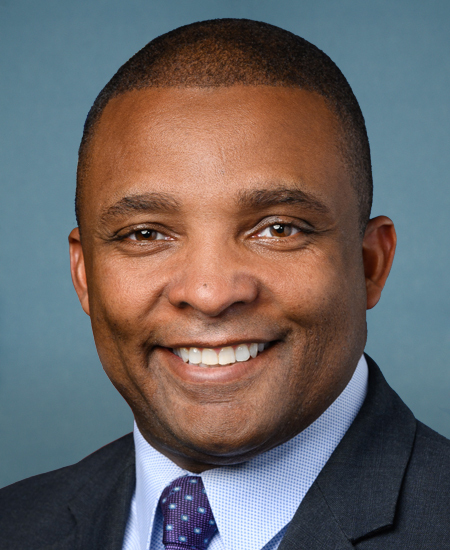
Rep. Donald G. Davis
Sponsored bills
Maddy summaryThis bill requires online platforms and internet service providers (like social media companies and messaging services) to report certain drug-related crimes to the Drug Enforcement Administration (DEA). Providers must submit reports if they have actual knowledge or a reasonable belief about fentanyl/methamphetamine sales, counterfeit prescription drugs, or illegal online pharmacies, including account details and location information. The law includes penalties for non-compliance ($190,000 for first violation) and requires the DEA to publish annual reports on the number of reports received and their outcomes. It exempts broadband internet providers and text messaging services from these requirements and includes privacy protections to prevent providers from being required to monitor content. The law aims to help law enforcement combat illegal drug trafficking by creating a structured reporting mechanism for online platforms.
Maddy summaryThis bill (HR 2365, Public Law 118-66) directs the U.S. Department of Health and Human Services (HHS) to establish the National Parkinson’s Project. It requires HHS to create and update a coordinated national plan for preventing, diagnosing, treating, and researching Parkinson’s disease and related disorders (including multiple system atrophy and progressive supranuclear palsy), while coordinating federal research and care efforts across agencies like the NIH, CDC, and VA. The law mandates annual progress assessments, an advisory council with patient advocates and diverse experts, and annual reports to Congress on federal Parkinson’s programs and recommendations for improvement. It affects federal agencies managing Parkinson’s-related programs and aims to improve care coordination and research efficiency for patients and caregivers, with the law sunsetting in 2035.
Maddy summaryHRES 1335 is a non-binding resolution designating July 21, 2024, as "Guam Liberation Day" to commemorate the U.S. military's liberation of Guam from Japanese occupation on July 21, 1944. It directly affects Guam's community by honoring the island's historical resilience, the CHamoru people's suffering during the 1941-1944 occupation, and the U.S. military's role in the Pacific campaign. The resolution's key mechanism is a formal House endorsement of this commemorative date, urging the President to issue a proclamation encouraging public observance. This is a symbolic gesture with no legal or financial impact, focusing solely on historical recognition.
Maddy summaryThis bill would allow families to deduct the cost of private umbilical cord blood or tissue banking as a medical expense on their federal income taxes. It directly affects families who pay for these services through accredited banks meeting specific health regulations. The key change amends tax law to add private cord blood/tissue banking services to the list of deductible medical care expenses, effective for tax years starting in 2024. This makes the cost of storing a newborn's cord blood or tissue for potential future family use tax-deductible, similar to other medical services.
Maddy summaryHR 8898, the Lower Grocery Prices Act, requires the Government Accountability Office (GAO) to study how grocery prices for U.S. consumers have changed over the past 20 years, including related economic data. The GAO must report its findings and recommendations to specific congressional committees within 180 days of the bill's enactment. This bill does not directly lower prices but mandates a review to identify potential policy options. The study will focus on the Consumer Price Index for food at home and aim to inform future legislative action.
Maddy summaryThis bill establishes a grant program to cover medical costs for retired Federal working dogs. Eligible nonprofits (501(c)(3) organizations with at least two years of experience assisting retired law enforcement and military dogs) can apply for grants to help pay for veterinary care. The program, funded at $1 million annually from 2025 through 2029, targets dogs that have received a retirement letter from their agency and are in their handler's care. It directly affects retired working dogs and the nonprofits providing their medical assistance.
Maddy summaryThis bill bans developers and deployers of AI algorithms from using them to deceive voters about election procedures (like voting locations or registration rules) or intimidate people from voting. It requires clear disclaimers - such as "AI Disclaimer: This output was generated by artificial intelligence" - on AI-generated election content, including fake candidate videos or altered voting information. The law sets safety standards for election-related AI, requiring developers to ensure algorithms are "safe and effective" before use. The Federal Trade Commission enforces these rules, with violations potentially leading to fines or up to one year in prison.
Maddy summaryHR 8859, the Deafblind DATA Act, requires the Census Bureau to create and publish a new annual table starting in 2026 showing the number of people in the U.S. who reported both hearing and vision loss in the American Community Survey. This table will display data by state, including sex, race, age, and economic factors like employment and income, without revealing personal details. The bill directly addresses the lack of a centralized count for deafblind individuals, who currently aren't accurately represented in census data. By cross-referencing existing survey responses, the Act aims to provide a clearer national picture to better understand and serve this population's needs.
Maddy summaryThe Texture Positive Act of 2024 provides federal grants to states to fund subgrants for eligible entities (such as minority- or women-owned businesses with 5+ years of experience) to integrate textured hair training into cosmetology school curricula. It requires these entities to offer students hands-on education in shampooing, deep conditioning, braiding, twisting, and styling naturally coiled, curly, or wavy hair, including developing training materials and hiring specialized instructors. States must report annually on participation numbers, instructor training, and cosmetology schools served. The program runs for 4 years for state grants (renewable) and 6 months for subgrants (renewable based on performance reports).