

Guaranteeing Healthcare Access to Personnel Who Served Act This bill addresses the administration and provision of health care to veterans through the Department of Veterans Affairs (VA) and non-VA providers. First, the bill provides statutory authority for the eligibility thresholds for when a veteran must receive non-VA care under the Veterans Community Care Program (VCCP) for primary care, mental health care, noninstitutional extended care services, specialty care, or specialty services. Additionally, the bill establishes access to care standards for non-VA care under the VCCP, meaning a veteran's appointment must be within specified distances and time frames. Among other requirements, the VA must also implement an 18-month pilot program to allow certain veterans to use a website or mobile application to request, schedule, and confirm medical appointments with VCCP providers; ensure that VCCP third party administrators and credentials verification organizations comply with specified requirements to help ensure that certain health care providers are excluded from providing non-VA health care services; develop a strategic plan to ensure the effectiveness of the telehealth technologies and modalities delivered by the VA; and establish an online health care education portal for veterans. The bill requires the Government Accountability Office to report on (1) the VA program under which third parties provide transportation for veterans who are seeking VA services or benefits, (2) VA telehealth services, and (3) the VA's Foreign Medical Program. Finally, the Paperwork Reduction Act does not apply to the voluntary collection of information during research conducted by the Veterans Health Administration.
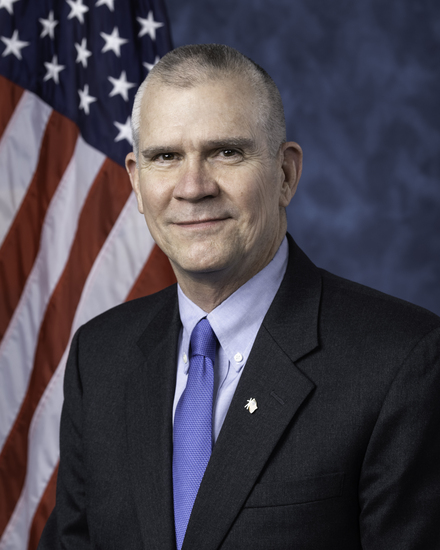
Rep. Matthew M. Rosendale, Sr.
Sponsored bills
This resolution expresses the sense of the House of Representatives that the Secretary of Defense, Lloyd James Austin III, should immediately resign from office.
This resolution expresses the sense of the House of Representatives that the Chairman of the Joint Chiefs of Staff, Mark Alexander Milley, immediately resign from office.
This resolution calls for the immediate resignation of President Biden.
U.S.A. Beef Act This bill modifies label requirements for meat food products of cattle. Specifically, the bill prohibits the label of cattle meat or a meat food product of cattle from bearing the phrase Product of U.S.A. unless such meat or meat food product is exclusively derived from one or more cattle born, raised, and slaughtered in the United States. The requirement does not apply to cattle meat or a meat food product of cattle that is intended and offered for export to a foreign country.
This resolution impeaches Secretary of State Antony J. Blinken for high crimes and misdemeanors related to his role in the withdrawal of U.S. forces and diplomatic assets from Afghanistan.
Puppies Assisting Wounded Servicemembers for Veterans Therapy Act or the PAWS for Veterans Therapy Act This bill implements a program and a policy related to service dog therapy for veterans. Specifically, the bill requires the Department of Veterans Affairs (VA) to implement a five-year pilot program to provide canine training to eligible veterans diagnosed with post-traumatic stress disorder as an element of a complementary and integrative health program. Eligible veterans are those who are enrolled in the VA health care system and have been recommended for participation by a qualified mental health care provider or clinical team. The VA must seek to enter agreements containing specified elements with accredited nongovernmental entities that have demonstrated ability to provide canine training. Veterans who participate in the program are authorized to adopt the dog they assisted in training if their health provider determines it is in the best interest of the veteran. The VA must establish processes to document and track the progress of participating veterans with respect to health benefits and improvements. The Government Accountability Office must brief Congress and submit a report on the program. The bill also authorizes the VA to provide service dogs to veterans with mental illnesses, regardless of whether they have a mobility impairment.
Forest Improvements through Research and Emergency Stewardship for Healthy Ecosystem Development and Sustainability Act or the FIRESHEDS Act This bill directs the Department of Agriculture (USDA), with respect to National Forest System lands, and the Department of the Interior, with respect to public lands, no later than 90 days after receiving a request from a state, to enter into an agreement with such state to jointly designate one or more fireshed management areas within such state, and conduct fireshed management projects in such fireshed management areas. Not later than 90 days after entering into an agreement, the USDA or Interior, as appropriate, and such state shall jointly conduct a stewardship and fireshed assessment. The USDA and Interior shall carry out fireshed management projects in accordance with the timeline and project size limitations included in the stewardship and fireshed assessment. Fireshed management projects shall be categorically excluded from the preparation of an environmental assessment or an environmental impact statement and exempt from the special administrative review process. The bill makes permanent the authority for a state to use revenue from timber sales under a good neighbor agreement for forest, rangeland, and watershed restoration services.
Commonsense Coordination Act This bill allows a federal agency to categorically exclude certain actions from the preparation of an environmental assessment or an environmental impact statement if another agency has categorically excluded such actions. Such a categorical exclusion shall not be subject to judicial review. The bill also categorically excludes certain forest management activities from requirements for environmental assessments or environmental impact statements. The forest management activities designated for such a categorical exclusion are those carried out by the Department of Agriculture (USDA) or the Department of the Interior jointly with another federal agency on certain National Forest System lands or certain public lands, respectively; and for which a categorical exclusion applies with respect to such other agency. USDA or Interior, as appropriate, may use the categorical exclusion after first obtaining written confirmation from the other federal agency that the categorical exclusion applies to the proposed forest management activity.
Resilient Federal Forests Act This bill modifies and sets forth provisions regarding forest management activities on National Forest System, public, and tribal lands. The bill provides for, among other things the Departments of Agriculture (USDA) and Interior to conduct fireshed management projects in fireshed management areas, certain categorical exclusions for various purposes, the balancing of the short- and long-term effects of forest management activities while considering injunctive relief, USDA and Interior to establish their own discretionary arbitration pilot programs as an alternative dispute resolution process for forest management activities, increasing the maximum term for a stewardship end result contract to 20 years, demonstration projects to support the development and commercialization of biochar on Indian forest lands or rangelands and in nearby communities by providing reliable supplies of feedstock from federal lands, the decommissioning of certain Forest Service Roads within designated high fire-prone areas, repealing of the Eastside Screens requirements on National Forest System lands, making the Northwest Forest Plan Survey and Manage Mitigation Measure Standards and Guidelines inapplicable to any National Forest System lands or public lands, development of a protection plan for giant sequoia trees on National Forest System lands and public lands, and permanent rights of access to the Oregon and California Railroad grant lands and the Coos Bay Wagon Road grant lands for private landowners issued reciprocal road rights-of-way.