

Maddy summaryHR 1586, the Forest Protection and Wildland Firefighter Safety Act of 2023, exempts certain fire suppression activities from requiring permits under the Clean Water Act. It directly affects federal agencies like the Forest Service, National Park Service, and Bureau of Land Management, as well as state, local, and tribal governments conducting wildfire response. The bill's key provision removes the need for a Section 402 permit under the Clean Water Act when these covered entities discharge fire retardants, chemicals, or water for fire control or prevention. This change streamlines firefighting operations by eliminating a specific permitting step during active wildfire events.
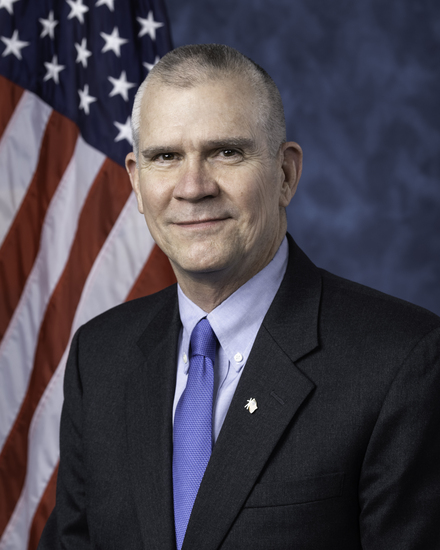
Rep. Matthew M. Rosendale, Sr.
Sponsored bills
Maddy summaryThe Mining Schools Act of 2024 establishes a federal grant program to strengthen domestic mining education by funding eligible schools. It defines eligible "mining schools" as accredited mining/engineering programs at higher education institutions or specific geology/engineering departments at 4-year public universities in states with significant mining-related economic activity. The Department of Energy will award up to 10 competitive annual grants for recruiting students and enhancing programs focused on critical minerals, environmental reclamation, sustainable extraction, and domestic mineral production. An advisory board of industry and academic experts will help select grantees and ensure funds are used as intended. The program is authorized to receive $10 million yearly from 2024 through 2031.
Maddy summaryThis bill blocks the Department of Housing and Urban Development (HUD) from implementing or enforcing the "Affirmatively Furthering Fair Housing" rule (2023) and prevents HUD from reissuing a similar rule without new congressional approval. It requires HUD to reinstate the "Preserving Community and Neighborhood Choice" rule (2020) as fully effective. The bill directly affects HUD's regulatory authority over housing programs but does not create new housing benefits or requirements for residents. It focuses solely on altering HUD's rulemaking process regarding fair housing enforcement.
Maddy summaryThis bill transfers specific mineral rights to the Crow Tribe and the Hope Family Trust. It requires the Hope Family Trust to convey its mineral interests in the Hope Family Tracts (4,660 acres in the Crow Reservation) to the Crow Tribe, while the U.S. government conveys mineral interests in the Bull Mountains Tracts (4,530 acres) to the Hope Family Trust. The mineral rights transferred to the Tribe will be held in trust by the U.S. and exempt from Montana state taxation. The Tribe must later agree on a revenue-sharing formula with the Hope Family Trust if the minerals are developed. This directly affects the Crow Tribe, the Hope Family Trust, and Montana's tax jurisdiction over these lands.
Maddy summaryHRES 1579 is a House resolution requiring all Members, officers, and employees of the House to use single-sex facilities (such as restrooms, locker rooms, and changing rooms) in Capitol and House office buildings that correspond to their biological sex. It prohibits the use of facilities not matching one's biological sex within these locations. The Sergeant-at-Arms would enforce this rule. This resolution applies solely to internal House operations and does not affect public facilities or external policies.
Maddy summaryHR 10083, the "No Funding for Illegal Migrant Billboards Act," prohibits the use of federal funds to advertise the Immigration Detention Ombudsman's office or functions through billboards or similar public advertising. This bill directly affects the Department of Homeland Security, specifically restricting how the Ombudsman's office can be promoted using public funds. The key mechanism is an amendment to the Homeland Security Act of 2002, adding a provision that bans obligating or expending funds for such advertising. The law applies to all public advertising methods, not just physical billboards, and takes effect immediately upon enactment.
Maddy summaryThis bill requires universities that mandate COVID-19 vaccination for attendance to cover medical costs for students who develop specific vaccine-related conditions (like myocarditis, pericarditis, or thrombosis). Students must submit documentation including vaccination records, a medical diagnosis, and cost records to their institution for reimbursement. If a university fails to comply, the Secretary of Education may cut its federal funding. The bill directly affects colleges receiving federal funds with vaccine attendance requirements and students who experience qualifying health issues after mandated vaccination. It does not change vaccination policies but establishes a process for medical cost coverage.
Maddy summaryHR 10069 transfers unobligated funds from the Ukraine Security Supplemental Appropriations Act (specifically the Economic Support Fund) to the Disaster Relief Fund. These funds will support disaster response under the Robert T. Stafford Disaster Relief Act for major disasters declared under that law. The bill excludes funds designated for preventing or responding to food insecurity. This transfer directly affects how unspent emergency aid funds are used for disaster relief, not for other purposes like food security programs.
Maddy summaryThis bill amends Section 4013 of the Water Infrastructure Improvements for The Nation Act to allow water districts and project developers who received federal loans for western U.S. water infrastructure projects to repay those loans faster. It adds a new provision (paragraph (3)) directing repayment authority under Section 4011, streamlining the process for accelerating loan repayment. The change directly affects entities managing federally funded water projects in the western United States, enabling earlier repayment without altering loan terms or funding amounts.
Maddy summaryThis bill terminates all federal funding for FEMA's Shelter and Services Program effective upon enactment. It prohibits new appropriations for this program or any similar successor program. Any remaining funds from the program as of the enactment date will be transferred to support disaster relief efforts under the Robert T. Stafford Disaster Relief Act. The change directly affects FEMA's budget operations but redirects existing resources to broader disaster assistance.