

Maddy summaryHRES 684 is a symbolic congressional resolution passed by the U.S. House of Representatives on September 14, 2023, condemning New Mexico Governor Michelle Lujan Grisham's emergency order that temporarily suspended open and concealed carry firearm rights for 30 days. The resolution asserts the order violated the Second Amendment, citing Supreme Court precedents (Heller, McDonald, Bruen) and noting a federal judge had already blocked the order's firearm restrictions. It does not change any laws or impose legal consequences - it is solely a formal expression of disapproval from Congress. The resolution directly addresses the Governor's actions but has no effect on New Mexico's laws or citizens' rights.
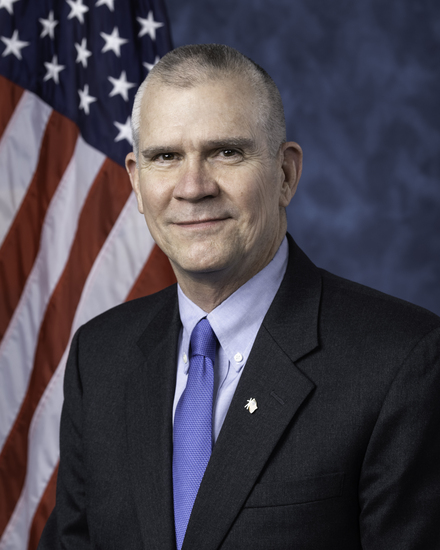
Rep. Matthew M. Rosendale, Sr.
Sponsored bills
Maddy summaryHR 5636, the "Protect Children’s Innocence Act," prohibits federal criminal penalties for performing gender-affirming medical care on minors under specific circumstances. It defines prohibited care as surgeries (like hysterectomy or mastectomy), puberty blockers, and hormone therapies at supraphysiologic doses, with exceptions for medical emergencies, intersex conditions, or life-threatening illnesses. The law only applies when the care involves interstate commerce (e.g., payments, communications, or travel across state lines). Minors receiving such care cannot be prosecuted, but they may sue providers for civil damages. The bill directly affects minors under 18, healthcare providers, and families seeking gender-affirming medical treatment.
Maddy summaryThis bill prohibits federal funding for colleges and universities that require students or staff to get a COVID-19 vaccine to enroll, work, or access services. It directly affects institutions of higher education receiving federal funds, such as those participating in student aid programs. The key provision blocks all federal financial support if an institution enforces such vaccine requirements as a condition of enrollment, employment, or benefits. The law does not ban vaccine mandates outright but ties federal funding to compliance with this prohibition.
Maddy summaryThis bill mandates the U.S. Secretary of the Interior to reissue a 2017 rule that removed grizzly bears in the Greater Yellowstone Ecosystem from the federal endangered species list, within 180 days of the bill's enactment. It directly affects grizzly bear management in that ecosystem by reinstating state-led management authority previously established under the 2017 rule. The key provision requires the rule's reissuance without any legal challenges, explicitly stating the action "shall not be subject to judicial review."
Maddy summaryHR 5577, the FACE Act Repeal Act of 2023, would repeal a federal law (Section 248 of Title 18, U.S. Code) that made it a crime to block access to abortion clinics or threaten clinic staff. This repeal would remove criminal penalties for obstructing access to clinics, affecting abortion providers, clinic staff, and individuals attempting to access or block clinic entrances. The bill specifically targets the repeal of this prohibition, applying to prosecutions pending or initiated after the law's enactment. It does not change other abortion-related laws or create new policies.
Maddy summaryThe Freedom to Breathe Act (HR 5368) prohibits the use of federal funds to enforce mask mandates for passengers traveling on air carriers, public transit, or in elementary, secondary, and higher education institutions from enactment until December 31, 2024. It bans federal agencies from requiring masks in these settings and prevents transportation providers or schools from denying service to individuals who refuse to wear masks. The law also overrides conflicting state or local rules during the applicable period. This applies specifically to settings receiving federal funding, such as public schools and federally supported transit systems.
Maddy summaryHR 5382, the HUD Equity Action Plan Elimination Act of 2023, prohibits federal funding for the Department of Housing and Urban Development's (HUD) Equity Action Plan and blocks a related proposed fair housing rule. The bill stops all federal funds from being used to implement HUD's Equity Action Plan and explicitly disapproves a proposed rule about affirmatively furthering fair housing. This means HUD cannot carry out the Equity Action Plan using federal money, and the specific proposed fair housing rule (published February 2023) cannot become final. The bill directly affects HUD's ability to advance its equity-focused housing initiatives and related regulatory actions.
Maddy summaryHR 5287, the Veterans Access to Direct Primary Care Act, creates a five-year pilot program allowing eligible enrolled veterans to use a Veterans Health Savings Account (VHSA) to pay for primary care services from non-VA providers through fixed-fee "direct primary care" arrangements. The VHSA covers primary care services, preventive screenings, and medications, but veterans using it cannot receive VA care for those same services during the pilot. The program, funded by existing VA Health Administration appropriations, requires annual reports to Congress and terminates after five years. It directly affects veterans enrolled in the VA patient system who choose this alternative care option.
Maddy summaryHR 5285, the Staff Safety Act, amends federal law to clarify that congressional staff (including Members' employees and committee staff) are exempt from Capitol Grounds firearm regulations under the same constitutional protections as Members of Congress. The bill requires the Capitol Police Board to revise its regulations within 90 days to align with this exemption, removing current restrictions preventing staff from carrying firearms on Capitol grounds. This directly affects congressional staff who are currently barred from carrying firearms under existing Capitol Police regulations. The bill bases its changes on Supreme Court rulings (Heller and Bruen) that affirm the Second Amendment applies to public carry outside the home. It focuses on legal clarification, not new safety measures or policy changes for staff.
Maddy summaryHR 4416, the "No Funds for Armed Regulators Act of 2023," prohibits using federal funds to hire or keep armed enforcement officers within three specific agencies: the Internal Revenue Service, the Department of Labor, and the Environmental Protection Agency. The bill defines "armed Federal regulatory enforcement officers" as individuals who enforce laws using tactical means, including weapons or force. It directly affects these agencies' enforcement personnel by blocking funding for armed roles in their regulatory work. The key mechanism is a funding restriction embedded in federal budget allocations, not a new law governing enforcement tactics. This bill focuses solely on restricting financial support for armed enforcement, without altering agency authority or duties.