

No Asylum for Criminals Act of 2021 This bill bars an individual who has been convicted of a crime from receiving asylum, with limited exceptions. Specifically, the Department of Homeland Security may designate political offenses committed outside of the United States that shall not be considered a crime for this purpose. Currently, an individual shall be barred from receiving asylum for only certain types of criminal convictions, such as if the individual is convicted for (1) an aggravated felony, or (2) a particularly serious crime and as a result deemed a danger to the United States.
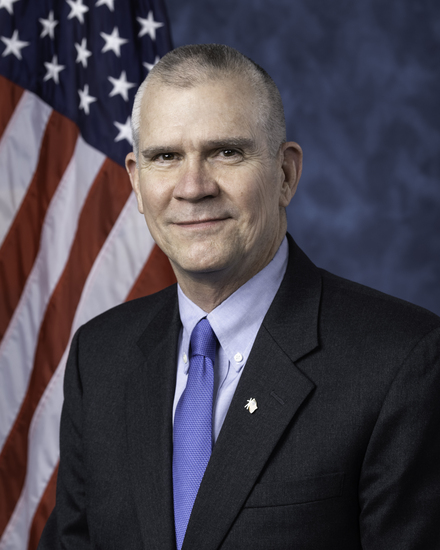
Rep. Matthew M. Rosendale, Sr.
Sponsored bills
This joint resolution proposes a constitutional amendment prohibiting Members of Congress from receiving compensation during a fiscal year unless both chambers have agreed to an identical concurrent resolution on the budget for that fiscal year before October 1.
This joint resolution proposes a constitutional amendment limiting Representatives to three terms and Senators to two terms. Terms beginning before the ratification of this amendment do not count towards these term limits.
This joint resolution proposes a constitutional amendment prohibiting total outlays for a fiscal year from exceeding total receipts for that fiscal year unless Congress authorizes the excess by a three-fifths roll call vote of each chamber. The prohibition excludes outlays for repayment of debt principal and receipts derived from borrowing. The amendment requires roll call votes of (1) three-fifths of each chamber of Congress to increase the public debt limit, and (2) a majority of each chamber for legislation increasing revenue. It also requires the President to submit a balanced budget to Congress annually. Congress is authorized to waive these requirements when a declaration of war is in effect or if the United States is engaged in a military conflict which causes an imminent and serious military threat to national security.
Protecting the Right to Keep and Bear Arms Act of 2021 This bill prohibits (1) the President or the Department of Health and Human Services from declaring emergencies or disasters for the purpose of imposing gun control; and (2) a federal officer or employee, or person operating under color of federal law, from banning the manufacture, sale, or transfer of firearms or ammunition while acting in support of relief from a major disaster or emergency.
Paycheck Protection Program Loan Forgiveness Flexibility Act of 2021 This bill modifies the rehiring deadline by which a participant in the Paycheck Protection Program, established to support small businesses in response to COVID-19 (i.e., coronavirus disease 2019), must return to pre-pandemic levels of employment in order to be eligible for loan forgiveness. Specifically, the bill sets this rehiring deadline to 90 days after the termination of all state and local COVID-19 emergency declarations that apply to the location of the recipient.
Protecting American Energy Jobs Act This bill limits the President's authority to prohibit or withdraw federal land or waters from energy production activities. Specifically, the bill requires the President and federal agencies to obtain the approval of Congress before prohibiting or substantially delaying certain new energy or mineral leases or permits on federal lands, including oil and gas leases, coal leases, hard rock leases, or critical minerals leases. In addition, the President and agencies must obtain the approval of Congress before withdrawing certain federal lands from mineral and geothermal leasing activities. Further, the bill repeals the President's authority to withdraw unleased lands on the outer Continental Shelf from oil and gas leasing. The bill nullifies Executive Order 13990 titled Protecting Public Health and the Environment and Restoring Science To Tackle the Climate Crisis; Executive Order 14008 titled Tackling the Climate Crisis at Home and Abroad; and the Department of the Interior's Secretarial Order 3395 concerning a temporary suspension of delegated authority to all of Interior's Bureaus and Offices, including the authority to approve leases.
One Bill, One Subject Transparency Act This bill requires each bill or joint resolution to include no more than one subject and the subject to be clearly and descriptively expressed in the measure's title. An appropriations bill may not contain any general legislation or change to existing law that is not germane to the subject of the underlying bill. The bill voids measures or provisions that do not comply with these requirements, including appropriation provisions outside the relevant subcommittee's jurisdiction.
Fund and Complete the Border Wall Act This bill establishes funding for a U.S.-Mexico border barrier and revises how border patrol agents are compensated for overtime. The Department of the Treasury shall set up an account for funding the design, construction, and maintenance of the barrier. The funds in the account are appropriated only for that purpose and for vehicles and equipment for border patrol agents. For each fiscal year, financial assistance to a country shall be reduced by $2,000 for each citizen or national of that country apprehended for illegally entering the United States through its southern border. The reduced amount shall be transferred to the border barrier account. The Department of State may opt not to reduce amounts appropriated to Mexico for various military and law enforcement-related activities. This bill establishes a 5% fee on foreign remittance transfers and increases the fee for the arrival/departure I-94 form for various aliens entering the United States, with part of the fees to go into the border barrier account. By December 31, 2021, DHS shall (1) take all actions necessary, including constructing barriers, to prevent illegal crossings along the U.S.-Mexico barrier; and (2) achieve operational control over all U.S. international borders. The bill changes how border patrol agents receive overtime pay when working up to 100 hours in a two-week period. For hours worked above 80, an agent shall receive at least 150% of the agent's regular hourly rate.
Birthright Citizenship Act of 2021 This bill limits birthright citizenship by redefining what it means to be subject to the jurisdiction of the United States. Currently, a person born in the United States and subject to U.S. jurisdiction is entitled to citizenship. Under the bill, a person is subject to U.S. jurisdiction if he or she is born to a parent who is (1) a U.S. citizen or national, (2) a lawful permanent resident residing in the United States, or (3) an alien performing active service in the Armed Forces. The bill does not affect the citizenship or nationality status of any person born before the bill's enactment date.