

Maddy summaryThis resolution (HRES 99) is a non-binding statement supporting National Black HIV/AIDS Awareness Day, observed annually on February 7. It directly addresses the disproportionate impact of HIV/AIDS on Black communities in the U.S., citing data showing Black Americans face higher diagnosis rates, later care access, and greater mortality compared to other groups. The resolution encourages state/local governments and health agencies to promote HIV testing and awareness, supports the National HIV/AIDS Strategy, and advocates for culturally competent care and the "U=U" (Undetectable equals Untransmittable) messaging. It does not create new laws or allocate funding but urges recognition of existing disparities and community-led solutions.
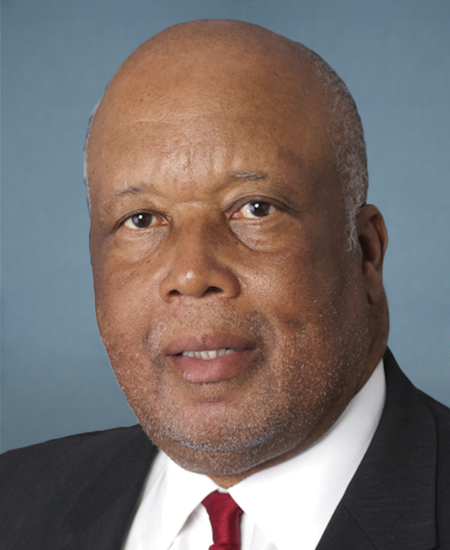
Rep. Bennie G. Thompson
Sponsored bills
Maddy summaryThis bill provides financial assistance to help low-income renters cover security deposits and moving costs. It directly affects families using housing choice vouchers (Section 8) and those receiving housing assistance through the HOME program. The law requires public housing agencies to use federal funds to pay for reasonable security deposits and moving expenses, and mandates that unused funds be returned to the agency for future use. It also directs the Department of Housing and Urban Development to study alternatives to traditional security deposits and report findings to Congress within 180 days.
Maddy summaryHR 1088, the Shirley Chisholm Congressional Gold Medal Act, authorizes a posthumous Congressional Gold Medal to honor Congresswoman Shirley Chisholm, the first African-American woman elected to Congress (1968) and the first Black candidate for a major party's presidential nomination (1972). The bill directs the Treasury Secretary to design and strike a gold medal featuring Chisholm's image, which will be presented by Congress and then permanently displayed at the Smithsonian Institution. Duplicate bronze medals may be sold to the public to cover production costs, with proceeds deposited into the U.S. Mint fund. This bill commemorates Chisholm's legacy and achievements without creating new laws or affecting any current policies.
Maddy summaryThis bill authorizes a posthumous Congressional gold medal for Constance Baker Motley, a pioneering civil rights attorney and federal judge. It directs the Treasury to strike a gold medal featuring her image and name, to be presented to her son, Joel Motley III, and niece, Constance Royster. The medal is a commemorative tribute recognizing her historic contributions to civil rights and her service as the first African-American woman appointed to a federal judgeship. No new policies or programs are created; the bill solely honors her legacy through a commemorative medal.
Maddy summaryHR 902, "Ellie’s Law," authorizes $10 million annually from fiscal years 2024 through 2028 for the National Institute of Neurological Disorders and Stroke to conduct broader research on unruptured brain aneurysms. The funding aims to study diverse patient populations by age, sex, and race, supplementing existing research budgets without replacing them. This bill directly affects researchers and future patients by increasing federal investment in a condition impacting 6.6 million Americans, with current federal spending at only $2.08 per affected person yearly. The legislation focuses on advancing scientific understanding to improve prevention and treatment, citing the high mortality rate (50% fatal) and significant healthcare costs ($4.1 billion annually in direct costs) associated with brain aneurysm ruptures.
Maddy summaryHRES 128 is a symbolic House resolution honoring baseball legend Hank Aaron's career and legacy. It recognizes his historic 715th home run breaking Babe Ruth's record in 1974, his 23-year MLB career (including 23 seasons with the Braves), and his role as a civil rights symbol who overcame pervasive racism. The resolution formally acknowledges Aaron's achievements on the field - such as 755 career home runs and the 1974 record-breaking moment - as well as his off-field impact in advancing equality. It was introduced in the U.S. House of Representatives on February 14, 2023, and serves as a ceremonial tribute without creating new laws or affecting any policies.
Maddy summaryThe American Opportunity Accounts Act establishes savings accounts for children born after December 31, 2005, to help them build financial assets. The government will make an initial $1,000 contribution to each eligible child's account (for those born after 2023) and provide annual contributions based on family income, ranging from $2,000 for low-income families to $0 for higher-income families. Account holders can access funds for education, home ownership, or other qualified expenses after age 18, with certain exceptions for higher education costs. The accounts are excluded from federal benefit eligibility calculations, and the government will manage the accounts through an American Opportunity Fund Board.
Maddy summaryThis bill authorizes a single Congressional Gold Medal to honor all U.S. Army Dustoff crews who served during the Vietnam War (1962-1973). It recognizes their critical role in evacuating nearly 900,000 wounded personnel, including U.S., South Vietnamese, and allied forces, under extreme combat conditions. The medal, designed with input from the Secretary of Defense, will be presented to the U.S. Army Medical Department Museum for permanent display. Duplicate bronze medals may be sold to cover costs, but the primary action is the commemorative recognition of these crews' service.
Maddy summaryThe Pregnant Women in Custody Act establishes new standards for care of pregnant women in correctional facilities across federal, state, tribal, and local systems. It prohibits using restrictive housing for pregnant women from confirmed pregnancy through 12 weeks after delivery (with limited exceptions), requires facilities to provide comprehensive healthcare services including prenatal and postpartum care, and mandates data collection about the health needs of incarcerated pregnant women. The bill also requires staff training on proper treatment, establishes protocols for unexpected childbirth, and mandates transfer of women with high-risk pregnancies to facilities with appropriate medical care. These provisions aim to improve health outcomes for both mothers and infants by addressing gaps in care for incarcerated pregnant women.
Maddy summaryHR 927, the Supreme Court Ethics Act, establishes new ethics rules and oversight for Supreme Court justices. It requires the Judicial Conference to create a binding code of conduct within one year and mandates the appointment of an Ethics Investigations Counsel to receive public complaints, investigate potential violations, and issue annual public reports. The bill also requires justices to publicly disclose their reasons for recusing themselves or denying recusal motions in cases. These provisions directly affect Supreme Court justices by creating a formal process for handling ethics concerns and increasing transparency around their conduct.