Willie O'Ree Congressional Gold Medal Act This bill provides for the award of a Congressional Gold Medal to Willie O'Ree or, if unavailable, to a member of his family, in recognition of his contributions and commitment to hockey, inclusion, and recreational opportunity.
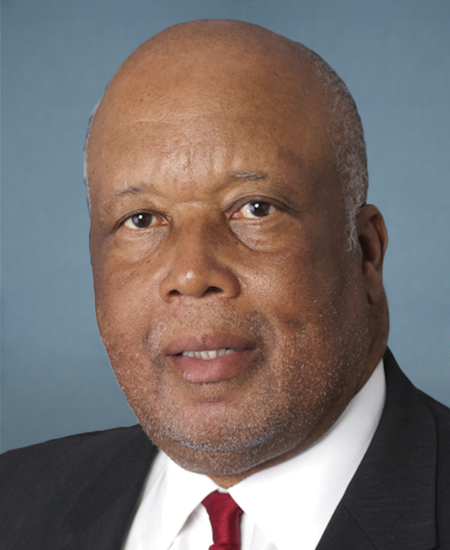
Rep. Bennie G. Thompson
Sponsored bills
This bill requires the Joint Committee on the Library to enter into an agreement to obtain a statue of Shirley Chisholm, the first African American woman elected to Congress. The committee shall place the statue in a permanent public location in the U.S. Capitol.
Emmett Till and Mamie Till-Mobley Congressional Gold Medal Act of 2021 This bill provides for the posthumous presentation of a Congressional Gold Medal in commemoration of Emmett Till and Mamie Till-Mobley. After the award the medal shall be given to the National Museum of African American History and Culture.
No Honor for Treason Act This bill prohibits the provision of military honors at the funeral or burial of any person who has been convicted of a felony committed on January 6, 2021, in or on the U.S. Capitol buildings and grounds.
Quit Because of COVID-19 Act This bill provides for Medicaid and Children's Health Insurance Program (CHIP) coverage of certain tobacco cessation services. Specifically, the bill provides for coverage, without cost-sharing, of diagnostic, therapy, and counseling services and pharmacotherapy, including prescription and nonprescription tobacco cessation agents, that are provided under medical supervision and in accordance with specified guidelines. It also applies a 100% Federal Medical Assistance Percentage (i.e., federal matching rate) for such items and services during the public health emergency relating to COVID-19 and for two years after the emergency period ends.
Minority Diabetes Initiative Act This bill authorizes grants for diabetes-related health care services in minority communities. The Department of Health and Human Services may make these grants to public and nonprofit health care providers.
Affordable Insulin for the COVID-19 Emergency Act This bill eliminates cost-sharing under the Medicare prescription drug benefit and Medicare Advantage for insulin and associated medical supplies during the public health emergency relating to COVID-19 (i.e., coronavirus disease 2019). The bill also allows beneficiaries to receive their insulin and supplies via mail order during the emergency period.
This joint resolution eliminates the deadline for the ratification of the Equal Rights Amendment, which prohibits discrimination based on sex. The amendment was proposed to the states in House Joint Resolution 208 of the 92nd Congress, as agreed to in the Senate on March 22, 1972. The amendment shall be part of the Constitution whenever ratified by the legislatures of three-fourths of the states.
Ethan's Law This bill establishes a framework to regulate the storage of firearms on residential premises at the federal, state, and tribal levels. At the federal level, the bill establishes statutory requirements for firearms on residential premises to be safely stored if a minor is likely to gain access without permission or if a resident is ineligible to possess a firearm. An individual who violates the requirements is subject to criminal penalties. A firearm stored in violation of the requirements is subject to seizure and forfeiture. At the state and tribal levels, the bill requires the Department of Justice to award grants to implement functionally identical requirements for the safe storage of firearms.
Pandemic Treatment Access and Affordability Act of 2021 This bill imposes licensing and price restrictions on federally supported drugs and other medicines intended to address COVID-19 (i.e., coronavirus disease 2019) or other public health emergencies. With respect to a COVID-19 drug patent developed using certain types of federal support, any license granted by the federal government shall be open and nonexclusive. Similarly, a licensee or assignee for such a patent shall grant open nonexclusive licenses for the patent. An entity that receives a license shall pay reasonable royalties to (1) the patent holder, or (2) the owner of marketing exclusivity rights granted by the Food and Drug Administration (FDA) that were terminated under this bill. The bill requires that such drugs be offered at a fair and reasonable price based on certain considerations, such as access. If the Department of Health and Human Services (HHS) finds that the price of any drug to address a public health emergency is excessive, HHS must void any FDA-granted exclusivity for the drug and grant open and nonexclusive licenses to other manufacturers. Such licenses are subject to reasonable royalty requirements.