Suicide Prevention Assistance Act This bill requires the Substance Abuse and Mental Health Services Administration (SAMHSA) to award grants to primary care offices for self-harm and suicide prevention services, including screenings. SAMHSA must also develop standards of practice for conducting such screenings.
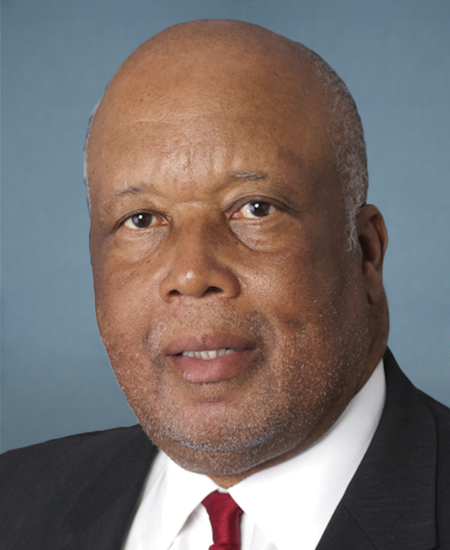
Rep. Bennie G. Thompson
Sponsored bills
Chiropractic Medicare Coverage Modernization Act of 2021 This bill expands Medicare coverage of chiropractic services to include all services provided by chiropractors, rather than only subluxation corrections through manual manipulation of the spine.
Workplace Violence Prevention for Health Care and Social Service Workers Act This bill requires the Department of Labor to address workplace violence in health care, social service, and other sectors. Specifically, Labor must issue an interim occupational safety and health standard that requires certain employers to take actions to protect workers and other personnel from workplace violence. The standard applies to employers in the health care sector, in the social service sector, and in sectors that conduct activities similar to those in the health care and social service sectors. In addition, Labor must promulgate a final standard within a specified time line.
COVID-19 Safe Birthing Act This bill expands coverage of maternal health care under Medicare, Medicaid, the Children's Health Insurance Program (CHIP), and private health insurance. The bill specifically provides for Medicare and Medicaid coverage of maternal health services that are furnished via telehealth. It also requires Medicaid, CHIP, and private health insurance to cover prenatal services and one year of postpartum care without cost-sharing. The bill also requires short-term, limited-duration health insurance plans, association health plans, and health care sharing ministries to cover COVID-19 testing without cost-sharing. It also requires state Medicaid programs to provide coverage of COVID-19 testing for pregnant individuals who are uninsured. Additionally, as a condition of Medicare participation, hospitals must permit pregnant individuals to be accompanied by someone of their choosing (in addition to a doula or other health care worker) during labor, delivery, and recovery, and may not implement any discriminatory policies that restrict hospital access or birthing options for pregnant individuals.
Commission to Study and Develop Reparation Proposals for African Americans Act This bill establishes the Commission to Study and Develop Reparation Proposals for African Americans. The commission shall examine slavery and discrimination in the colonies and the United States from 1619 to the present and recommend appropriate remedies. The commission shall identify (1) the role of the federal and state governments in supporting the institution of slavery, (2) forms of discrimination in the public and private sectors against freed slaves and their descendants, and (3) lingering negative effects of slavery on living African Americans and society.
Healthy Families Act This bill provides for paid and unpaid sick leave for employees to meet their own medical needs and those of their families. It requires employers with 15 or more employees to provide their employees with at least one hour of earned paid sick leave for every 30 hours worked, up to a maximum of 56 hours of paid sick leave in a year. An employer with fewer than 15 employees may also provide the same amount of paid sick leave, but may opt out of such requirement, in which case such employer must provide its employees at least 56 hours of unpaid leave in a year. An employee may use sick leave for absences (1) resulting from a physical or mental illness, injury or medical condition; (2) resulting from obtaining professional medical diagnosis or care, or preventive medical care; (3) to care for a child, parent, spouse, a domestic partner, or other blood or close relative; and (4) resulting from domestic violence, sexual assault, or stalking. The bill makes it unlawful for any employer to interfere with, restrain, or deny the exercise of an employee's right to accrue sick leave as provided by this bill. An employee may take legal action to enforce the right to sick leave granted by this bill and the Department of Labor must investigate complaints of violations of the requirements of this bill. Labor is authorized to conduct a public awareness campaign to educate and inform the public of the requirements for paid sick leave provided by this bill.

Student Loan Forgiveness for Frontline Health Workers Act This bill establishes temporary programs to provide federal and private student loan forgiveness to certain frontline health care workers. Frontline health care workers are those individuals who have made significant contributions to the medical response (e.g., patient care, medical research, or testing) to the COVID-19 (i.e., coronavirus disease 2019) national emergency. Specifically, the Department of Education (ED) must carry out a program to forgive the outstanding balance of principal and interest due on federal student loans for borrowers who are frontline health care workers. Additionally, the Department of the Treasury must carry out a program to repay in full the outstanding balance of principal and interest due on certain private student loans for borrowers who are frontline health care workers. ED and Treasury must coordinate to ensure that eligibility determinations are consistent across both programs and that frontline health care workers who are eligible for both programs may apply for loan forgiveness with a single application. Further, such programs must be available to frontline health care workers who were borrowers of eligible loans and who died as a result of COVID-19. The bill specifies the notification requirements related to the availability of these programs. ED, Treasury, and the Department of Health and Human Services must jointly establish an intergovernmental working group to assist with the administration of these programs, including the development of the application process. The bill also excludes discharged student loan debt under these programs from an individual's gross income.
Water Affordability, Transparency, Equity, and Reliability Act of 2021 This bill increases funding for water infrastructure, including funding for several programs related to controlling water pollution or protecting drinking water. Specifically, it establishes a Water Affordability, Transparency, Equity, and Reliability Trust Fund. The fund may be used for specified grant programs. The bill increases the corporate income tax rate to 24.5% to provide revenues for the fund. In addition, the bill revises requirements concerning the clean water state revolving fund (SRF) and the drinking water SRF. It also creates or reauthorizes several grant programs for water infrastructure.
Public Servants Protection and Fairness Act of 2021 This bill establishes an alternative formula to calculate Social Security retirement benefits for those who receive pensions for certain non-covered employment. (The existing formula is known as the windfall elimination provision.) The alternative formula adjusts an individual's total lifetime earnings based on the proportion of covered earnings (i.e., earnings subject to Social Security payroll taxes). It applies to individuals who (1) first become eligible for benefits after 2022, (2) have earnings from non-covered service performed after 1977, and (3) have less than 30 years of coverage (i.e., years in which a beneficiary is considered to have contributed a substantial amount into the Social Security trust funds). Beneficiaries receive the higher benefit amount as calculated under the alternative method or the existing formula. In addition, the bill provides rebates for certain beneficiaries currently impacted by the existing formula. The Social Security Administration must include non-covered earnings in Social Security account statements, and the Government Accountability Office must study the availability of certain information related to retirement plans maintained by state and local governments.
Historic Tax Credit Growth and Opportunity Act of 2021 This bill increases the rehabilitation tax credit and modifies certain requirements for the credit. The bill increases the rate of the credit for qualified rehabilitation expenditures in taxable years beginning after December 31, 2019, and before January 1, 2027, after which the rate reverts to 20%. The bill increases the rate of the credit to 30% for certain small projects whose qualified rehabilitation expenditures do not exceed $2.5 million. The bill also expands the types of buildings eligible for rehabilitation by decreasing the rehabilitation threshold from 100% to 50% of project expenses. It also eliminates the basis adjustment requirement for the credit and modifies rules relating to tax-exempt use property eligible for the credit.