

Maddy summaryHR 407, the "Protect the UNBORN Act," prohibits federal agencies from implementing or enforcing two specific executive orders issued by President Biden in 2022 (Executive Orders 14076 and 14079), which aimed to protect access to reproductive healthcare services. The bill bans the use of federal funds, including those from the 2022 Consolidated Appropriations Act, to carry out, administer, or enforce these executive orders. It directly affects federal agencies and programs that would otherwise comply with the Biden administration's policies on reproductive healthcare access. The bill does not create new healthcare rules but blocks the implementation of existing executive actions.
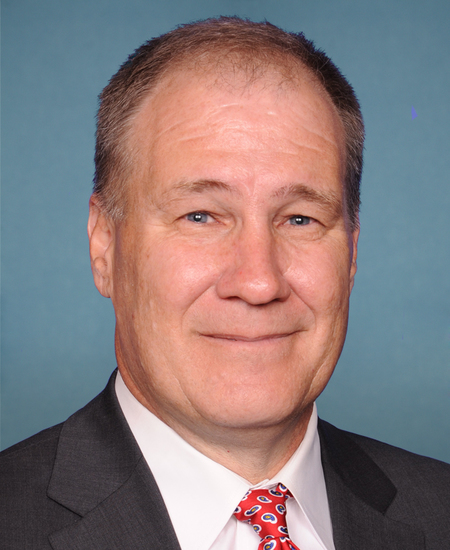
Rep. Trent Kelly
Sponsored bills
Maddy summaryThis bill bans federal funding for abortions in most cases, prohibiting the use of taxpayer money for abortion services or health insurance plans covering abortion. Exceptions allow funding for abortions resulting from rape, incest, or when a pregnancy endangers a woman's life. It requires health insurance plans sold through the Affordable Care Act (ACA) marketplaces to clearly disclose any separate costs for abortion coverage and prohibits ACA subsidies from being used for plans that cover abortion (except in the specified exceptions). The law directly affects federal programs like Medicaid, ACA marketplace plans, and insurers offering health coverage to individuals using federal subsidies.
Maddy summaryHJRES 142 is a congressional disapproval resolution targeting a Department of Labor rule issued on April 25, 2024. It seeks to block the "Retirement Security Rule: Definition of an Investment Advice Fiduciary" (89 Fed. Reg. 32122), which defined standards for financial advisors handling retirement accounts. If passed, this resolution would make the Labor Department's rule ineffective, directly affecting retirement plan advisors and financial institutions subject to the regulation. The bill uses a specific procedural mechanism under Title 5, U.S. Code, to nullify the rule without creating new law.
Maddy summaryHR 1586, the Forest Protection and Wildland Firefighter Safety Act of 2023, exempts certain fire suppression activities from requiring permits under the Clean Water Act. It directly affects federal agencies like the Forest Service, National Park Service, and Bureau of Land Management, as well as state, local, and tribal governments conducting wildfire response. The bill's key provision removes the need for a Section 402 permit under the Clean Water Act when these covered entities discharge fire retardants, chemicals, or water for fire control or prevention. This change streamlines firefighting operations by eliminating a specific permitting step during active wildfire events.
Maddy summaryHR 7438 directs the U.S. Treasury to mint commemorative coins for the 2026 FIFA World Cup, including 100,000 $5 gold coins, 500,000 $1 silver coins, and 750,000 half-dollar coins. The coins will be sold to the public at face value plus surcharges ($35, $10, and $5 per coin, respectively), with all surcharge revenue paid to FWC2026 US, Inc. for U.S. soccer programs. These funds must support soccer initiatives, particularly in underserved communities and youth development, as specified in the bill. The coins are legal tender but will only be issued during 2026, with no net cost to the U.S. government.
Maddy summaryThe FEMA Loan Interest Payment Relief Act requires FEMA to reimburse local governments and electric cooperatives for interest paid on qualifying disaster recovery loans. A qualifying loan must be used for FEMA-covered activities with at least 90% of proceeds dedicated to those purposes. Reimbursement covers the lesser of actual interest paid or what would have been paid at the prime interest rate, as defined by the Federal Reserve. This relief applies to interest accrued in the seven years preceding the bill's enactment.
Maddy summaryThis bill allows livestock producers and their employees to take black vultures (Coragyps atratus) that are harming or threatening livestock, bypassing the usual protections under the Migratory Bird Treaty Act. It directly affects ranchers and farm workers in areas where black vultures cause livestock deaths or injuries. The key provision requires annual reporting to the U.S. Fish and Wildlife Service about any vultures taken, using a simplified form similar to existing reporting for permitted bird take. This creates a specific, limited exception to federal bird protections for livestock protection, with no new restrictions on vulture populations.
Maddy summaryHR 6751 authorizes the U.S. Mint to produce commemorative coins honoring Roberto Clemente, a Hall of Fame baseball player and humanitarian, including 50,000 $5 gold coins, 400,000 $1 silver coins, and 750,000 half-dollar coins. The coins must feature Clemente's image and inscriptions like "Roberto Clemente" and "2027," with all sales including a surcharge ($5-$35 per coin) paid to the Roberto Clemente Foundation. The foundation, which supports youth sports, education, and disaster relief programs, will use these funds for its mission, while the U.S. Treasury must recover all production costs. The coins will be sold exclusively in 2027, with no net cost to the government.
Maddy summaryThis bill allows National Guard and Reserve members to count their active duty service toward student loan forgiveness requirements. Specifically, it deems months of qualifying military service (excluding deployments over 30 days) as equivalent to making monthly loan payments, calculated by dividing days served by 20 and rounding to the nearest whole month. Members must serve at least 10 days in a year to earn credit, and the bill removes the annual limit of 12 qualifying payments, allowing credit for more than 12 months if service qualifies. It directly affects Reserve component members of the Armed Forces who hold eligible federal student loans.
Maddy summaryThe COMETS Act allows NASA to enter agreements with private companies and state governments to provide them with supplies, support, and services related to their space activities at NASA-owned or operated facilities. It also permits NASA to include such supplies or services in its own procurement requirements, provided the Administrator confirms it benefits the government, doesn’t interfere with NASA’s operations, and avoids competing with other commercial space activities. Before committing to any agreement, NASA must secure full payment from the requesting entity or state government upfront. This bill directly affects NASA, commercial space entities, and state governments operating at NASA sites by streamlining collaborative arrangements for space-related services.