

Maddy summaryThe Jumpstart on College Act creates federal grant programs to expand early college high schools and dual enrollment programs, aiming to help more students earn postsecondary credentials within the normal timeframe. It authorizes $250 million annually for 6 years, with 40% of funds going directly to college-high school partnerships and 55% to states for statewide support. The grants require matching funds from recipients and mandate specific uses, such as creating college-aligned curricula, providing professional development for teachers, and ensuring students from underrepresented groups can access these programs without paying tuition for college courses. The bill also requires detailed reporting on student outcomes, including graduation rates and credential completion by demographic groups.
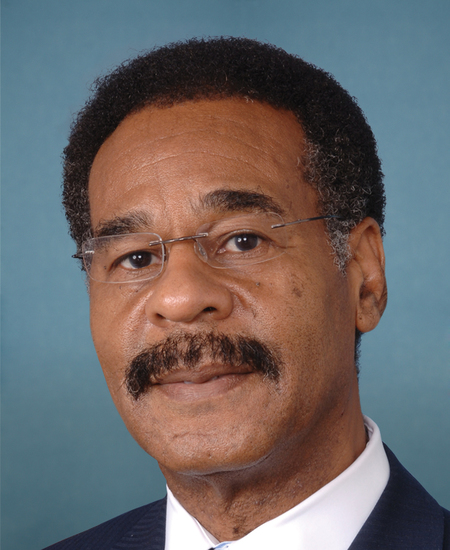
Rep. Emanuel Cleaver
Sponsored bills
Maddy summaryHR 5428, the No Tax Breaks for Union Busting (NTBUB) Act, prevents employers from deducting certain expenses related to influencing workers' decisions about union representation. It targets spending on tactics like anti-union meetings, workplace surveillance, or consultants during organizing campaigns, making these costs non-deductible for tax purposes. Employers must report such expenses on their tax returns, including details about the activities and amounts spent. The bill aims to remove tax incentives for employer interference in union elections, aligning with federal labor law protections for workers' collective bargaining rights.
Maddy summaryThis bill would prevent government shutdowns by automatically continuing federal funding at the previous year's level if Congress fails to pass annual budget bills by October 1. It requires Congress to prioritize budget legislation over other matters during funding gaps, with only limited exceptions for true emergencies like national security threats. All federal programs and agencies would operate using prior-year funding rates until a new budget is enacted, applying broadly across the government unless specific exemptions exist under current law. The bill does not create new spending but changes the process to avoid shutdowns by default.
Maddy summaryHRES 668, the BUDS Resolution, amends House rules to allow bipartisan joint sponsorship of public bills and resolutions by one majority-party and one minority-party member. This change directly affects House members seeking to co-sponsor legislation with cross-party support, updating the existing rules for naming cosponsors and submitting constitutional authority statements. The key mechanism requires that for joint sponsorship, one sponsor must represent the majority party and the other the minority party, with both sponsors sharing responsibility for related procedural steps. This procedural adjustment streamlines the process for bipartisan co-sponsorship without altering legislative policy.
Maddy summaryHR 5322, the Time Off to Vote Act, requires most private employers (with 25+ employees) to provide two consecutive hours of paid leave for employees to vote in federal elections. Employers must grant this leave upon request, can schedule it during early voting periods if permitted by state law, and cannot include lunch breaks in the leave period. The bill prohibits retaliation against employees who take this leave and ensures it does not affect accrued employment benefits. Violations could result in civil penalties up to $10,000 per offense, enforced by the Department of Labor.
Maddy summaryThe Sustaining Our Democracy Act creates a federal program to provide states with annual funding to improve election administration and increase voting access. It allocates $2 billion each year from 2024-2033 through the State Election Assistance and Innovation Trust Fund to support activities like upgrading voting equipment, training election workers, and expanding voting access for underserved communities, people with disabilities, and voters on Indian lands. States must submit detailed plans for using funds, which cannot be used for activities that restrict voting access or target election officials. The Act establishes an Office of Democracy Advancement and Innovation to administer the program, monitor fund usage, and oversee compliance with its requirements.
Maddy summaryThe Unhoused Voter Opportunity Through Elections Act (HR 5294) protects voting rights for people experiencing homelessness by prohibiting states from denying voting access based on living in a "nontraditional abode" like shelters, public spaces, or locations where someone is considered homeless under federal law. Key provisions require election officials to make ballot drop boxes accessible to unhoused individuals, accept written attestations of residence instead of traditional proof, allow homeless shelters to be used as voting addresses, and mandate outreach to shelters about registration deadlines and election dates. The bill also creates a grant program to fund mobile voting centers and direct outreach services specifically for unhoused individuals. These changes would directly affect homeless individuals and election officials across all states, implementing concrete policy changes to improve voting access for a population often excluded from the electoral process.
Maddy summaryHR 5295, the Expanding the VOTE Act, modifies Section 203 of the Voting Rights Act to expand language access for voters. It requires states and localities to provide voting materials (including ballots and instructions) in the language of covered language minority groups, with new provisions for American Indian and Alaska Native languages requiring tribal government consultation for unwritten languages. The bill creates $15 million in grants to help jurisdictions provide voting materials in languages that don’t currently trigger Section 203 coverage, while mandating continued provision for those groups in future elections. It also directs a study to evaluate lowering population thresholds for language protections and expanding the definition of covered languages.
Maddy summaryHR 4277, the Saving America’s Pollinators Act of 2023, would immediately cancel all registrations for neonicotinoid pesticides (including imidacloprid and clothianidin) and ban their sale, use, and future registration. This directly affects farmers and crop producers who currently use these pesticides on over 150 million acres of crops like corn and soybeans, where seed coatings are widely applied. The bill also ends exemptions for seed-treated pesticides and requires the Environmental Protection Agency to revoke tolerances for pesticide residues in food within six months. Additionally, it mandates the U.S. Fish and Wildlife Service’s newly established Center for Pollinator Conservation to monitor native bee populations and coordinate federal actions to reverse pollinator declines.
Risk Management for Derivatives Clearing Organizations Act This bill allows derivatives clearing organizations and clearing agencies to maintain accounts at a Federal Reserve Bank.