

Maddy summaryHRES 1096 is a non-binding resolution expressing support for the House of Representatives to collaborate with the Congressional Black Caucus in developing the "Black Wealth Agenda." It identifies key areas requiring policy action, including closing the racial wealth gap through improvements in homeownership access, education equity, fair employment practices, affordable housing, and tax reform. The resolution outlines priorities such as expanding support for Black entrepreneurship, addressing systemic housing discrimination, raising the federal minimum wage, and investing in historically Black colleges. It does not create new laws or mandate specific actions but commits the House to coordinating legislative efforts focused on these economic equity goals. The resolution was introduced by multiple representatives and referred to relevant committees for review.
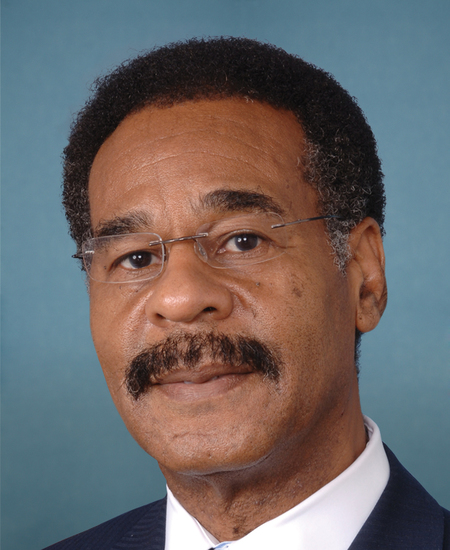
Rep. Emanuel Cleaver
Sponsored bills
Maddy summaryThis concurrent resolution (HCONRES 97) recognizes the gender wage gap, noting that women working full-time earn 84 cents for every dollar earned by men. It highlights racial disparities (e.g., Latinas earn 57 cents, Black women 69 cents) and the economic impact of the gap, including $965 billion in annual lost wages for women. As a symbolic resolution, it does not create new laws or policies but formally acknowledges the issue and reaffirms Congress’s commitment to addressing wage inequality.
Maddy summaryHRES 1075 is a ceremonial resolution recognizing AmeriCorps members, alumni, and AmeriCorps Seniors volunteers for their community service. It highlights their contributions over 30 years, including supporting vulnerable populations, disaster response, education, and environmental protection through nearly 200,000 annual volunteers. The resolution encourages nationwide recognition during AmeriCorps Week (March 10-16, 2024), urging the public to salute volunteers and promote community service. It has no funding or policy changes - only symbolic acknowledgment of existing program impacts.
Maddy summaryThe Pony Up Act requires the United States Postal Service (USPS) to reimburse individuals who were charged late fees or penalties due to delayed delivery of their bills or payment notices. If USPS delivers a bill notice less than 6 days before the payment due date (or payment after the due date), it must pay the exact amount of fees incurred. Individuals can apply for reimbursement via USPS website, mail, or in-person, with appeals available to a Judicial Officer within 30 days. The bill also mandates annual USPS reports on mail delivery delays by mail class and an audit to assess if certain mail types receive priority treatment.
Maddy summaryHR 7629, the Protect Our Letter Carriers Act of 2024, allocates $1.4 billion annually (2025-2029) to the U.S. Postal Service for high-security collection boxes and replacing physical universal mailbox keys with electronic versions, directly affecting USPS operations and letter carriers. It requires the Attorney General to appoint specialized prosecutors in each district to coordinate investigations and prosecutions of postal-related crimes, such as assaults on carriers or mail theft. The bill also mandates the U.S. Sentencing Commission to adjust guidelines so that assaults or robberies against postal employees are treated with the same severity as assaults against law enforcement officers. These provisions aim to enhance safety through infrastructure upgrades, improved prosecution, and stricter sentencing for crimes targeting postal workers.
Maddy summaryThis bill establishes a Federal Advisory Panel to analyze climate change risks to federal retirement investments and advise on transitioning toward low-carbon portfolios. It directly affects the Federal Retirement Thrift Investment Board (which manages retirement funds for over 5 million federal employees) by requiring the panel to assess fossil fuel investments, examine other pension funds' climate strategies, and produce a report within one year. Key mechanisms include creating a new "Climate Choice Stock Index Fund" that excludes fossil fuel companies (if the Board determines fossil fuel investments aren't financially sound), and mandating annual climate cost reports from the Federal Reserve and SEC. The bill focuses on aligning retirement fund investments with climate risk management while maintaining financial responsibility, without mandating immediate divestment.
Maddy summaryThe American High-Speed Rail Act authorizes $35 billion annually for high-speed rail corridor development (with $3 billion for corridor planning), requiring at least 20% of project costs to come from non-Federal sources. It defines "high-speed rail" as services reaching 186+ mph and "higher-speed rail" as 110-186 mph, with no more than 20% of funds allocated to higher-speed rail projects. Key provisions include allowing advance acquisition of rail corridors before environmental reviews, creating tax exclusions for rail carriers selling property to high-speed rail projects, and requiring consideration of equity, sustainability, and economic development impacts in planning. The bill affects federal agencies, state and local governments, rail carriers, and communities along proposed rail corridors.
Maddy summaryHR 7481 establishes a new CDC program to address social determinants of health - such as housing, food access, and transportation - that impact community health outcomes. It authorizes $100 million annually (2025-2029) to fund grants for state/local health agencies, nonprofits, and universities to design and implement community-based strategies tackling unmet health needs. Grantees must collaborate with health systems, housing organizations, and local stakeholders to collect data, develop evidence-based solutions, and monitor impacts on health equity and healthcare costs. The bill requires annual reporting and a national evaluation after five years to assess program effectiveness.
Maddy summaryHJRES 118 proposes a constitutional amendment requiring House Representatives to submit a list of at least five qualified backup candidates before taking office. If a Representative dies, the state governor must select one from that list within 10 days, and the House Speaker immediately fills the vacancy. The temporary appointee serves until a special election is held to permanently fill the seat. This process aims to maintain House operations without delays during vacancies.
Maddy summaryHR 7561, the "No Pay Until Peace Act," would withhold pay from Members of Congress if mass shootings occur during the year. Specifically, it reduces each member's annual salary by one month's pay for every month a mass shooting (defined as 4+ injuries from a firearm in a single incident) happens in the U.S. The bill applies to the 2024-2025 congressional term, with pay withheld during the One Hundred Eighteenth Congress session and released on its final day. It directly affects all Senators and Representatives serving during the period of mass shootings. The law does not apply to pay periods after the November 2024 general election.