

Maddy summaryHR 5744, the Energy Innovation and Carbon Dividend Act of 2023, would impose a carbon fee on fossil fuels (crude oil, coal, and natural gas) based on their greenhouse gas emissions, starting at $15 per metric ton of CO2 equivalent in 2023 and increasing by $10 annually. The revenue from this fee would be distributed directly to American citizens as monthly "carbon dividends" through a new trust fund, with adults receiving full payments and children under 19 receiving half payments. The bill also establishes a border fee adjustment on imported carbon-intensive products to prevent companies from moving operations to countries with weaker environmental regulations. It sets specific emissions reduction targets: 8% annual reductions from 2025-2030 and 2.5% annual reductions from 2031-2050 relative to 2005 levels. The carbon fee would be phased out once emissions drop to 10% of 2005 levels and monthly dividends fall below $20 for three consecutive years.
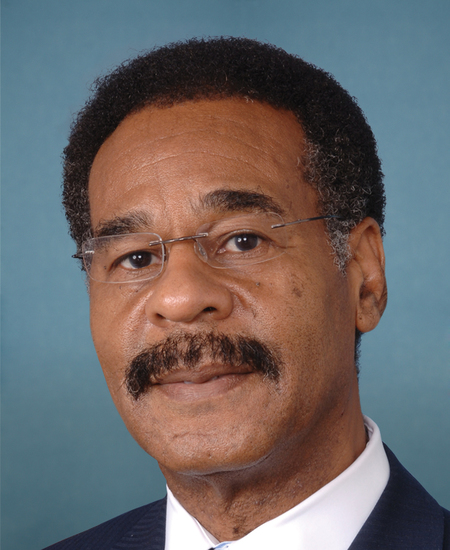
Rep. Emanuel Cleaver
Sponsored bills
Maddy summaryThe Climate Resilience Workforce Act establishes a coordinated federal system to build a workforce for climate resilience, directly affecting workers in climate-related sectors and prioritizing frontline communities (low-income, communities of color, Tribal communities) and populations facing employment barriers (undocumented individuals, formerly incarcerated people). Key mechanisms include grant programs for state and local climate resilience planning, job creation grants requiring 40% of jobs to go to frontline communities and populations facing barriers, and minimum labor standards including $15/hour wages (increasing annually), employer-paid health insurance, and protections against discrimination. The bill creates an Office of Climate Resilience, a Climate Resilience Equity Advisory Board, and a Center for the Climate Resilience Workforce to define climate resilience sectors and ensure equitable hiring practices. It also removes employment barriers through immigration status protections, criminal record reforms, and drug testing policy changes for climate resilience workers.
Maddy summaryThe MORE Act (HR 5601) would federally decriminalize cannabis by removing it from the Schedule I list of controlled substances under the Controlled Substances Act. It requires federal courts to expunge non-violent cannabis convictions and associated arrests, with a focus on addressing racial disparities in cannabis enforcement. The bill creates an Opportunity Trust Fund that would allocate 50% of funds to criminal justice programs, 20% to small business assistance for minority cannabis entrepreneurs, and 20% to community reinvestment grants for individuals impacted by the War on Drugs. It also prohibits federal agencies from denying benefits or security clearances based on cannabis use or past cannabis convictions, and establishes a Cannabis Justice Office to administer these programs.
Maddy summaryThe CARE for Moms Act aims to reduce maternal mortality in the United States by improving healthcare access and quality for pregnant and postpartum women, with specific attention to racial disparities. Key provisions include requiring 12-month continuous Medicaid coverage for postpartum individuals (up from 60 days), expanding oral health coverage during pregnancy, and funding State-Based Perinatal Quality Collaboratives through $35 million annual grants. The bill specifically targets the higher maternal mortality rates faced by Black women, who are about 3 times more likely to die from pregnancy-related causes than White women. It also includes provisions for doula services, rural mobile health units, and improved data collection on maternal health outcomes.
Maddy summaryThis bill changes Medicare payment rules for anesthesiologist services in specific rural hospitals. It requires Medicare to pay for anesthesiologist services in qualifying rural hospitals using the same "reasonable cost, pass-through" reimbursement method currently used for certified registered nurse anesthetists (CRNAs), rather than the standard physician payment rate. The bill directly affects rural hospitals and anesthesiologists working in those facilities, ensuring they receive comparable reimbursement to CRNAs under existing rules. The change applies to services provided during cost reporting periods starting after the bill's enactment date. This is a technical adjustment to payment methodology, not a new coverage benefit.
Maddy summaryThe HOPE for Haitian Prosperity Act extends duty-free access for Haitian goods to the U.S. market until 2035, with specific extensions for apparel and other exports. It requires Haitian producers to meet labor standards on minimum wages, working hours, and safe conditions to maintain this trade benefit. The bill also creates a new U.S. technical assistance program to help Haiti diversify exports, focusing on agriculture, apparel, and services, while requiring collaboration with Haitian government, businesses, and labor groups. Annual reports to Congress will track progress on these efforts.
Maddy summaryHR 5008, the HEAL for Immigrant Families Act of 2023, would remove immigration status as a barrier to health insurance coverage for immigrants in the United States. The bill would make all lawfully present immigrants, including those with Deferred Action for Childhood Arrivals (DACA) status, eligible for Medicaid, CHIP, and Affordable Care Act health insurance subsidies. It would eliminate state-level restrictions on Medicaid eligibility for immigrants and allow individuals with federally authorized presence to access premium tax credits and cost-sharing reductions. This legislation aims to address health coverage disparities that disproportionately affect immigrant communities, particularly Black, Indigenous, Latinx, and other communities of color.
Maddy summaryThe Access to Infertility Treatment and Care Act would require most health insurance plans to cover infertility treatment (including assisted reproductive technology like IVF) and fertility preservation services for people undergoing medical treatments that might cause infertility, such as cancer therapies. It prohibits cost-sharing (like deductibles and copays) for these services that exceeds what's charged for similar medical services and applies to private insurance, federal employee health plans, TRICARE, veterans' benefits, and Medicaid programs. The bill also requires insurers to provide clear notice to plan members about these coverage requirements. This legislation aims to ensure infertility treatment is covered similarly to other medical conditions, as recognized by medical organizations.
Maddy summaryThe Social Security 2100 Act would significantly enhance Social Security benefits for millions of Americans by increasing monthly payments for retirees, disabled workers, widows/widowers, and children. Key provisions include raising the minimum benefit for long-term low earners, improving cost-of-living adjustments using a more accurate index, eliminating the 5-month waiting period for disability benefits, and extending child benefits to age 26. The bill also changes how Social Security taxes are calculated by applying them to income above $400,000 and establishes a unified Social Security Trust Fund to manage program finances. Most provisions would apply to benefits payable from 2025 through 2034, affecting all current and future Social Security beneficiaries.
Maddy summaryThe PrEP Access and Coverage Act of 2023 requires private health insurance plans, Medicare, Medicaid, and other public health programs to cover pre-exposure prophylaxis (PrEP) for HIV prevention without cost-sharing, including the medication, related lab tests, and follow-up care. The bill also prohibits life, disability, and long-term care insurance companies from denying coverage or charging higher premiums to people taking PrEP. It establishes public education campaigns to increase awareness of PrEP and PEP (post-exposure prophylaxis) and creates funding for state and community programs to expand access to HIV prevention services, particularly for populations disproportionately affected by HIV including Black, Hispanic/Latinx, and transgender individuals. The legislation specifically addresses current disparities in PrEP access, as data shows only 11% of Black/African American and 21% of Hispanic/Latinx individuals eligible for PrEP received prescriptions in 2022 compared to 82% of White individuals. Coverage requirements for most plans will take effect on January 1, 2025.