

Maddy summaryHR 2895, the Time Is Up Act of 2023, sets strict deadlines for the President to act on foreign investment reviews under the Committee on Foreign Investment in the United States (CFIUS). It requires the President to announce any suspension or prohibition of a covered foreign investment deal within 15 days of the bill's enactment if more than 105 days (or 60 days for certain investigations) have passed since review began without a decision. For any announcement made before or after the bill's enactment, the President must complete the suspension or prohibition within 30 days of the announcement. This bill directly affects foreign entities seeking to invest in U.S. businesses and the federal process reviewing those deals for national security risks.
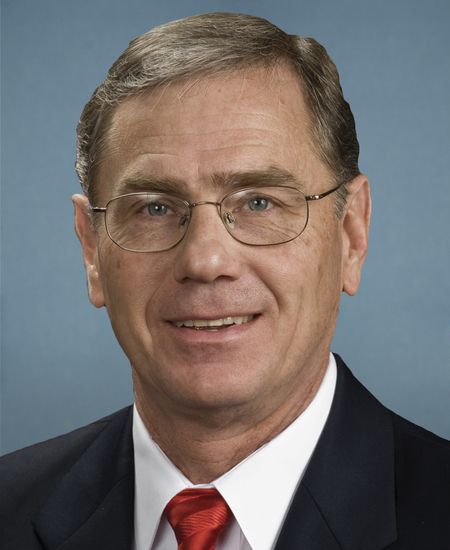
Rep. Blaine Luetkemeyer
Sponsored bills
Maddy summaryHR 2826, the Save Local Business Act, clarifies when multiple businesses can be held jointly responsible for labor laws. It amends the National Labor Relations Act and Fair Labor Standards Act to state that a business is only a joint employer if it directly controls key employment terms like hiring, pay, schedules, or discipline for another business's workers. This directly affects franchisors, contractors, and similar business models that might previously have been deemed joint employers under broader interpretations. The bill aims to limit joint employer liability to cases where one business has clear, day-to-day control over essential worker conditions.
Maddy summaryHR 2743 prohibits large financial institutions (over $100 billion in assets) from denying banking services to lawful businesses based on subjective political reasons, industry type, or reputational concerns. It requires these institutions to use objective, risk-based assessments for service decisions and provide written justifications for denials. The law applies to banks, credit unions, and payment networks, with civil penalties for violations including fines up to $10,000 per incident. It specifically ensures businesses operating legally under federal law receive fair access to financial services without discrimination. The bill mandates that denials be based on documented risk factors, not political bias or category-based exclusion.
American Innovation and R&D Competitiveness Act of 2023 This bill eliminates the five-year amortization requirement for research and experimental expenditures, thus allowing continued expensing of such expenditures in the taxable years in which they are incurred.
Maddy summaryHJRES 27 is a congressional resolution seeking to block a federal rule that redefined which waterways fall under the Clean Water Act's protections. It targets a rule submitted by the Army Corps of Engineers, Department of Defense, and Environmental Protection Agency (EPA) on January 18, 2023, which aimed to revise the "Waters of the United States" definition. The resolution would formally disapprove this rule under a specific federal procedure (Chapter 8 of Title 5), preventing it from taking effect. This would directly affect how federal agencies regulate pollution and development near water bodies, including wetlands and smaller streams.
Maddy summaryThis bill increases SEC filing thresholds for publicly traded companies, primarily affecting smaller businesses and mid-sized corporations. It raises the public float threshold for smaller reporting companies from $250 million to $500 million and their annual revenue threshold from $100 million to $250 million, while switching to a three-year revenue average. For accelerated filers, the exit threshold rises from $60 million to $75 million, and large accelerated filers must now reach $750 million market value (up from $560 million) to exit that category. The bill also explicitly excludes smaller reporting companies from being classified as accelerated or large accelerated filers.
Maddy summaryHR 2630, the Safe Step Act, requires group health plans and health insurance issuers to establish a clear, transparent process for patients or their doctors to request exceptions to medication step therapy protocols. These protocols typically force patients to try cheaper drugs first before covering more expensive alternatives. The bill mandates that plans must approve exceptions when prior treatments failed, delay would cause serious harm, a treatment is unsafe, or a patient is stable on a previously approved drug, with strict 72-hour (or 24-hour in emergencies) decision timelines. It also requires plans to publish the exception process online and limit documentation requests to only necessary medical information. This law directly affects health insurers, employers offering health plans, and patients using step therapy for prescription drugs.
Maddy summaryHR 2434, the Next Generation Fuels Act of 2023, requires automobile manufacturers to design vehicles for model years 2028 and later to operate with gasoline containing up to 25% ethanol (2028-2032) or 30% ethanol (2033+) and to be compatible with gasoline having a research octane number of 95 or higher (2028-2032) or 98 or higher (2033+). Fuel retailers must install equipment to ensure compatibility with these high-octane, high-ethanol fuels, while refiners must meet specific requirements for gasoline aromatics content and low-carbon fuel standards. The bill mandates labeling requirements to inform consumers about fuel compatibility and potential consequences of using lower-octane fuels. EPA must determine nationwide availability of 98 octane gasoline by 2031 before the full requirements take effect in 2033, affecting automobile manufacturers, fuel retailers, and refiners through changes in vehicle design, fuel composition, and consumer information standards.
Maddy summaryHR 2490 creates a new reward program for whistleblowers who provide original information leading to successful enforcement actions by the Consumer Financial Protection Bureau (CFPB) that result in monetary penalties exceeding $1 million. Whistleblowers can receive 10% to 30% of the collected penalties (minimum $50,000, maximum $5 million per person) for information that directly leads to enforcement actions against financial institutions violating consumer financial laws. The bill includes strong confidentiality protections to prevent disclosure of whistleblowers' identities and requires the CFPB to consider factors like the significance of the information and the whistleblower's cooperation when determining award amounts. The CFPB must also report annually to Congress on the program's activity, including the number of awards granted and case types.
Maddy summaryThis bill amends the Consumer Financial Protection Bureau's (CFPB) mission to prioritize fair and transparent markets while explicitly adding a focus on strengthening private sector competition without government interference or subsidies. It requires the CFPB to establish an Office of Economic Analysis to review all proposed rules, assess their impact on consumer choice, credit access, and pricing, and publish these findings in the Federal Register. The bill also mandates that new rules must identify the specific problem they solve and include measurable metrics - like changes in consumer access and cost of financial products - to evaluate success. Existing rules must be periodically reviewed (after 1, 2, 5, and 10 years) to determine if they effectively addressed their intended problem.