

Maddy summaryThe College Transparency Act requires the National Center for Education Statistics to develop a secure, privacy-protected system that collects and organizes student-level data from colleges and universities. The system will track enrollment patterns, progression, completion rates, costs, financial aid, and post-graduation outcomes, with data disaggregated by characteristics like race, gender, program of study, and credential level. Colleges participating in federal financial aid programs must submit this data, while the system will provide the public with customizable summary information to help students and families make informed college decisions. The bill includes strict privacy protections, prohibiting collection of sensitive data like health information or exact addresses, and requires data minimization to only what's necessary for the system's purposes.
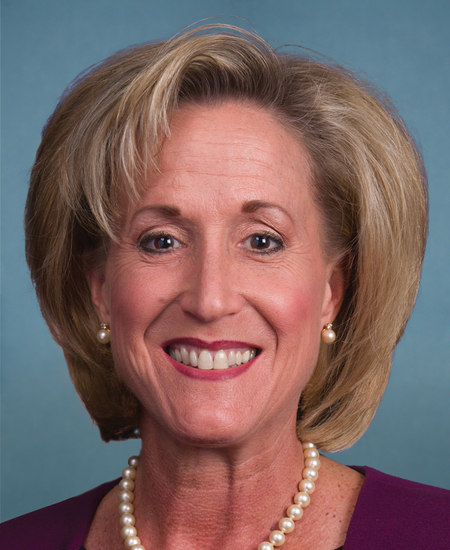
Rep. Ann Wagner
Sponsored bills
Maddy summaryHR 2918, the Fair Housing for Survivors Act of 2023, amends the Fair Housing Act to explicitly protect survivors of domestic violence, sexual assault, and sex trafficking from housing discrimination. It adds "survivor of domestic violence, sexual assault, or severe forms of trafficking" as a protected class under the law, prohibiting landlords and housing providers from refusing to rent, evicting, or charging more based on this status. The bill also clarifies that discrimination based on survivor status - including denial of housing due to protective orders, shelter stays, or prior incidents - is illegal. This directly affects survivors who face barriers like denied rentals, evictions, or higher costs when seeking safe housing, addressing documented discrimination reported by 67% of survivors in New York studies. The law preserves survivors' ability to pursue other discrimination claims under the Fair Housing Act.
Maddy summaryHRES 311 is a non-binding House resolution encouraging the expansion of the Abraham Accords to promote normalization of relations between Israel and additional countries. It urges the U.S. government to support these agreements while ensuring tangible security and economic benefits for citizens in participating nations. The resolution expresses support for U.S.-Israel security cooperation and existing financial commitments under the U.S.-Israel Memorandum of Understanding. As a symbolic measure, it does not create new legal requirements but formally advocates for deeper regional diplomatic engagement.
Maddy summaryHR 734, the Protection of Women and Girls in Sports Act of 2023, amends Title IX to prohibit federally funded schools and athletic programs from allowing individuals assigned male at birth to participate in women's or girls' sports teams. The bill defines "sex" for this purpose as "reproductive biology and genetics at birth," making it a violation of federal law to permit such participation in designated women's or girls' programs. It allows males to train with women's teams only if no female is deprived of a roster spot, competition opportunity, scholarship, or other benefit tied to the team. This law directly affects public and private schools receiving federal financial assistance that operate athletic programs.
Maddy summaryHR 2743 prohibits large financial institutions (over $100 billion in assets) from denying banking services to lawful businesses based on subjective political reasons, industry type, or reputational concerns. It requires these institutions to use objective, risk-based assessments for service decisions and provide written justifications for denials. The law applies to banks, credit unions, and payment networks, with civil penalties for violations including fines up to $10,000 per incident. It specifically ensures businesses operating legally under federal law receive fair access to financial services without discrimination. The bill mandates that denials be based on documented risk factors, not political bias or category-based exclusion.
Maddy summaryHJRES 27 is a congressional resolution seeking to block a federal rule that redefined which waterways fall under the Clean Water Act's protections. It targets a rule submitted by the Army Corps of Engineers, Department of Defense, and Environmental Protection Agency (EPA) on January 18, 2023, which aimed to revise the "Waters of the United States" definition. The resolution would formally disapprove this rule under a specific federal procedure (Chapter 8 of Title 5), preventing it from taking effect. This would directly affect how federal agencies regulate pollution and development near water bodies, including wetlands and smaller streams.
Maddy summaryThe Project Safe Childhood Act modernizes the Project Safe Childhood program to combat online child sexual exploitation and abuse. It requires the Attorney General to develop best practices for investigating and prosecuting child sexual exploitation offenses, including contact sexual offenses and those involving child sexual abuse material. Each U.S. Attorney must create a district-specific strategic plan coordinating with law enforcement and prosecutors to identify victims and serious offenders, with a focus on victim-centered approaches. The bill authorizes $29.1 million annually for additional staff, training, and a national Safer Internet Day to raise public awareness about online child exploitation threats.
Maddy summaryHR 2539 permanently extends the New Markets Tax Credit (NMTC) program, which incentivizes private investment in low-income communities. The bill directly affects community development financial institutions (CDFIs) and investors who fund projects in designated low-income areas by ensuring the credit remains available beyond 2025. Key provisions include automatically adjusting the credit amount annually for inflation starting in 2024 and clarifying that the credit can be used to offset alternative minimum tax liability. This maintains the program’s effectiveness in channeling capital to underserved neighborhoods without changing eligibility or funding levels.
Maddy summaryHR 1806, the Small LENDER Act, reduces reporting burdens for small lenders by creating a phased transition period for new data collection rules under the Equal Credit Opportunity Act. It requires regulators to give qualifying small lenders a 3-year period to comply with new rules and a subsequent 2-year "safe harbor" period during which they aren’t penalized for non-compliance. A "small business lender" is defined as one originating at least 500 small business loans (defined as loans to entities with $1 million or less in annual revenue) in each of the two prior calendar years. This directly affects small lenders meeting these volume thresholds, easing their administrative burden without changing existing lending standards.
Maddy summaryThe Bank Loan Privacy Act (HR 1810) requires the Consumer Financial Protection Bureau (CFPB) to issue a rule with public notice and comment before deleting or modifying data related to credit applications. The rule must describe the intended data changes and explain how they protect consumer privacy. This law directly affects the CFPB's procedures for handling credit data, adding a transparency step before any data modifications. It does not change credit reporting content but mandates public input for privacy-focused data adjustments.