

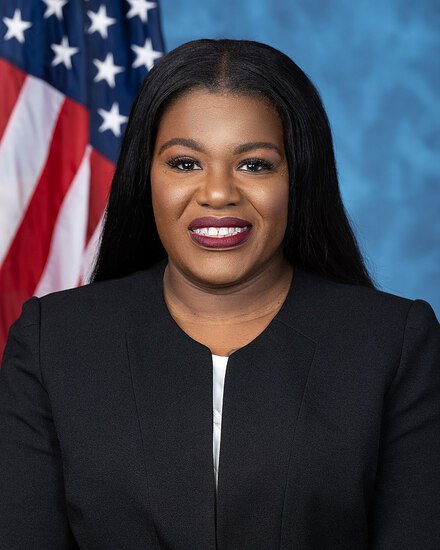
Maddy summaryThe VA Employee Fairness Act of 2024 modifies collective bargaining rules for employees of the Veterans Health Administration (VHA). It removes existing subsections (b), (c), and (d) from the law governing VHA employee bargaining and renumbers the remaining provision. This change streamlines the collective bargaining framework but does not alter the Secretary of Veterans Affairs' existing authorities over incentive pay and expedited hiring. The bill directly affects VHA employees by changing how their collective bargaining rights are structured under federal law. The law remains neutral, focusing solely on procedural adjustments to the existing bargaining framework.
Sponsored bills
Maddy summaryThis bill establishes minimum safety standards for railroad bridges and requires railroad carriers to provide detailed inspection reports classifying bridges as poor, fair, or good condition, including repair timelines and costs for bridges in poor condition. It mandates railroad carriers to post visible signs identifying bridge ownership and a contact number for public safety concerns, and creates a public database showing basic bridge condition information without detailed technical specifications. The bill also establishes a safety concern reporting system for the public and authorities, and requires the Department of Transportation to conduct randomized bridge inspections to verify reported conditions. Railroad carriers that fail to meet safety requirements face civil penalties, including weekly fines for continued operation of unsafe bridges.
Maddy summaryThe COINTELPRO Full Disclosure Act requires federal agencies to publicly disclose COINTELPRO records within 6 months, with exceptions for records that would cause harm to national security or privacy. It establishes a 4-year Review Board to assess records that might be withheld, and sets a 25-year deadline for full disclosure of all COINTELPRO records not already publicly available. The bill creates a COINTELPRO Records Collection at the National Archives, requires agencies to notify victims or their families before disclosure, and aims to provide transparency about the FBI's historical COINTELPRO program that surveilled domestic organizations from 1956.
Maddy summaryHR 9982 creates a dedicated Office of Children’s Health Protection within the EPA to address environmental risks affecting children. The office, led by an EPA-appointed director, will assess health threats like pollution or chemicals that disproportionately impact infants, children, and adolescents, and coordinate federal efforts to reduce these risks through policy, research, and school health programs. It establishes a permanent advisory committee to guide the EPA and requires $7.8 million annually for the office plus $13.2 million for the committee through 2029. The bill directly affects children’s health by mandating EPA action on environmental hazards through specific programs, not by changing existing regulations or creating new taxes.
Maddy summaryThis bill creates a pilot program to protect affordable housing in communities impacted by infrastructure projects. It requires federal agencies to plan for preserving affordable housing - through community land trusts, shared equity programs, or long-term rental housing - when mitigating, retrofitting, or removing infrastructure like highways. The program mandates that housing must remain affordable for low- and moderate-income residents for at least 30 years, preventing displacement. A joint report to Congress by 2027 will evaluate the program’s impact on housing costs and demographics.
Maddy summaryHRES 1525 is a non-binding resolution calling for the U.S. government to address policies contributing to forced migration and displacement. It urges reforms such as overhauling economic sanctions, investing in developing countries to reduce poverty and instability, and reforming trade agreements to protect workers. The resolution also calls for expanding legal immigration pathways, improving asylum processing, and creating a roadmap to citizenship for immigrants living in the U.S. As a resolution, it does not create new laws but sets policy priorities for future legislative action.
Maddy summaryThe Long COVID Research Moonshot Act establishes a dedicated National Institutes of Health research program to accelerate scientific understanding and treatment development for Long COVID, directly affecting millions of people experiencing persistent health issues after COVID-19 infection. The bill creates a Long COVID Research Program with a specific Director to coordinate all NIH research, develop an annual research plan, and establish a patient-informed advisory board with representation from both patients and scientific experts. It authorizes $1 billion annually for 10 years (2025-2034) to fund research on Long COVID's causes, prevention, detection, management, and treatment, including a clinical trial registry and public health surveillance through the CDC. The legislation also includes provisions for public education campaigns, provider training, and a national network of multidisciplinary Long COVID clinics to improve care access, particularly for underserved populations. This comprehensive approach aims to address Long COVID through coordinated research, surveillance, and clinical care improvements.
Maddy summaryThis bill raises the federal minimum wage to $15 per hour initially, with future increases tied to a "stability wage" calculated using average hourly earnings and cost-of-living adjustments (CPI). It modifies income tax brackets so that tax rates apply to income levels adjusted based on this stability wage calculation. The bill eliminates special minimum wage certificates for workers with disabilities and changes how earned income is counted for means-tested benefits. These changes would affect most workers, taxpayers across income levels, and individuals receiving government benefits based on income. The bill's provisions would take effect three months after enactment.
Maddy summaryHR 9878, the No Shame at School Act of 2024, requires schools to automatically certify students from households with unpaid meal fees for free or reduced-price meals (instead of allowing discretion), and mandates retroactive reimbursement for past unpaid meals. It directly affects school districts and students in households owing meal fees by prohibiting stigmatizing practices like special tokens, public lists of names, or withholding grades due to unpaid fees. Key provisions ban schools from physically segregating students, using debt collectors, or taking food away from students who owe fees, while requiring clear communication to households about meal applications. The bill defines "covered child" as any student enrolled in a participating school meal program whose household owes fees or is eligible for free/reduced meals.
Maddy summaryThis resolution formally censures Representative Glen Clay Higgins (LA-03) for a September 25, 2024, social media post containing racist remarks and false claims about Haitians. The bill requires Higgins to appear in the House chamber to receive the censure, with the resolution publicly read by the Speaker. It specifically references his post describing Haiti as "the nastiest country," falsely accusing Haitians of eating pets, and labeling them "slapstick gangsters and thugs." The censure is a formal disciplinary action by the House, not a policy change.