

Maddy summaryHR 7587, the Port Optimization for Responsible Transportation Act, streamlines federal approval processes for port infrastructure projects. It directs the Maritime Administration to adopt environmental review shortcuts (categorical exclusions) used by other transportation agencies and create new ones specifically for port projects, reducing lengthy reviews. The bill also extends grant application deadlines when solicitation details change, allows minor budget adjustments without delays, and requires annual reports on grant processing times. These changes directly affect port authorities receiving federal grants and the Maritime Administration, aiming to speed up project approvals while maintaining environmental standards.
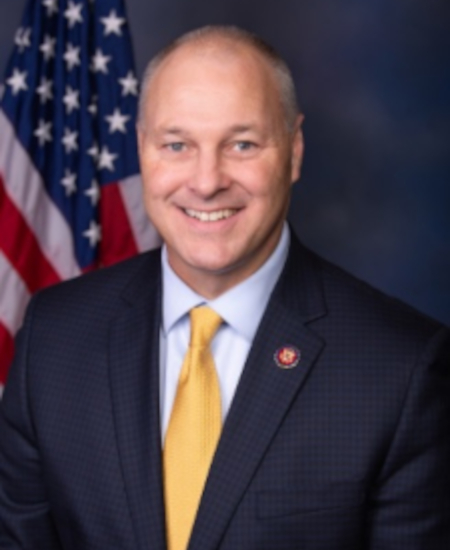
Rep. Pete Stauber
Sponsored bills
Maddy summaryThe Farm to Fly Act of 2023 amends USDA programs to include sustainable aviation fuel (SAF) as a qualifying product for financial assistance, directly affecting farmers, biorefineries, and agricultural producers. It defines SAF as liquid fuel meeting strict environmental standards - requiring at least a 50% reduction in lifecycle greenhouse gas emissions compared to jet fuel and excluding sources like palm oil or petroleum. The bill mandates the Secretary of Agriculture to lead a cross-agency initiative focused on advancing SAF development, leveraging agricultural resources, and fostering public-private partnerships to expand the domestic SAF market. This aims to support rural economic growth, strengthen U.S. energy security, and align with national clean energy goals in aviation.
Maddy summaryThis resolution (HRES 1038) is a symbolic gesture honoring three Burnsville, Minnesota, first responders who died in the line of duty on February 18, 2024: Police Officers Paul Elmstrand and Matthew Ruge, and Firefighter/Paramedic Adam Finseth. It expresses the House’s condolences to their families, honors Sergeant Adam Medlicott (who was injured in the same incident), and recognizes all local law enforcement and first responders for their service. The resolution does not create new laws or policies but formally acknowledges their sacrifice through a non-binding expression of support. It specifically commemorates their heroic actions during a domestic call response in Burnsville.
Maddy summaryHR 7494, the Protect America’s Lands Act, prohibits national securities exchanges from processing transactions involving stocks issued by companies primarily managing land for conservation. It defines "natural asset companies" as those holding rights to ecological performance of specific land areas, with their core purpose being to conserve, restore, or sustainably manage natural assets without causing material harm. The bill directly affects securities exchanges and these specific companies by banning exchange-based trading of their securities. This is a regulatory change to the Securities Exchange Act of 1934, focusing on financial market rules rather than direct land management policies.
Maddy summaryHR 7361, the Flowers for Fallen Heroes Act of 2024, requires the American Battle Monuments Commission to establish a low-cost program allowing the public to order flowers for military gravesites at Commission-managed cemeteries. The bill mandates the Commission to partner with third-party florists (without excess fees) and create a user-friendly website and phone system for ordering by one year after enactment. It also authorizes credit card and electronic payment processing for these orders, with customers responsible for any third-party processing fees, and requires annual reports to Congress detailing program implementation, including order data and florist engagement. This bill directly affects the public seeking to honor fallen service members and the Commission’s operations at 25 overseas military cemeteries.
Maddy summaryThis bill requires the Small Business Administration's Office of Rural Affairs to submit annual reports on its rural business activities. The initial report must detail how the office promotes financial assistance, tracks statistics, and conducts outreach events, while annual reports must be submitted alongside the SBA's budget justification. It also mandates a separate report on the SBA's collaboration with the Department of Agriculture regarding rural business efforts. All reporting requirements will use existing SBA funding without new appropriations.
Maddy summaryHR 7450, the Protecting Privacy in Purchases Act, prohibits payment card networks and covered entities (like payment processors) from requiring or assigning merchant category codes that specifically identify firearms retailers as different from general stores or sporting goods retailers. This directly affects firearms retailers and payment networks by preventing them from using business classification codes that could flag firearm sales. The bill establishes an enforcement process where the Attorney General investigates complaints, issues remediation notices, and can seek court injunctions for non-compliance, while preempting state or local laws on this issue. It does not create private lawsuits for individuals.
Maddy summaryHR 7129, the "Put America on Commission Act of 2024," creates an Office of Whistleblower Awards within the Small Business Administration (SBA) to incentivize reporting of fraud in pandemic relief loans. It directly affects whistleblowers who provide original information about financial misconduct by SBA loan recipients and the recipients themselves who face penalties. The bill establishes a Whistleblower Award Fund, paying 10% (U.S. entities) or 15% (foreign entities) of recovered funds from convictions or settlements related to "COVID loan actions" (defined as fraud cases under CARES Act provisions). It includes anti-retaliation protections for whistleblowers and requires annual reports to Congress on award distributions. The program sunset provisions end its authority once all related cases are resolved.
Maddy summaryHR 7382 amends existing law to allow law enforcement agencies using Byrne JAG funds (a federal grant program) to specifically fund programs aimed at reducing demand for commercial sex trafficking. This change directly affects state and local law enforcement agencies that receive Byrne JAG grants, enabling them to allocate these funds toward demand reduction initiatives like public awareness campaigns or victim services. The key mechanism is adding "programs to reduce the demand for trafficked persons" as an explicitly authorized use of Byrne JAG funds under the 1968 Crime Control Act. This policy change expands the scope of existing federal funding to target the demand side of sex trafficking, without creating new programs or altering other funding categories.
Maddy summaryThis bill redirects existing federal funds that were previously allocated for the United Nations Relief and Works Agency for Palestine Refugees (UNRWA) to construct a permanent barrier along the U.S. southwest border. It directly affects UNRWA, which provides aid to Palestinian refugees, by halting its current funding stream for border construction. The bill mandates that all unspent funds designated for UNRWA be repurposed for border wall construction and prohibits all future federal funding for UNRWA starting upon enactment. These are concrete policy changes: redirecting specific existing funds and banning all future support.