

Maddy summaryHR 1425, the "No WHO Pandemic Preparedness Treaty Without Senate Approval Act," requires the U.S. Senate to approve any World Health Organization (WHO) pandemic preparedness treaty through a two-thirds vote. The bill deems any convention, agreement, or international instrument on pandemic prevention drafted by the WHO’s International Negotiating Body (INB) as a treaty subject to Senate ratification, rather than allowing it to take effect as an executive agreement. This directly affects U.S. foreign policy implementation regarding WHO agreements, ensuring Congress has a formal role in approving such binding international commitments. The bill stems from congressional concerns about WHO’s pandemic response and public skepticism toward the organization, as outlined in its findings.
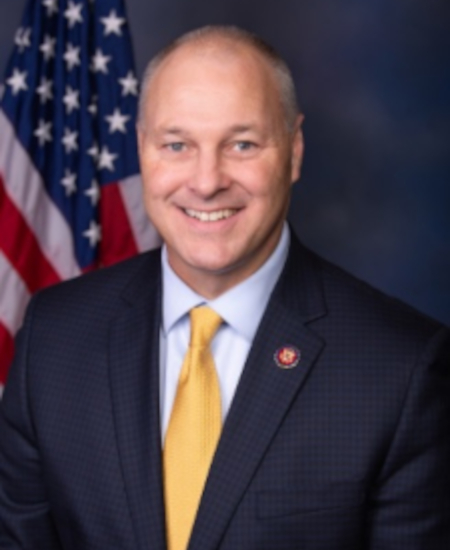
Rep. Pete Stauber
Sponsored bills
Maddy summaryHJRES 168 is a congressional resolution seeking to block a specific environmental regulation by the Council on Environmental Quality (CEQ). It targets the CEQ's "National Environmental Policy Act Implementing Regulations Revisions Phase 2" rule, published in the Federal Register on May 1, 2024 (89 Fed. Reg. 35442). If passed, this resolution would use a statutory process under Title 5, U.S. Code, to nullify the rule, preventing it from taking effect. The bill directly affects the CEQ's regulatory authority over federal environmental reviews under the National Environmental Policy Act (NEPA).
Maddy summaryHR 8836 establishes a grant program to fund projects improving habitat connectivity for migratory wildlife, particularly big game species like deer, elk, and pronghorn. It provides up to 90% federal funding for initiatives such as wildlife crossings, fence modifications, habitat restoration, and coordination with landowners, administered through the National Fish and Wildlife Foundation. Eligible recipients include state and tribal wildlife agencies, landowners, nonprofits, and transportation departments. The bill explicitly prohibits requiring changes to agriculture, mining, or existing land uses and preserves state/Tribal authority over wildlife management.
Maddy summaryHR 8305, the Loggers Economic Assistance and Relief Act, provides financial relief to timber harvesting and hauling businesses that suffer significant revenue losses due to major disasters. It authorizes payments equal to 10% of a business's gross revenue during a 30-day period or quarter if revenue drops by at least 10% compared to the same period in the previous year, including losses from insect infestations declared as disasters. Payments must be used solely for operating expenses and are funded with $50 million annually for fiscal years 2024 and 2025. The program targets small timber businesses directly impacted by events like wildfires or pest outbreaks, with the USDA administering the payments and reporting recipient details to Congress.
Maddy summaryThis bill authorizes border states (adjacent to the U.S. northern or southern border) to place movable, temporary structures on federal land near the border for security purposes without needing a special use permit. States must notify the relevant federal agency (e.g., Bureau of Land Management or Forest Service) at least 45 days before placement, and structures can remain for up to one year, with possible 90-day extensions if U.S. Customs and Border Protection determines "operational control" hasn't been achieved. The bill directly affects border states and federal land management agencies by streamlining temporary border security measures on public lands.
This resolution supports the designation of National FFA Week. It also (1) recognizes the important role of the National FFA Organization (Future Farmers of America) in developing the next generation of globally conscious leaders who will change the world; and (2) celebrates the 10th anniversary of the Give the Gift of Blue program, which has donated more than 17,000 FFA blue jackets to FFA members in need.
Maddy summaryHR 7241 creates a new federal program to help rural water and wastewater systems prepare for and respond to disasters. It authorizes $20 million annually (2024-2028) for grants to nonprofit organizations with proven experience in water system disaster response. These organizations will provide on-site technical assistance, help develop emergency plans, conduct vulnerability assessments, repair critical infrastructure (like pumps and treatment systems), and support disadvantaged communities lacking resources. The program directly affects rural water systems and their operators by improving their ability to maintain safe water service during and after disasters. Grants cannot cover activities already funded by other federal programs, and equipment costs are limited to 25% of the grant amount.
Maddy summaryHR 8652, the Veterans Border Patrol Training Act, creates a 5-year pilot program to train and hire transitioning U.S. military service members and veterans as U.S. Customs and Border Protection Border Patrol agents. The program, established within 180 days of enactment, uses the existing Department of Defense SkillBridge Program (under 10 U.S.C. § 1143) to transition service members into Border Patrol roles, requiring collaboration between Homeland Security, Defense, and Veterans Affairs. The bill mandates annual reports to Congress tracking participation statistics, including breakdowns by military status (active duty, reserve, officers, enlisted, veterans, spouses, dependents). It does not change existing hiring rules but provides a dedicated pathway for military-connected individuals to enter Border Patrol service. The program automatically terminates after five years.
Maddy summaryHR 9390, the Sober Act of 2024, creates a federal grant program to fund state, local, and tribal 24/7 sobriety programs. These programs require individuals with substance use disorders (often linked to alcohol-related offenses) to abstain from alcohol/drugs, undergo regular testing (twice daily or via continuous monitoring), and face immediate sanctions for violations like jail time or community service. The bill authorizes $10 million annually from 2025-2029 to cover up to 80% of program costs, with recipients required to report on participation, testing outcomes, and program expenses. It aims to expand access to structured sobriety support as a complement to existing measures like ignition interlock devices for DUI offenders.
Maddy summaryThe SAFER at the Border Act prohibits the U.S. Department of Homeland Security from temporarily admitting (paroling) certain individuals at the border. It defines "known terrorists" (those arrested, charged, or convicted for terrorism), "suspected terrorists" (reasonably suspected of terrorism), and "special interest aliens" (those with potential terrorism links based on travel patterns). The bill explicitly bans parole for these individuals, even for humanitarian reasons or public benefit, and also prohibits parole for refugees. Additionally, it allows states to sue the Department of Homeland Security if they suffer financial harm exceeding $100 from the parole of such individuals.