

Maddy summaryHR 6319 (the 911 SAVES Act of 2023) requires the Office of Management and Budget to reclassify public safety telecommunicators as "Protective Service Occupations" within 30 days of enactment. This change corrects their current misclassification in the federal Standard Occupational Classification (SOC) system, which is used for statistical data on jobs. The bill directly affects how these professionals - critical in emergency calls involving missing children, active threats, and officer safety - are officially categorized in government workforce data. It does not create new benefits or funding but aims to better recognize their lifesaving role through accurate federal job classification.
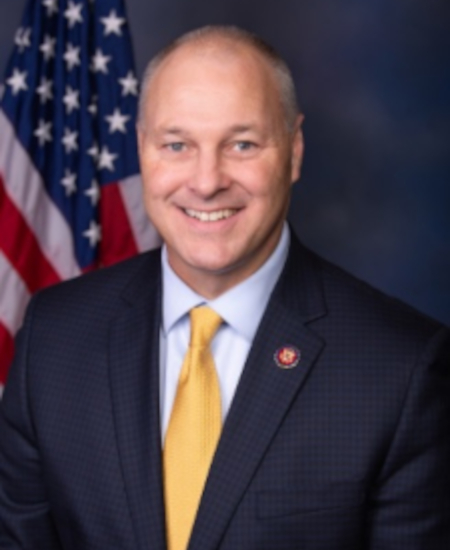
Rep. Pete Stauber
Sponsored bills
Maddy summaryThis bill (HJRES 163) is a congressional disapproval resolution targeting an Environmental Protection Agency (EPA) rule finalized on May 9, 2024. The EPA rule established new emissions standards for greenhouse gases from fossil fuel power plants (both new and existing) and repealed a previous rule called the Affordable Clean Energy Rule. The resolution would block this EPA rule from taking effect by invoking the Congressional Review Act (Chapter 8 of Title 5, U.S. Code). If passed, it would prevent the EPA rule from being enforced, directly affecting fossil fuel power plant operators and the EPA’s regulatory authority over emissions.
Maddy summaryHJRES 133 is a congressional resolution seeking to block an Environmental Protection Agency (EPA) rule titled "Greenhouse Gas Emissions Standards for Heavy-Duty Vehicles-Phase 3." This rule, published in the Federal Register on April 22, 2024, established new emissions requirements for large trucks and commercial vehicles. The resolution, if passed, would prevent the EPA rule from taking effect by formally disapproving it under standard congressional review procedures. The measure directly affects the EPA’s regulatory authority and vehicle manufacturers who would have been required to comply with the proposed standards.
Maddy summaryH.J. Res. 117 is a joint resolution that would disapprove an Environmental Protection Agency (EPA) rule concerning the reconsideration of National Ambient Air Quality Standards for particulate matter. The EPA rule, published on March 6, 2024, was part of the agency’s process to review these standards, which set limits for harmful air pollutants. This resolution invokes a congressional disapproval procedure under federal law to block the rule from taking effect. If enacted, the rule would have no force or effect, preserving the existing air quality standards for particulate matter.
Maddy summaryThis bill designates the U.S. Postal Service facility at 31143 State Highway 65 in Pengilly, Minnesota, as the "First Lieutenant Richard Arne Koski Post Office." It updates all official references to the location to reflect this new name in laws, documents, and records. The bill has no policy changes or direct impact beyond the naming of this specific post office.
Maddy summaryThe DeOndra Dixon INCLUDE Project Act of 2024 establishes a new National Institutes of Health (NIH) research program focused on Down syndrome. It requires the NIH to study medical conditions often linked to Down syndrome - such as Alzheimer's disease, heart problems, and autoimmune disorders - to develop better treatments and improve quality of life for individuals with Down syndrome. The program must coordinate existing NIH research, expand clinical trials involving people with Down syndrome, and submit biennial reports to Congress on progress. The bill authorizes $250 million annually for fiscal years 2025-2030 to fund this initiative, supplementing but not replacing current NIH funding for Down syndrome research.
Maddy summaryHR 9614, the ENABLE Act, permanently extends key tax benefits for ABLE accounts, which help people with disabilities save money without losing government benefits. The bill removes an expiration date (previously set for January 1, 2026) for higher contribution limits and the savers credit for ABLE accounts, and allows permanent rollovers of funds from 529 college savings plans into ABLE accounts. These changes directly affect individuals with disabilities and their families who use ABLE accounts for savings. The bill makes these provisions permanent, applying to future taxable years and distributions after enactment.
Maddy summaryHR 1425, the "No WHO Pandemic Preparedness Treaty Without Senate Approval Act," requires the U.S. Senate to approve any World Health Organization (WHO) pandemic preparedness treaty through a two-thirds vote. The bill deems any convention, agreement, or international instrument on pandemic prevention drafted by the WHO’s International Negotiating Body (INB) as a treaty subject to Senate ratification, rather than allowing it to take effect as an executive agreement. This directly affects U.S. foreign policy implementation regarding WHO agreements, ensuring Congress has a formal role in approving such binding international commitments. The bill stems from congressional concerns about WHO’s pandemic response and public skepticism toward the organization, as outlined in its findings.
Maddy summaryHJRES 168 is a congressional resolution seeking to block a specific environmental regulation by the Council on Environmental Quality (CEQ). It targets the CEQ's "National Environmental Policy Act Implementing Regulations Revisions Phase 2" rule, published in the Federal Register on May 1, 2024 (89 Fed. Reg. 35442). If passed, this resolution would use a statutory process under Title 5, U.S. Code, to nullify the rule, preventing it from taking effect. The bill directly affects the CEQ's regulatory authority over federal environmental reviews under the National Environmental Policy Act (NEPA).
Maddy summaryHR 8836 establishes a grant program to fund projects improving habitat connectivity for migratory wildlife, particularly big game species like deer, elk, and pronghorn. It provides up to 90% federal funding for initiatives such as wildlife crossings, fence modifications, habitat restoration, and coordination with landowners, administered through the National Fish and Wildlife Foundation. Eligible recipients include state and tribal wildlife agencies, landowners, nonprofits, and transportation departments. The bill explicitly prohibits requiring changes to agriculture, mining, or existing land uses and preserves state/Tribal authority over wildlife management.