

Maddy summaryThe Preserving Seniors’ Access to Physicians Act of 2023 increases the Medicare payment adjustment rate for physicians from 1.25% to 4.62%, directly affecting doctors who treat Medicare patients (primarily seniors). It also reduces the funding for the Medicaid improvement fund from $5,796,117,810 to $3,973,117,810. These changes impact Medicare providers and Medicaid programs, with the Medicare adjustment aimed at supporting physicians adjusting to payment changes. The bill does not specify how the Medicaid funding reduction relates to its stated goal of preserving seniors' access to physicians.
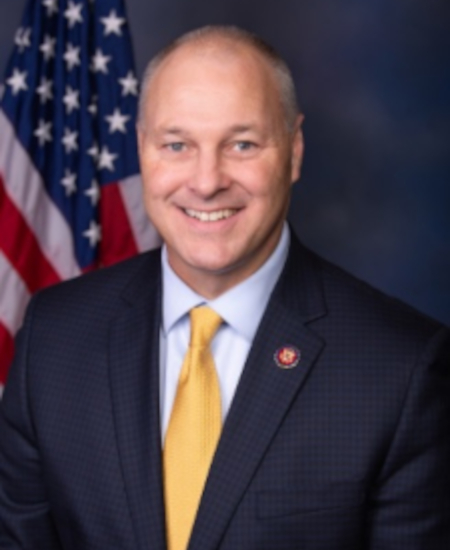
Rep. Pete Stauber
Sponsored bills
Maddy summaryThe Maximum Pressure Act (HR 6114) is a legislative proposal that would maintain and expand U.S. sanctions against Iran. The bill would codify existing sanctions, require Iran to meet 12 specific conditions before sanctions could be lifted (including ending support for terrorism, releasing hostages, and ending nuclear enrichment), and expand sanctions on Iran's Revolutionary Guard Corps and missile programs. It also establishes new reporting requirements for the U.S. government to monitor Iran's activities and the impact of sanctions. The legislation would require congressional review before any sanctions could be lifted or modified, preventing the executive branch from unilaterally easing restrictions.
Maddy summaryHR 5840, the Transportation Security Screening Modernization Act of 2024, simplifies the process for transportation workers to obtain multiple TSA security credentials. It requires the TSA to allow individuals to apply for and renew programs like the TWIC (Transportation Worker Identification Credential) and HAZMAT Endorsement through a single enrollment at any TSA center, with a combined fee lower than separate applications. The bill mandates coordinated expiration dates for all credentials and ensures state-issued commercial driver's licenses reflect the correct HAZMAT endorsement validity. These changes aim to reduce duplication and costs for workers needing multiple security clearances. The TSA must implement these changes within two years and publish details online.
Maddy summaryHR 5709 would amend the tax code to allow individuals who qualify for Medicare Part A due to age (typically 65+) to contribute to Health Savings Accounts (HSAs). Currently, Medicare beneficiaries are ineligible to contribute to HSAs, but this bill removes that restriction by updating the Internal Revenue Code. The key change adds a new eligibility category for Medicare Part A beneficiaries to the tax code provisions governing HSAs. This policy change directly affects seniors enrolled in Medicare Part A, enabling them to use HSAs for qualified medical expenses as part of their healthcare savings strategy. The amendment applies to contributions made after December 31, 2023.
Maddy summaryHR 5193, the Senior Citizens’ Freedom to Work Act of 2023, repeals the Social Security Retirement Earnings Test. This means seniors receiving Social Security benefits who continue working will no longer have their benefits reduced based on their earnings. The bill removes specific provisions in the Social Security Act that previously deducted benefits for individuals under full retirement age who earned above a set limit. The change applies to taxable years ending after December 31, 2023, directly affecting working seniors who previously faced benefit reductions.
Maddy summaryThe Preserving Access to Home Health Act of 2023 repeals a 2018 payment adjustment for Medicare home health agencies, restoring prior payment rates for 2024 and subsequent years. It requires the Medicare Payment Advisory Commission (MedPAC) to analyze how home health agencies' financial performance affects access to care, including reviewing spending and utilization data across Medicare, Medicaid, and other payers. Starting in 2025, the bill mandates home health agencies to report detailed data on visit volumes and payments by payer source (Medicare, Medicaid, private insurers) through updated cost reports. This data will help MedPAC assess payment policy impacts on access to home health services for Medicare beneficiaries.
Maddy summaryHR 4961 requires U.S. Customs and Border Protection (CBP) to maintain the operating hours at all U.S. ports of entry along the U.S.-Canada border at or above the levels in effect before the COVID-19 pandemic's public health emergency declaration. This directly affects CBP operations and travelers, commercial truckers, and businesses relying on cross-border trade through these ports. The key provision mandates CBP to ensure hours equal to or greater than pre-pandemic schedules without requiring new approvals. The bill creates a concrete policy change by legally binding CBP to specific operational hours, avoiding any reduction below the 2019 baseline.
Maddy summaryThe Leveling the Playing Field 2.0 Act (HR 3882) updates U.S. trade law to better address international trade practices that disadvantage American businesses. It establishes special rules for handling multiple investigations of the same merchandise (called "successive investigations"), requiring the Commerce Department to consider previous injury determinations when making new findings. The bill also creates mechanisms to address market distortions from foreign government subsidies, including currency undervaluation, and strengthens procedures to prevent duty evasion through certification requirements for importers. These changes primarily affect foreign exporters of goods subject to U.S. antidumping and countervailing duty investigations, as well as U.S. importers of those goods.
Maddy summaryThis bill prohibits federal funding for gender transition procedures - including hormone therapy, puberty blockers, and surgeries like genital reassignment - across all federal programs and health plans. It exempts procedures for medical conditions (such as disorders of sex development) and treatment of complications arising from such procedures. The bill also blocks Affordable Care Act premium tax credits and cost-sharing reductions for health plans covering these services, though individuals may purchase separate non-federal-funded coverage. State and private insurers can still offer such coverage using their own funds, but federal subsidies cannot be applied to it.
Maddy summaryThis bill creates a new tax deduction for healthcare providers who offer free medical care to eligible patients. It allows direct primary care physicians (those charging a subscription fee) to deduct the published fees for free care provided, plus half the subscription fee per visit. Other providers can deduct the Medicare-reimbursed value of free care given to patients enrolled in Medicaid or children's health programs. The deduction is limited to the provider's total income from medical services that year. It directly affects healthcare providers who offer free care to Medicaid/Medicare-eligible patients without expecting payment.