

Combating Global Corruption Act of 2021 This bill requires the Department of State to address corruption, including related to the Nord Stream 2 pipeline (a national gas pipeline expected to increase Russia's natural gas export capacity). The State Department must annually publish a ranking of foreign countries based on their government's efforts to eliminate corruption. The bill outlines the minimum standards that the State Department must consider when creating the ranking. These considerations include, for example, whether a country has criminalized corruption, adopted measures to prevent corruption, and complied with the United Nations Convention Against Corruption and other relevant international agreements. Tier one countries meet the standards; tier two countries make some efforts to meet the standards; tier three countries make de minimis or no efforts to meet the standards. If a country is ranked in the second or third tier, the State Department must designate an anti-corruption contact at the U.S. diplomatic post in that country to promote good governance and combat corruption. The bill also requires the State Department, in coordination with the Department of the Treasury, to evaluate whether to impose asset- and visa-blocking sanctions against foreign persons engaged in significant corruption (1) in tier three countries, or (2) related to the Nord Stream 2 pipeline. The State Department must report to Congress about any sanctions imposed under this bill. The evaluation and reporting requirements concerning the Nord Stream 2 pipeline terminate after five years.
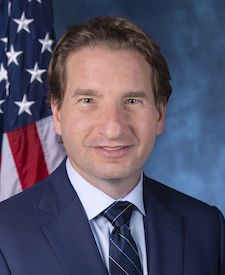
Rep. Dean Phillips
Sponsored bills
CARA 3.0 Act of 2021 This bill addresses substance use disorders by expanding access to treatment and recovery services, providing for housing protections, and requiring other activities. Specifically, the bill reauthorizes, establishes, and expands support for treatment and recovery services. This includes increasing access to treatment in the criminal justice system and other settings and for particular populations, such as pregnant and postpartum individuals and youth and young adults. Additionally, the bill expands Medicare and Medicaid coverage for treatment, including by expanding telehealth access to medication to treat substance use disorders. The bill also temporarily requires that non-opioid pain treatment options be reimbursed separately, instead of on a packaged basis, under Medicare. As a condition of receiving certain federal funding, states must mandate the use of prescription drug monitoring programs (PDMPs) by prescribers and dispensers and impose additional PDMP requirements. Moreover, prescribers of potentially addictive drugs must complete continuing education requirements. The bill also revises the registration process for providers who prescribe certain medications to treat substance use disorders, including by eliminating the provider's patient limit for such medications. In addition, the Substance Abuse and Mental Health Services Administration must carry out activities to promote access to high-quality recovery housing. The bill also sets out protections for individuals with substance use disorders who live in, or apply to live in, federally assisted housing. Furthermore, the bill requires other activities to address substance use, such as support for workforce education and training; public awareness campaigns and similar outreach; and research on prevention strategies, insurance coverage, and treatment modalities.
Hong Kong People's Freedom and Choice Act of 2021 This bill provides for temporary protected status (TPS) for qualifying Hong Kong residents and contains other immigration-related provisions. Hong Kong shall be treated as a TPS-designated territory for 18 months starting from this bill's enactment. (Qualifying nationals of a TPS-designated territory or country may not be removed from the United States and shall have employment authorization while the designation is in effect.) Furthermore, Hong Kong shall be treated as separate from China for the purposes of various numerical limitations on immigrant visas. (In the treaty that transferred sovereignty of Hong Kong to China, China pledged that Hong Kong "will enjoy a high degree of autonomy.") The bill also establishes Priority Hong Kong Resident status for qualified individuals. To obtain such status, an individual must meet certain requirements, such as having resided in Hong Kong for at least ten years as of the day of this bill's enactment and not having citizenship in any jurisdiction other than China, Hong Kong, or Macau. For seeking refugee status or asylum, a Priority Hong Kong Resident may establish a well-founded fear of persecution based on various factors, such as fear based on the individual's significant role in certain protests against China's encroachment into Hong Kong's autonomy. The Department of Homeland Security (DHS) or the Department of State may provide special immigrant status to an eligible Priority Hong Kong Resident with a bachelor's or graduate degree if DHS determines that doing so would provide a significant benefit to the United States.
Golden Visa Accountability Act This bill requires the Department of State to establish and maintain a database containing information about investor visa denials due to the applicant's involvement in corruption or serious human rights abuses. (Generally, the United States offers immigrant visas to qualified individuals who invest in the United States and create a certain number of full-time jobs.) Initially, the database must include records related to such denials of U.S. investor visas. The bill also requires the State Department to eventually expand the database to include records of such denials of investor visas in other countries. The State Department shall prioritize including records from European Union countries and from Australia, Canada, New Zealand, and the United Kingdom. The State Department may admit a foreign country to be part of the database if the State Department determines (1) that country will be honest and forthcoming with its records, and (2) that country's investor visa program is at risk of abuse by corrupt foreign officials.
Empowering Law Enforcement To Fight Sex Trafficking Demand Act of 2021 This bill allows grants under the Edward Byrne Memorial Justice Assistance Grant program to be used for programs to combat human trafficking.
Disarm Hate Act The bill expands the categories of persons who are prohibited from receiving or possessing a firearm. Specifically, it prohibits firearm sale or transfer to and receipt, possession, shipment, or transport by a person (1) who has been convicted of a misdemeanor hate crime, or (2) who has received an enhanced hate crime misdemeanor sentence.
Foreign Corruption Accountability Act This bill temporarily authorizes the President to impose visa-blocking sanctions against any foreign person that engages in public corruption activities (e.g., soliciting or accepting bribes or engaging in extortion) against the United States. The President may terminate the sanctions by making a determination that the person (1) is no longer engaged in (or has taken significant verifiable steps to cease) the sanctionable conduct, or (2) will not knowingly engage in sanctionable conduct in the future. In addition, the President may also terminate the sanctions if it is in U.S. national security interests. The President must notify Congress at least 15 days before terminating the sanctions. The President must annually report to Congress on the imposition and termination of sanctions on foreign persons for engaging in public corruption. The authority to impose the sanctions terminates six years after this bill's enactment.
Northern Border Reopening Transparency Act This bill requires the Department of Homeland Security to submit a report on considerations relating to easing restrictions on or reopening the United States-Canada border to essential and nonessential travel.
Greater Leadership Overseas for the Benefit of Equality Act of 2021 or the GLOBE Act of 2021 This bill contains provisions related to (1) the protection of LGBTQI individuals globally; and (2) immigration protections for vulnerable individuals. The bill establishes (1) an interagency group to respond to urgent threats to LGBTQI people in foreign countries, and (2) a permanent Special Envoy for the Human Rights of LGBTQI Peoples in the Department of State. The President shall impose visa-blocking sanctions on foreign persons responsible for violating the human rights of individuals based on sexual orientation, gender identity, or sex characteristics. The State Department shall establish the Global Equality Fund to provide assistance to nongovernmental organizations working to advance and protect human rights. The U.S. Agency for International Development shall establish the LGBTQI Global Development Partnership to work with the private sector and nongovernmental organizations to support LGBTQI rights. The bill removes prohibitions against providing foreign assistance to nongovernmental organizations that offer certain medical services (e.g., abortion-related services) using non-U.S. government funds. The bill contains several immigration-related provisions, such as those establishing that persecution based on sexual orientation or gender identity may form the basis of an asylum request, allowing certain applicants to file asylum claims more than a year after their arrival in the United States, including a permanent partnership between two partners as a marriage for immigration law purposes, providing for free counsel in certain immigration proceedings, and granting U.S. citizenship to a child born abroad through assistive reproductive technology from a U.S. citizen who is the child's nonbiological parent.
Justice for Victims of Kleptocracy Act of 2021 This bill requires the Department of Justice to publish and regularly update its website with an accounting of property that is forfeited to the United States as a result of foreign government corruption. It also expresses the sense of Congress that recovered assets shall be returned for the benefit of the people harmed by the corruption.