

Maddy summaryThe American Opportunity Accounts Act establishes savings accounts for children born after December 31, 2005, to help them build financial assets. The government will make an initial $1,000 contribution to each eligible child's account (for those born after 2023) and provide annual contributions based on family income, ranging from $2,000 for low-income families to $0 for higher-income families. Account holders can access funds for education, home ownership, or other qualified expenses after age 18, with certain exceptions for higher education costs. The accounts are excluded from federal benefit eligibility calculations, and the government will manage the accounts through an American Opportunity Fund Board.
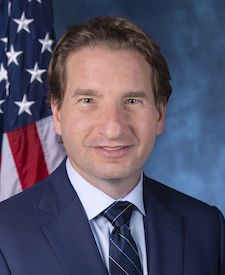
Rep. Dean Phillips
Sponsored bills
Maddy summaryThis bill authorizes a single Congressional Gold Medal to honor all U.S. Army Dustoff crews who served during the Vietnam War (1962-1973). It recognizes their critical role in evacuating nearly 900,000 wounded personnel, including U.S., South Vietnamese, and allied forces, under extreme combat conditions. The medal, designed with input from the Secretary of Defense, will be presented to the U.S. Army Medical Department Museum for permanent display. Duplicate bronze medals may be sold to cover costs, but the primary action is the commemorative recognition of these crews' service.
Maddy summaryThe EAGLES Act of 2023 reauthorizes and expands the U.S. Secret Service’s National Threat Assessment Center (NTAC) to prevent targeted violence, particularly in schools. It directs the NTAC to provide training, research, and consultation on threat assessment to schools, law enforcement, and mental health professionals, with a focus on early intervention for concerning behaviors. The bill allocates $10 million annually (2024-2028) for these efforts, requiring the Center to develop state-specific training plans and report on outcomes like the number of schools trained. It directly affects school districts, educators, and community safety agencies by standardizing evidence-based prevention programs, avoiding criminal justice involvement for at-risk youth.
Veterans Infertility Treatment Act of 2023 This bill requires the Department of Veterans Affairs (VA) to furnish infertility treatments, standard fertility preservation services, or both to a covered veteran or partner of a covered veteran. A covered veteran is a veteran who is enrolled in the VA health care system and has infertility or is at risk of having infertility, as determined by a licensed physician. The VA may furnish up to three completed in vitro fertilization cycles that result in live birth, or 10 attempted cycles, whichever occurs first. Additionally, the VA may furnish in vitro fertilization treatment using donated gametes or embryos. The VA must receive consent to furnish an in vitro fertilization cycle from the covered veteran, the partner of a covered veteran, and the third-party donor (if applicable). For purposes of paying travel expenses for treatment or services to the partner of a covered veteran, the VA must deem the partner to be a veteran receiving treatment or care. The VA must prescribe regulations related to the provision of infertility treatments and standard fertility preservation services as required by this bill. Prior to the enactment of such regulations, the VA must ensure that (1) counseling and treatment furnished under existing authority is available to a veteran and the veteran's partner, regardless of whether they are married; and (2) treatment under existing authority may be furnished using donated gametes or embryos.
Maddy summaryHR 987 authorizes the U.S. Mint to produce commemorative coins honoring Golda Meir, Israel's first female Prime Minister, and the 75th anniversary of U.S.-Israel relations. It specifies three coin types: $5 gold coins (max 50,000), $1 silver coins (max 400,000), and half-dollar clad coins (max 750,000), with detailed weight and composition requirements. All coins will include Golda Meir's image, her name, and commemorative inscriptions, and will be sold during 2026. A surcharge ($35 for $5 coins, $10 for $1 coins, $5 for half-dollars) will be paid to the American Friends of Kiryat Sanz Laniado Hospital Inc. to support its hospital operations.
Maddy summaryHR 782 prohibits state officials from interfering with abortion services provided across state lines. It specifically blocks states from restricting: (1) out-of-state patients traveling for legal abortions, (2) providers offering such services, (3) assistance for travel or care, or (4) the interstate shipment of FDA-approved abortion drugs. The bill allows the federal Attorney General or affected individuals to sue violators for injunctions, damages, and attorney fees. It directly affects patients seeking care in other states, healthcare providers, transportation services, and pharmacies handling FDA-approved abortion medications. The law focuses on preventing state laws from blocking access to legally permitted abortion services.
Maddy summaryHR 767 modifies the FDA's safety program for mifepristone (a medication used in medication abortion) to improve access. It requires the FDA to remove in-person dispensing rules, allow prescriptions via telehealth, and permit certified pharmacies to mail the medication directly to patients. This bill directly affects patients seeking medication abortion and healthcare providers who prescribe or dispense mifepristone. The changes apply specifically to mifepristone's safety program under federal law, ensuring broader access through existing pharmacy channels.
Maddy summaryHR 621, the PART Act, requires catalytic converters on vehicles to be stamped with a visible vehicle identification number (VIN) using special high-visibility paint to deter theft. It creates a federal grant program to help auto dealers, repair shops, and law enforcement implement this stamping at no cost to vehicle owners. The bill also mandates that sellers of catalytic converters retain buyer identification and vehicle details for two years, and adds new federal criminal penalties for stealing or trafficking in catalytic converters.
Maddy summaryThis bill mandates the federal government to develop a comprehensive strategy specifically targeting drug trafficking routes through the Caribbean into the United States, including ports of entry, maritime corridors, and air routes. The strategy must define agency roles, detail required resources, and ensure legitimate trade and travel are not hindered. It specifically requires plans to reduce drug-related violent crime in Puerto Rico and the U.S. Virgin Islands, along with recommendations for additional federal assistance or authorities needed by local law enforcement. The bill creates a procedural requirement for this planning document but does not allocate new funding or change existing laws.
Maddy summaryHR 926 would require the Supreme Court to establish a code of conduct for justices within 180 days of enactment, along with procedures for handling ethics complaints against them. The bill mandates minimum disclosure standards for gifts, income, and reimbursements received by justices and their law clerks, and requires justices to recuse themselves when they or their family received gifts from parties in a case. It would also require parties and amici curiae to disclose gifts given to justices and lobbying contacts related to justices' nominations, and establish a judicial investigation panel to review complaints against justices. The legislation aims to increase transparency in Supreme Court ethics processes and provide clearer recusal standards for justices.