

This resolution calls for the federal government to establish a national biodiversity strategy, which must include a goal of conserving at least 30% of U.S. lands and waters to protect biodiversity and address climate change by 2030 and other goals necessary to reduce the threats to biodiversity.
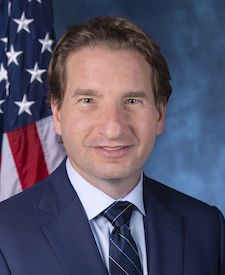
Rep. Dean Phillips
Sponsored bills
Maddy summaryThis bill allows asylum seekers not in detention to obtain work authorization 30 days after filing their asylum application, provided their application isn't deemed frivolous. It directly affects individuals seeking asylum in the U.S. who are awaiting a final decision on their case. The authorization remains valid until the asylum application receives a final denial, including any administrative or court appeals. This changes the prior system where many asylum seekers faced prolonged work restrictions while their cases were processed.
Maddy summaryThe Military Spouse Hiring Act expands the Work Opportunity Tax Credit to include military spouses. Employers who hire a spouse of an active-duty military member - certified by a local agency as meeting eligibility requirements on the hiring date - can claim this tax credit. The credit reduces the employer's federal tax liability for hiring such individuals. This provision applies to new hires after the bill's enactment date.
Maddy summaryThe United States Foundation for International Conservation Act of 2023 establishes a new independent foundation to provide long-term funding for the management of protected areas and conservation projects in eligible countries. The Foundation will be governed by a Board with government officials and private sector representatives, and it will fund projects that require non-U.S. Government funding to match the U.S. funding provided. Projects must demonstrate community support, environmental safeguards, and economic benefits for local communities. The Foundation will operate for 10 years with $100 million authorized annually for fiscal years 2024-2033, and must report annually to Congress on its activities and outcomes.
Maddy summaryHR 1247 would award a Congressional Gold Medal to the Freedom Riders collectively, honoring their pivotal role in challenging segregation in interstate travel during the Civil Rights movement. The medal, to be struck by the U.S. Mint and displayed at the Smithsonian Institution, recognizes their nonviolent protests that led to the 1961 federal ban on segregation in interstate public facilities. This is a symbolic tribute with no legal effect, as the bill does not create new policies or alter existing laws.
Maddy summaryThe Richard L. Trumka Protecting the Right to Organize Act of 2023 strengthens workers' rights to organize unions by making it harder for employers to interfere with organizing efforts. Key provisions include changing the definition of "employee" to make it more difficult to classify workers as independent contractors, prohibiting employers from threatening to permanently replace striking workers, and requiring employers to provide voter lists for union elections. The bill also creates a new electronic voting system for union elections, strengthens whistleblower protections for workers reporting labor violations, and increases penalties for unfair labor practices. These changes directly affect workers seeking to form unions, employers who may interfere with organizing, and labor organizations. The bill aims to make it easier for workers to exercise their right to collective bargaining under the National Labor Relations Act.
Maddy summaryHRES 132 is a non-binding House resolution expressing condolences for the over 36,000 earthquake victims in Türkiye and Syria and commending humanitarian response efforts. It specifically condemns the Assad regime for obstructing aid delivery and exploiting the disaster, urging the Biden administration to open all UN border crossings for aid and prevent U.S.-funded assistance from being diverted to Syria’s government. The resolution also calls for continued enforcement of the Caesar Syria Civilian Protection Act to protect Syrian civilians. As a symbolic resolution, it does not create new law but formally directs the administration’s diplomatic approach to the crisis.
Maddy summaryHR 1190, the "Disclosing Foreign Influence in Lobbying Act," amends the Lobbying Disclosure Act of 1995 to require lobbyists to disclose the name and address of any foreign government or political party (other than the client) that directs, plans, supervises, or controls their lobbying activities. This change directly affects registered lobbyists who work with foreign entities, mandating them to report these foreign influences in their filings. The key provision adds a new requirement to disclosure forms, specifying that foreign governments or political parties involved in controlling lobbying efforts must be named, even if they are not the direct client. This focuses on transparency about foreign involvement in U.S. lobbying, without altering the core lobbying registration framework.
Maddy summaryHR 1194, the "Fighting Presidential Budget Waste Act," requires the President and the Office of Management and Budget (OMB) to consider findings from the most recent GAO report on reducing government waste when preparing the annual federal budget. The bill specifically directs them to review the GAO report titled "Additional Opportunities to Reduce Fragmentation, Overlap, and Duplication and Achieve Billions of Dollars in Financial Benefits" (or a successor report). This mandate applies to all budget submissions under Section 1105 of Title 5, U.S. Code. The law does not create new spending or programs but changes the budget preparation process by requiring federal officials to factor in GAO recommendations for cost savings.
Maddy summaryThis bill requires drug manufacturers to include patient experience data in the U.S. Food and Drug Administration's risk-benefit assessments for new drug approvals. It amends the Federal Food, Drug, and Cosmetic Act to mandate that sponsors submit and describe how patient experience data was considered during the review process. The law directly affects pharmaceutical companies seeking new drug approvals and the FDA during its evaluation. The key provision adds specific language to the approval framework, making patient experience data a formal part of the assessment.