

Maddy summaryThis bill creates a new exemption from U.S. passport application fees for first responders participating in disaster relief. Specifically, it allows the Secretary of State to waive both passport issuance and execution fees for volunteers working under U.S. government contracts, grants, or agreements to conduct search, rescue, or disaster relief operations within seven days of a natural disaster in a foreign country. The bill does not change existing fee exemptions for military personnel, seamen, or families of fallen service members. It also requires the Secretary of State to report annually on the number of such fee waivers granted to first responders.
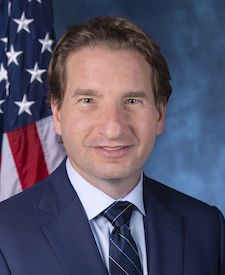
Rep. Dean Phillips
Sponsored bills
Maddy summaryThis bill establishes a new Office within the Department of Justice to address racial disparities in missing and murdered Black women and girls cases. The Office will collect data on case resolution times, coordinate with law enforcement, and create a public dashboard tracking these cases. It also creates grants for community organizations to provide culturally appropriate services, prevention programs, and training for law enforcement targeting violence against Black women and girls. The bill directly affects Black women and girls who are victims of violence and their communities, focusing on improving data collection and support systems rather than changing criminal laws.
Maddy summaryHR 5492, the Veteran Families Health Services Act of 2023, provides fertility treatment, counseling, and adoption assistance to military members and veterans with infertility conditions. The bill requires the Department of Defense to offer fertility preservation services like cryopreservation before deployment or hazardous assignments, and to cover fertility treatments including in vitro fertilization for current service members. For veterans, it adds fertility treatment and counseling to VA medical services, allows adoption assistance up to the cost of three adoptions, and mandates coordination between military and VA health systems. These provisions apply regardless of sex, gender identity, sexual orientation, or marital status, and are designed to support military families affected by service-related infertility.
Maddy summaryThe Better CARE for Animals Act of 2023 amends the Animal Welfare Act to strengthen enforcement of animal welfare standards. It gives the Attorney General authority to bring civil cases for violations, including seeking penalties up to $10,000 per day per violation and injunctions to remove or relocate animals. The bill also requires the Secretary of Agriculture and Attorney General to coordinate through a new Memorandum of Understanding, focusing on repeat violators. These changes directly affect dealers, exhibitors, and enforcement agencies by expanding civil enforcement tools and clarifying jurisdiction over rule violations.
Maddy summaryThe John R. Lewis Voting Rights Advancement Act of 2023 would strengthen the Voting Rights Act of 1965 by updating the criteria for which states and localities must obtain federal preclearance before changing voting practices. It would establish new standards for proving vote dilution and vote denial by requiring courts to consider historical discrimination, racial polarization in voting, and whether voting practices disproportionately burden minority voters. The bill would also require states and localities to provide public notice of voting changes and share demographic data about polling locations. These changes would primarily affect jurisdictions with a history of voting rights violations, aiming to prevent discriminatory voting practices before they take effect.
Maddy summaryThe Humane Cosmetics Act of 2023 bans cosmetic animal testing in the United States, prohibiting companies from conducting or contracting such testing after its enactment (effective 1 year later). It also bans selling or transporting cosmetics developed using animal testing conducted after that date within U.S. interstate commerce. The law directly affects cosmetic manufacturers, retailers, and suppliers operating in the U.S. market, requiring them to use non-animal testing methods for safety evaluations. Exceptions exist for foreign regulatory requirements or when no alternative testing methods are available for specific ingredients.
Maddy summaryHJRES 89 requires the President to obtain Senate approval (with a two-thirds vote) or new congressional legislation to suspend, terminate, or withdraw from the North Atlantic Treaty (NATO). It prohibits using federal funds for such actions until Congress passes a two-thirds resolution or enacts a law authorizing withdrawal. The bill mandates 180-day written notification to relevant congressional committees (Foreign Affairs and Foreign Relations) before any withdrawal action and authorizes Congress to sue to block unilateral executive moves. This directly affects the executive branch's ability to act unilaterally on NATO membership, reinforcing congressional oversight of treaty obligations.
Maddy summaryThe No Tax Breaks for Union Busting Act would deny tax deductions for employers who attempt to influence employees' decisions about union activities, including unfair labor practices like firing workers for organizing or using captive audience meetings. It targets expenses related to union-busting tactics, such as consulting fees and other costs used to sway workers' opinions about collective bargaining. Employers would need to report these expenses on tax returns and would no longer be able to deduct them from taxable income. The bill aims to prevent employers from using tax-deductible expenses to influence union elections, aligning with existing rules that deny tax deductions for political spending. It would apply to expenses incurred in taxable years beginning 240 days after enactment.
Maddy summaryHR 5433, the Child Care Stabilization Act, provides $16 billion annually from 2024 to 2028 to stabilize the child care sector through grants administered by the Health and Human Services Secretary. It directly affects licensed child care providers by offering stable funding to cover operating costs, while supporting higher wages for early educators without raising family fees. Key provisions include expanding access to high-quality, affordable care - especially for infants/toddlers, rural communities, and children with disabilities - and addressing shortages in underserved areas. The funding builds on existing American Rescue Plan resources, aiming to strengthen the child care workforce and increase available options for working families.
Maddy summaryHR 5428, the No Tax Breaks for Union Busting (NTBUB) Act, prevents employers from deducting certain expenses related to influencing workers' decisions about union representation. It targets spending on tactics like anti-union meetings, workplace surveillance, or consultants during organizing campaigns, making these costs non-deductible for tax purposes. Employers must report such expenses on their tax returns, including details about the activities and amounts spent. The bill aims to remove tax incentives for employer interference in union elections, aligning with federal labor law protections for workers' collective bargaining rights.