

Maddy summaryHR 7197, the Artificial Intelligence Environmental Impacts Act of 2024, requires the Environmental Protection Agency (EPA) to conduct a comprehensive study on AI's environmental footprint - including energy use, water consumption, e-waste, and pollution across AI models' full lifecycle - and to solicit public input. It establishes a voluntary reporting system for AI companies (voluntary reporting entities) to share data on their environmental impacts, supported by guidelines developed with a stakeholder consortium focused on creating measurement standards. The bill mandates a 4-year report to Congress detailing the consortium’s findings, the reporting system’s design, and recommendations for future action to address negative impacts or promote positive ones. This legislation does not impose mandatory regulations but aims to build data and standards for informed decision-making about AI’s environmental effects.
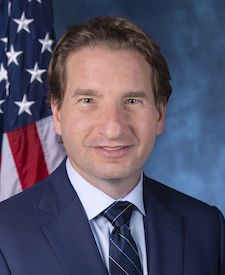
Rep. Dean Phillips
Sponsored bills
End Banking for Human Traffickers Act of 2024 This bill establishes requirements for finance and banking entities to detect and prevent human trafficking. The Financial Institutions Examination Council must review procedures to improve the capability of specified programs to target financial transactions relating to severe forms of human trafficking. The Interagency Task Force to Monitor and Combat Trafficking must submit to Congress recommendations for the revision of anti-money laundering programs specifically targeting severe forms of human trafficking. The bill provides additional criteria to be considered by the Department of State to indicate a foreign country's serious and sustained efforts to eliminate human trafficking for purposes of certain foreign assistance. Specifically, the bill adds criteria regarding whether a foreign country has taken or is taking steps to implement a framework for preventing financial transactions involving severe forms of human trafficking.
Maddy summaryThe ACCESS Act of 2024 creates a federal grant program to help clinics and health care providers expand abortion and reproductive health services in states where abortion is legal (outside of life or health exceptions). It authorizes $200 million annually for fiscal years 2024-2028 to fund specific capacity-building activities, including facility expansions, hiring clinical staff, telehealth services, and culturally appropriate patient resources. Priority is given to providers in states experiencing the highest increases in out-of-state patients seeking abortion care. The bill directly supports health care entities serving patients who travel across state lines for services, aiming to reduce wait times and improve access for vulnerable communities.
Maddy summaryThe Complete Streets Act of 2024 requires states to establish programs that help local governments, transit agencies, and other eligible entities design and build transportation infrastructure accommodating all users, including pedestrians, cyclists, and public transit riders. States must provide technical assistance and grants for complete streets projects, with 5% of certain transportation funds allocated to these programs. The bill establishes design standards requiring features like protected bike lanes, accessible sidewalks, and appropriate lighting for all transportation projects, applying to new projects on Federal-aid highways within metropolitan areas. It mandates that states develop complete streets policies and prioritization plans to improve safety and accessibility, particularly in underserved communities, with compliance required by 2026 or 2029 for different project types.
Maddy summaryHR 7056, the Access to Family Building Act, establishes federal rights for individuals to access assisted reproductive technology (ART) like IVF without unreasonable restrictions, directly affecting patients seeking fertility treatments and health care providers offering ART services. The bill prohibits states from imposing limitations on ART that are more burdensome than those for comparable medical procedures, fail to advance safety, or unduly restrict access, while allowing health and safety regulations that are necessary and least restrictive. It creates federal enforcement mechanisms, including lawsuits by the Attorney General or affected individuals to challenge violating state laws, and preempts conflicting state regulations. The bill explicitly preserves state authority over health/safety regulations and does not alter existing state insurance coverage laws for ART.
Maddy summaryThe Nurse Faculty Shortage Reduction Act of 2024 creates a new federal grant program to address nursing faculty shortages. It authorizes $28.5 million annually (2024-2028) to help nursing schools supplement faculty salaries, covering the gap between clinical nurse pay and teaching salaries. Schools must submit detailed salary data and plans to sustain higher pay after the 3-year grant period. The program prioritizes schools in high-need areas, serving vulnerable populations, or recruiting underrepresented faculty, with a report required to Congress after 3 years.
Maddy summaryThis bill requires the President's annual budget submission and congressional budget resolutions to include the ratio of public debt to estimated gross domestic product (GDP). It amends existing laws (31 U.S.C. §1105(a) and the Congressional Budget and Impoundment Control Act of 1974) to mandate this specific metric be reported. The change would standardize the inclusion of this ratio in federal budget documents, making it a formal part of fiscal planning. It is a procedural update to reporting requirements, not a policy change affecting debt levels or spending.
Maddy summaryThis bill establishes a 16-member Fiscal Commission in Congress to develop bipartisan recommendations for improving the federal budget and debt situation. The Commission must identify policies to balance the budget, stabilize the debt-to-GDP ratio at or below 100%, and improve long-term fiscal outlook, with recommendations requiring approval from at least 3 Republican and 3 Democratic members. The Commission must submit its report and legislative language by November 15, 2024, including economic and budgetary effects, after which Congress would consider the proposals through expedited procedures. The Commission would terminate 30 days after submitting its final report.
Maddy summaryThe Transit Emergency Relief Act (HR 7012) amends federal transportation law to provide more flexible funding for public transit agencies facing emergencies. It allows funds designated for emergency relief (under 49 U.S.C. § 5324) to remain available until spent, be used for prior or current fiscal years, and not reduce existing funding. The bill also increases annual funding caps for transit programs and adds $50 million per year (2024-2027) specifically for this emergency relief program. Public transportation agencies receiving federal grants are directly affected, as the changes simplify access to funds during crises while requiring compliance with labor standards (49 U.S.C. § 5333). This creates more predictable support for transit systems recovering from unexpected disruptions.
Maddy summaryThis bill restores visa eligibility for immigrants who had diversity visas allocated for fiscal years 2017-2022 but were denied entry due to specific travel restrictions (like Executive Orders 13769/13780 or related proclamations) or pandemic-related delays. The State Department must notify affected individuals within 90 days of the bill’s enactment, giving them one year to confirm they wish to proceed with their visa applications. Unused visas from those years can be reallocated without counting against current annual limits, and applicants who fail to respond or are denied for standard reasons (like education requirements) lose eligibility. The policy directly affects individuals impacted by these specific past barriers to immigration.