

Maddy summaryHR 7921, the Countering Antisemitism Act, establishes a National Coordinator to Counter Antisemitism within the Executive Office of the President and creates an Interagency Task Force to coordinate federal efforts against antisemitism across multiple agencies. The bill requires federal agencies to report on implementing the U.S. National Strategy to Counter Antisemitism, mandates annual threat assessments of antisemitic violent extremism from the FBI, DHS, and National Counterterrorism Center, and addresses antisemitic discrimination in higher education through a designated Office for Civil Rights Designee. It also includes provisions for a study on Holocaust education by the U.S. Holocaust Memorial Museum, a study on online antisemitism with recommendations for Congress, and amendments to the Nonprofit Security Grant Program to require public reporting on grant applications and awards.
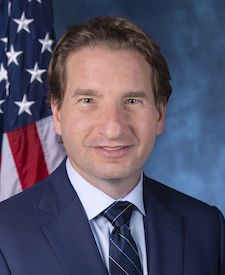
Rep. Dean Phillips
Sponsored bills
Maddy summaryHR 7433, the Law Enforcement Support and Transnational Repression Hotline Act, creates a new hotline for U.S. citizens and residents who believe they are victims of transnational repression by foreign governments or their agents - such as threats, harassment, or coercion for exercising First Amendment rights. The Department of Homeland Security must establish this anonymous hotline and run a public service campaign in multiple languages (including Spanish, Arabic, Mandarin, and Russian) to educate the public about transnational repression and available resources. The bill also requires research into new technologies to help law enforcement combat such threats while protecting privacy and civil liberties. This legislation directly supports victims of foreign government intimidation and enhances federal coordination to address cross-border repression tactics.
Maddy summaryHR 7866, the United States-Israel Anti-Tunnel Cooperation Enhancement Act, increases funding for U.S.-Israel collaboration on anti-tunnel technology from $50 million to $80 million. The bill directly affects U.S. defense and homeland security agencies working with Israel to detect, map, and disrupt underground terror tunnels used by groups like Hamas. Key provisions include authorizing the higher funding level under existing law to enhance joint efforts against subterranean threats, such as tunnels used for attacks, weapon storage, and hostage holding beneath civilian areas in Gaza. This focuses on concrete policy changes to scale up bilateral cooperation on a specific security technology.
Maddy summaryHCONRES 102 is a non-binding symbolic resolution supporting International Transgender Day of Visibility, introduced by multiple House members. It formally encourages the U.S. to observe the day with ceremonies and programs, celebrates transgender community achievements, and recognizes their ongoing fight for equality amid documented discrimination in employment, healthcare, housing, and public spaces. The resolution highlights transgender representation in politics (including 21 state legislators) and historical context, while acknowledging rising anti-transgender legislation. It directly affirms the transgender community's visibility and rights without creating new policies or funding.
Maddy summaryHRES 1110 is a symbolic resolution passed by the U.S. House of Representatives in March 2024 to commemorate March 2024 as National Women’s History Month. It formally supports the month’s goals, recognizes women and organizations advancing women’s history education, and highlights the intersectional contributions of Black, Hispanic, Asian, Native American, Pacific Islander, LGBTQ+, and disabled women throughout U.S. history. The resolution has no legal effect or policy changes - it serves solely as a ceremonial acknowledgment of historical milestones and ongoing advocacy for gender equality. It directly affects all Americans by affirming the significance of women’s historical contributions through official congressional recognition.
Maddy summaryThe Parity in Engineering Act amends a federal highway law (Section 112(b)(2)(F) of Title 23) by removing Minnesota from a list of states subject to a specific engineering services requirement. It corrects a technical reference by replacing "States of West Virginia or Minnesota" with "State of West Virginia," meaning the provision now applies solely to West Virginia. This change directly affects federal highway engineering contracting processes in West Virginia and Minnesota, with Minnesota no longer covered by this specific rule. The bill makes a narrow procedural adjustment without altering broader policy or impacting other states.
Maddy summaryThis bill directs the federal government to launch a national public health education campaign about abortion access. It requires the Secretary of Health to provide medically accurate, culturally competent information on where to access abortion services (including medication abortion and telehealth), legality, identifying misleading crisis pregnancy centers, and spotting misinformation. The campaign specifically targets underserved groups like communities of color, immigrants, LGBTQ+ individuals, and people in rural areas. It prohibits promoting misinformation about abortion safety, abortion reversal, or abstinence-only programs, and bans collecting personal data from users. The effort aims to improve access to reliable information, not to change abortion laws.
Maddy summaryHR 7814, the Dental Loan Repayment Assistance Act of 2024, changes tax rules to exclude certain loan repayments from taxable income for dental school faculty. It directly affects dental faculty members at schools participating in the federal Dental Faculty Development and Loan Repayment Program (under Section 748(a)(2) of the Public Health Service Act). The key provision amends tax law so that repayments received through this specific program are not counted as taxable income. The bill also requires a GAO report to assess how many dental faculty remain teaching in clinics at participating schools after receiving the funding.
Maddy summaryThe AADAPT Act reauthorizes and expands the Project ECHO grant program to specifically address Alzheimer's disease and dementia care. It provides $1 million annually (2026-2031) for grants to eligible health care entities - such as rural clinics, tribal organizations, or community health centers - to develop online training programs for primary care providers working in underserved areas (including rural, frontier, or medically underserved communities). These programs aim to improve provider retention, increase early diagnosis of dementia, and enhance quality care. The bill requires grantees to report on outcomes and ensures funding supplements, rather than replaces, existing resources.
Maddy summaryHR 7770, the Rosie the Riveter Commemorative Coin Act, authorizes the U.S. Mint to produce and sell three commemorative coins honoring women who worked on the U.S. home front during World War II. It specifies $5 gold coins (max 50,000), $1 silver coins (max 400,000), and half-dollar coins (max 750,000), all to be issued between January 1, 2025, and December 31, 2025. Each coin sale includes a surcharge ($35 for gold, $10 for silver, $5 for half-dollar), with all surcharge funds directed to the Rosie the Riveter Trust for maintaining the Rosie the Riveter WWII Home Front National Historical Park and educational programs. The coins will feature designs reflecting the legacy of diverse women workers and must meet specific weight, diameter, and composition standards.