

Maddy summaryThis bill amends the Department of Veterans Affairs' procurement rules to ensure women-owned small businesses receive equal priority in contracting preferences. It requires the VA to treat preferences for women-owned small businesses the same as other small business preferences under federal procurement law. Specifically, it adds a new provision (Section 8(m) of the Small Business Act) to VA procurement guidelines, mandating that all such preferences be afforded "the same degree of priority." This directly affects VA contracting officers and women-owned small businesses seeking federal contracts with the VA.
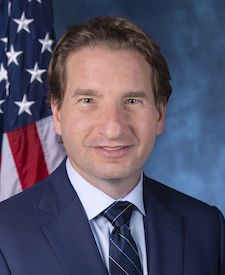
Rep. Dean Phillips
Sponsored bills
Maddy summaryThe STOP TRANQ Act requires the U.S. government to include xylazine - a veterinary sedative increasingly mixed with illicit drugs - in the annual International Narcotics Control Strategy Report. This amendment adds xylazine to the list of substances tracked alongside illicit fentanyl, improving data collection on its role in drug trafficking and public health threats. The bill focuses on standardizing international reporting to better assess global drug trends, without altering enforcement or funding. It directly affects the Department of State and the Office of National Drug Control Policy, which produce the report.
Maddy summaryHR 9274, the SHAWL Act, establishes two new Smithsonian museums: the National Museum of the American Latino and the American Women’s History Museum. It authorizes both museums to be located within the National Mall’s "Reserve" area, overriding prior restrictions, and requires federal agencies managing potential sites to transfer jurisdiction to the Smithsonian after notifying congressional committees. The bill mandates that both museums accurately represent diverse cultures, histories, and viewpoints within Latino and women’s communities through exhibits and programs, requiring input from a broad range of community experts. It also requires the Smithsonian to submit biennial reports to Congress detailing compliance with these representation requirements.
Maddy summaryThis bill amends the Higher Education Act to require colleges and universities receiving federal funds to implement evidence-based programs preventing alcohol and substance misuse among students and staff, replacing outdated terms like "drug abuse" with "substance misuse." It creates a new $15 million annual grant program (for fiscal years 2025-2030) to fund recovery services, peer support, integrated health care, overdose prevention, and crisis training. Grants can support campus-based services like counseling, re-entry assistance for students on academic probation due to substance use, and coordination with community health providers. The bill also mandates interagency coordination between education and health agencies to develop best practices and requires institutions to certify compliance with prevention program requirements.
Maddy summaryThis bill makes it a federal crime to steal packages that have been delivered by private carriers (like FedEx or UPS) but not yet received by the recipient. It directly affects package recipients, carriers, and thieves who target unclaimed deliveries left on porches or in mailboxes. The key provision amends federal law to include these delivered-but-unclaimed packages under the same legal protections as mail in transit. This changes the law to treat stolen packages at the delivery stage as a federal offense, similar to theft of postal mail. The bill does not create new penalties but expands existing theft statutes to cover this specific scenario.
Maddy summaryThe Federal Prison Oversight Act establishes a new inspections regime for federal prisons, requiring the Justice Department's Inspector General to conduct regular assessments of Bureau of Prisons facilities. These inspections will evaluate conditions of confinement, medical care, staffing levels, safety protocols, and policies related to visitation and programming. The bill also creates a new Ombudsman position within the Department of Justice to receive and address complaints from incarcerated people, their families, and staff about health, safety, and rights concerns. The Inspector General must submit public reports with recommendations, and the Bureau must respond with corrective action plans within 60 days. The law includes protections against retaliation for those filing complaints and requires the Bureau to provide multiple confidential channels for submitting complaints.
Maddy summaryHR 9119, the Alzheimer's Law Enforcement Education Act of 2024, requires the Department of Justice to create an online training course for law enforcement officers on interacting with people with Alzheimer's disease or dementia. The course covers recognizing symptoms, effective communication techniques, avoiding physical restraints, and identifying abuse or neglect. It mandates that state departments count this training toward required certification hours for law enforcement, correctional, and probation officers. The bill directly affects these officers by requiring new training standards for handling encounters with individuals experiencing dementia. The training must be developed within one year of the bill's enactment.
Maddy summaryHR 9104, the Access to Birth Control Act, requires pharmacies that normally stock contraception to provide birth control or related medications without delay if in stock, or immediately offer alternatives like referrals to other pharmacies or expedited orders if unavailable. It prohibits pharmacists from intimidating customers, misrepresenting availability, breaching confidentiality, or refusing to fill valid prescriptions for birth control. Pharmacies violating these rules face civil penalties up to $1,000 per day or private lawsuits. The law specifically applies to pharmacies that routinely carry contraception and excludes cases where a valid prescription is missing or payment cannot be made. It aims to address documented refusals to dispense birth control, particularly following the Dobbs decision.
Maddy summaryThis bill requires the Department of Veterans Affairs (VA) to implement annual sensitivity training for all VA employees handling military sexual trauma (MST) claims, including staff processing claims, communicating about evidence, and making decisions. It also mandates that the VA automatically obtain a veteran's service records when processing MST claims and directs the VA to report on improving training for contracted health care professionals who examine veterans filing such claims. The changes aim to ensure VA staff and contracted medical personnel are properly trained to avoid retraumatizing veterans during the claims process. The VA must submit a report to Congress within 90 days detailing current training and future plans for these requirements.
Maddy summaryThis bill allows the VA to provide a single headstone or marker for groups of eligible veterans buried together in group interments, instead of individual markers. It sets a 7-year expiration for this provision, ending seven years after the bill's enactment. The bill also extends the deadline for burying spouses and dependent children of veterans or active-duty service members at national cemeteries from October 1, 2024, to October 1, 2031. These changes directly affect veterans buried in group interments and their families seeking burial benefits at VA national cemeteries.