

Maddy summaryThe EACH Act of 2023 would require federal health programs - including Medicaid, Medicare, the Indian Health Service, and TRICARE - to cover abortion services without restrictions. It repeals a provision in the Affordable Care Act that allowed states to limit abortion coverage in health insurance plans sold through state marketplaces. The bill also prohibits the federal government from restricting abortion coverage in private health insurance plans. This would directly affect millions of people, particularly low-income individuals and people of color, who are disproportionately enrolled in Medicaid and currently face barriers to abortion care due to coverage restrictions.
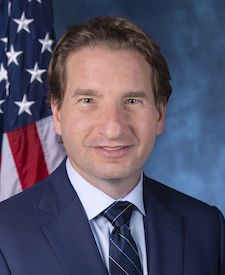
Rep. Dean Phillips
Sponsored bills
Maddy summaryThis bill extends a temporary COVID-19 emergency waiver that allows nurse aides in training to count hours worked during the pandemic toward their certification requirements at nursing facilities. It specifically permits these hours to satisfy the 75-hour minimum training requirement and allows facilities to conduct competency evaluations on-site if states don’t offer them weekly. The waiver remains in effect for at least 24 months after enactment, with a requirement for the Secretary to study its continued appropriateness within one year. The policy directly affects nurse aides working in skilled nursing facilities and nursing facilities under federal Medicare/Medicaid rules. It does not create new training programs but maintains pandemic-era flexibility for staffing.
Maddy summaryThis bill extends funding for the existing Public Health Service Act program focused on raising public awareness about Alzheimer's disease and related dementias. It authorizes $33 million annually for fiscal years 2025 through 2029 to support public health education and outreach initiatives. The program directly affects public health organizations and community groups that develop and distribute educational materials about Alzheimer's prevention, diagnosis, and care. The key provision is the multi-year funding extension, ensuring continued support for nationwide awareness efforts without altering the program's core structure.
Maddy summaryThe FEMA Loan Interest Payment Relief Act requires FEMA to reimburse local governments and electric cooperatives for interest paid on qualifying disaster recovery loans. A qualifying loan must be used for FEMA-covered activities with at least 90% of proceeds dedicated to those purposes. Reimbursement covers the lesser of actual interest paid or what would have been paid at the prime interest rate, as defined by the Federal Reserve. This relief applies to interest accrued in the seven years preceding the bill's enactment.
Maddy summaryHR 6751 authorizes the U.S. Mint to produce commemorative coins honoring Roberto Clemente, a Hall of Fame baseball player and humanitarian, including 50,000 $5 gold coins, 400,000 $1 silver coins, and 750,000 half-dollar coins. The coins must feature Clemente's image and inscriptions like "Roberto Clemente" and "2027," with all sales including a surcharge ($5-$35 per coin) paid to the Roberto Clemente Foundation. The foundation, which supports youth sports, education, and disaster relief programs, will use these funds for its mission, while the U.S. Treasury must recover all production costs. The coins will be sold exclusively in 2027, with no net cost to the government.
Maddy summaryThe Working Dog Commemorative Coin Act (HR 807) directs the U.S. Treasury to mint three types of commemorative coins honoring working dogs' service: $5 gold coins, $1 silver coins, and half-dollar coins with specific weight and composition requirements. Each coin will carry a surcharge ($35 for $5 coins, $10 for $1 coins, $5 for half-dollars) that will be paid directly to America's VetDogs to support their programs providing service dogs for veterans, the disabled, and others. The coins will be issued in 2027 with designs reflecting working dogs' roles in military, detection, therapy, and assistance work. The legislation specifies that all surcharge revenue must fund America's VetDogs' operations without creating new government programs. This is a commemorative measure focused on honoring working dogs' contributions through coin sales, with all surcharge funds going to a specific nonprofit organization.
Maddy summaryThis bill establishes a Truth and Healing Commission to investigate the history and impacts of U.S. Indian Boarding School policies on Native American communities, including cultural, emotional, and physical effects on survivors, descendants, and tribal communities. The Commission will document these impacts through research, public meetings, and testimony, working with two advisory committees focused on Native American perspectives and Federal agency coordination. The Commission will operate for six years, with annual reports to Congress and a final report containing recommendations for Federal action. The bill also includes provisions for managing burial sites related to boarding schools and ensures the Native American Graves Protection and Repatriation Act applies to remains found on Federal lands related to these schools.
Maddy summaryThis bill establishes a Coordinator within the State Department to manage the relocation and resettlement of eligible Afghan allies and to assist U.S. citizens and lawful permanent residents in Afghanistan who seek U.S. support to leave the country. The Coordinator can hire temporary staff (preferring Foreign Service appointments), enter contracts, and coordinate with other federal agencies to use their funds for these efforts. The Coordinator must notify relevant congressional committees 15 days before transferring funds between agencies. The position and its authorities will expire three years after the bill becomes law.
Maddy summaryThis resolution condemns the global rise of antisemitism and urges all countries and international organizations to adopt the Global Guidelines for Countering Antisemitism, which were developed by the U.S. and partners in Buenos Aires. The guidelines include specific policies for protecting Jewish communities, collecting data on antisemitism, and promoting Holocaust education. As a non-binding resolution, it does not create new laws but calls for formal endorsement of these international standards. The House emphasizes strengthening global cooperation to counter antisemitism, referencing the U.S. National Strategy to Counter Antisemitism and over 40 nations that have already supported the guidelines.
Maddy summaryThe Sunshine Protection Act of 2023 would end the practice of changing clocks twice a year for daylight saving time (DST) by making DST permanent nationwide, unless a state chooses to remain on standard time. It repeals the requirement to switch clocks back to standard time in the fall, directly affecting all U.S. states and territories that currently observe DST. The bill allows states that previously opted out of DST under the Uniform Time Act (like Arizona and Hawaii) to maintain their current time zone choices without further action. Key provisions include adjusting time zone offset language in existing law and granting states the authority to select either permanent DST or standard time based on their current arrangements. This change would eliminate seasonal time changes for most Americans, though states could still choose to stay on standard time if they prefer.