

Maddy summaryThis bill would reduce the pay of all U.S. House and Senate members by one day's salary for each day a government shutdown occurs. Specifically, Congress would withhold that amount during the shutdown and hold it in an escrow account until the end of the current Congress (the 118th). The policy applies to shutdowns starting after the November 2024 election and defines a shutdown as a lapse in funding due to failure to pass appropriations bills. It directly affects all sitting Members of Congress by tying their pay to avoiding shutdowns.
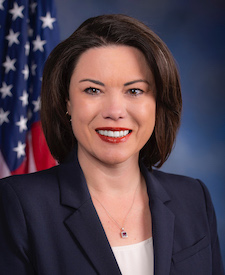
Rep. Angie Craig
Sponsored bills
Maddy summaryThis bill establishes a new Office within the Department of Justice to address racial disparities in missing and murdered Black women and girls cases. The Office will collect data on case resolution times, coordinate with law enforcement, and create a public dashboard tracking these cases. It also creates grants for community organizations to provide culturally appropriate services, prevention programs, and training for law enforcement targeting violence against Black women and girls. The bill directly affects Black women and girls who are victims of violence and their communities, focusing on improving data collection and support systems rather than changing criminal laws.
Maddy summaryThe Biomanufacturing and Jobs Act amends the USDA's BioPreferred Program to increase federal purchasing of biobased products made from agricultural commodities like corn and soybeans. It requires federal agencies to annually update their procurement targets for biobased products, establishes a new USDA task force to coordinate biobased product programs, and creates new labeling and reporting requirements. The bill affects federal procurement agencies, USDA's programs, and manufacturers of biobased products including personal care items, paints, construction materials, and textiles. Key mechanisms include mandatory federal procurement targets, annual updates to procurement requirements, training for procurement staff, and public marketing initiatives to promote biobased products.
Maddy summaryThis bill creates a new program to incentivize SNAP (Supplemental Nutrition Assistance Program) recipients to purchase "naturally nutrient-rich dairy" like fluid milk, yogurt, and cheese at checkout. It allocates $10 million annually to fund competitive grants for state/local governments and nonprofits to implement projects that provide point-of-sale incentives for qualifying dairy products. Projects must use electronic systems to apply incentives only toward eligible dairy purchases and undergo independent evaluations using rigorous methods to measure impact on consumption. The program replaces an existing dairy incentive initiative under the 2018 farm bill, with a transition period ensuring no disruption to current projects.
Maddy summaryThe Better CARE for Animals Act of 2023 amends the Animal Welfare Act to strengthen enforcement of animal welfare standards. It gives the Attorney General authority to bring civil cases for violations, including seeking penalties up to $10,000 per day per violation and injunctions to remove or relocate animals. The bill also requires the Secretary of Agriculture and Attorney General to coordinate through a new Memorandum of Understanding, focusing on repeat violators. These changes directly affect dealers, exhibitors, and enforcement agencies by expanding civil enforcement tools and clarifying jurisdiction over rule violations.
Maddy summaryThis bill extends existing programs that provide payments to counties and states with federal land, primarily to support local schools and communities. It updates key deadlines, extending secure payments through 2026, special project authorities through 2029, and county fund expenditure authority through 2028. A new pilot program allows regional foresters to appoint resource advisory committee members directly, with this authority ending October 1, 2028. These changes directly affect rural counties and states managing federal lands, maintaining current funding mechanisms without altering eligibility or payment amounts.
Maddy summaryHR 4845, the Food Secure Strikers Act of 2023, amends the Food and Nutrition Act to remove a restriction that previously disqualified workers from the Supplemental Nutrition Assistance Program (SNAP) if they were on strike. The bill changes eligibility rules so that striking workers are no longer automatically ineligible for SNAP benefits solely because they are participating in a labor strike. This change directly affects workers involved in strikes who rely on SNAP for food assistance, ensuring they can access benefits during labor disputes. The key provision removes specific language from Section 6(d) of the Food and Nutrition Act that had barred strike participants from SNAP enrollment.
Maddy summaryThe John R. Lewis Voting Rights Advancement Act of 2023 would strengthen the Voting Rights Act of 1965 by updating the criteria for which states and localities must obtain federal preclearance before changing voting practices. It would establish new standards for proving vote dilution and vote denial by requiring courts to consider historical discrimination, racial polarization in voting, and whether voting practices disproportionately burden minority voters. The bill would also require states and localities to provide public notice of voting changes and share demographic data about polling locations. These changes would primarily affect jurisdictions with a history of voting rights violations, aiming to prevent discriminatory voting practices before they take effect.
Maddy summaryThe No Tax Breaks for Union Busting Act would deny tax deductions for employers who attempt to influence employees' decisions about union activities, including unfair labor practices like firing workers for organizing or using captive audience meetings. It targets expenses related to union-busting tactics, such as consulting fees and other costs used to sway workers' opinions about collective bargaining. Employers would need to report these expenses on tax returns and would no longer be able to deduct them from taxable income. The bill aims to prevent employers from using tax-deductible expenses to influence union elections, aligning with existing rules that deny tax deductions for political spending. It would apply to expenses incurred in taxable years beginning 240 days after enactment.
Maddy summaryHR 5433, the Child Care Stabilization Act, provides $16 billion annually from 2024 to 2028 to stabilize the child care sector through grants administered by the Health and Human Services Secretary. It directly affects licensed child care providers by offering stable funding to cover operating costs, while supporting higher wages for early educators without raising family fees. Key provisions include expanding access to high-quality, affordable care - especially for infants/toddlers, rural communities, and children with disabilities - and addressing shortages in underserved areas. The funding builds on existing American Rescue Plan resources, aiming to strengthen the child care workforce and increase available options for working families.