

Maddy summaryHR 1809 requires the U.S. Commerce Secretary to develop a strategy preventing U.S. exports of specific microelectronics (like microcontrollers, GPS modules, and circuit boards) to Iran for use in drone production. It also directs the State Department to coordinate with European and Asian allies to block similar technology transfers to Iran. The bill targets dual-use components that have been found in Iranian drones used by Russia in Ukraine, aiming to stop these technologies from supporting Iran's drone industry. This policy directly affects U.S. manufacturers of these components, their distributors, and international partners involved in exporting such technology to Iran.
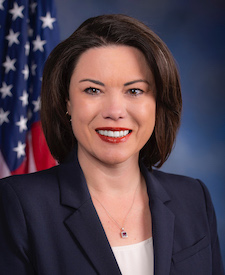
Rep. Angie Craig
Sponsored bills
Maddy summaryHRES 750 is a symbolic resolution recognizing the "Operation Green Light for Veterans" campaign, which encourages counties to illuminate buildings green (Nov 6-12) to show community support for veterans. It promotes awareness of existing county resources - such as mental health services, job training, housing assistance, and benefits guidance - that help veterans transition to civilian life. The resolution urges all counties to participate in the lighting event and use community outreach to highlight these resources, while commending the National Association of Counties for leading the initiative. It does not create new laws or funding but focuses on raising visibility for existing support systems. (HRES 750, introduced Sept. 29, 2023)
Maddy summaryHRES 734 is a House resolution supporting the designation of October 1 as "National Latino and Latina Physician Day." It highlights that Latino and Latina physicians represent only 6% of U.S. doctors and aims to raise awareness about the need for greater diversity in medicine. The resolution emphasizes that increasing representation benefits Latino and Latina communities by improving health outcomes and addressing barriers like language and cultural gaps in care. It does not create new laws but formally expresses congressional support for this symbolic observance.
Maddy summaryHR 5667, the Pay Our Military Act, ensures continued pay and allowances for active-duty military members, reservists, Department of Defense civilians, and qualifying contractors during any government funding gap in fiscal year 2024. It appropriates funds from the Treasury to cover these payments if regular appropriations bills aren't passed before the end of the fiscal year. The funding automatically terminates once regular appropriations are enacted or by January 1, 2025, whichever comes first.
Maddy summaryThis bill requires the Department of Veterans Affairs (VA) to review all veteran suicides occurring between 2018-2023 (the five years before enactment) for veterans who received VA care. The review must analyze demographics, medications (including those with strong safety warnings like "black box" labels), prescribing patterns, mental health diagnoses, and facility-level data. The VA must complete the review within 18 months and publicly submit a detailed report to Congress and the public within 30 days of completion. This law directly affects veterans' families, VA healthcare providers, and policymakers by mandating transparency around suicide risk factors and prescribing practices.
Maddy summaryHR 5728, the Government Shutdown Impact Report Act of 2023, requires the Congressional Budget Office (CBO) to issue daily reports during government shutdowns. The CBO must submit reports within 24 hours of each shutdown day, detailing specific economic impacts like lost GDP, unprovided Small Business Administration assistance, lost park revenue, and tourism revenue declines. These reports will provide Congress with real-time data on the costs of shutdowns to taxpayers and the economy. The bill directly affects how Congress receives information about shutdown consequences, mandating standardized, frequent reporting on economic and service disruptions.
Rural Microentrepreneur Assistance Act of 2023 This bill reauthorizes through FY2028 and revises the Rural Microentrepreneur Assistance Program (RMAP). This Department of Agriculture program provides loans to eligible microenterprise development organizations to capitalize revolving loan funds that provide loans to qualified rural microenterprises. The bill increases the amount a rural microenterprise may borrow to up to $75,000 (from up to $50,000). The bill also increases the maximum allowable federal cost share to 100% (from 75%). The bill further specifies that a RMAP project loan may not be used to cover more than 50% of any demolition, construction, or related costs of real estate improvements.
Maddy summaryThis bill amends the Higher Education Act to require all U.S. colleges and universities receiving federal financial aid to create detailed anti-harassment policies covering physical, online, and institution-sponsored settings. It mandates policies prohibiting harassment based on race, sex (including sexual orientation and gender identity), disability, religion, and other protected characteristics, including harassment via institutional email, computers, or electronic messaging. The bill also establishes a $50 million annual grant program to fund colleges developing prevention programs, victim support services, and training for students and staff on recognizing and addressing harassment. These policies and grants must comply with existing civil rights laws like Title IX but add specific requirements for reporting and prevention.
Maddy summaryHRES 720 designates the week of September 24-30, 2023 (and annually thereafter) as "Gold Star Families Remembrance Week" to honor families who have lost loved ones in military service. It specifically recognizes the sacrifices of families of fallen service members and veterans, and encourages Americans to observe the week through community service and celebrating the lives of those who died protecting the nation. This resolution is procedural and symbolic, with no new funding, regulations, or policy changes - only a formal designation to honor these families. It directly affects Gold Star families (those with members who died in military service) and the broader public through its call for observance.
Maddy summaryThis bill provides federal retirement benefits to educators at tribal schools. It makes employees of tribally controlled schools eligible for the same federal retirement pension (FERS) and Thrift Savings Plan (TSP) as other federal employees. The Bureau of Indian Affairs will pay the government's share of these contributions. This directly affects educators working at tribal schools operating under specific federal contracts or grants, such as those under the Indian Self-Determination Act or Tribally Controlled Schools Act.